
The History of Sakai’s Chusen Dyeing and Wazarashi Fabric
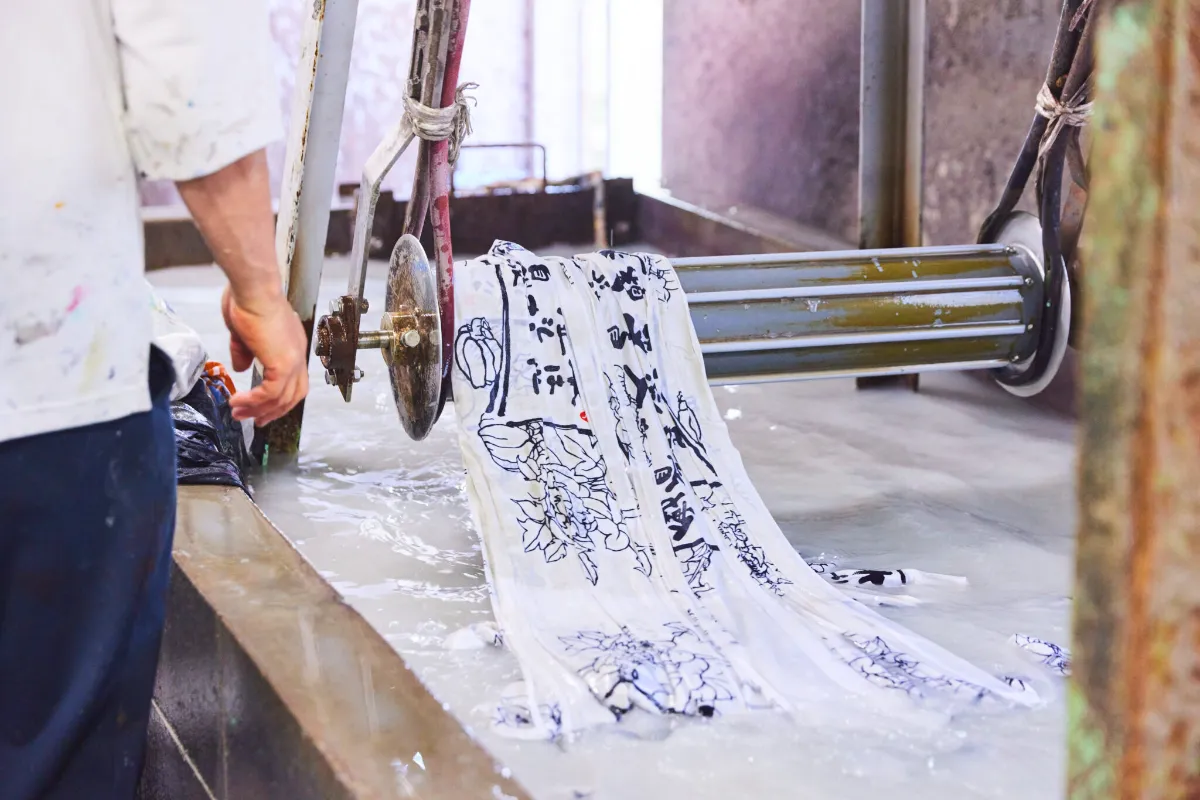
Traditional Crafts Rooted in Sakai: Chusen Dyeing and Wazarashi Fabric
During the Edo period (1603–1867), cotton transported along the Kishu Kaido road transformed Sakai into a thriving hub for the cotton trade.
Raw cotton, freshly harvested and still containing impurities like oils and starch, was bleached to create wazarashi fabric, known for its softness and gentleness. Wazarashi production, alongside cotton cultivation, began more than 400 years ago in areas along the Ishizu River, which flows through the heart of Sakai, including Tsukuno and Kena.
In the Meiji period (1868–1912), Japan pioneered the distinctive dyeing technique known as Chusen. This method involves pouring dyes onto wazarashi fabric to achieve vibrant and intricate designs, fostering the growth of chusen and wazarashii as Sakai’s key traditional industries.
At the 1903 “5th Domestic Industrial Exhibition” in Osaka’s Tennoji, chusen-dyed yukata (summer kimono) fabrics dazzled audiences and won awards. Known as Naniwa Hana and Hanchuu, these designs gained popularity nationwide.
The term chusen became widely recognized around 1935. While chusen products reached their peak in the 1950s, the craft continues to thrive today. Modern artisans create a variety of items beyond traditional towels and yukata, ensuring Sakai’s rich heritage lives on. In 2019, chusen and wazarashii products were officially recognized as “Naniwa Honzome,” a designation of traditional craft excellence by Japan’s Minister of Economy, Trade, and Industry, further highlighting their cultural and historical importance.