
2023/10/1
Aoki-Hamono Seisakusho Co., Ltd. 2023
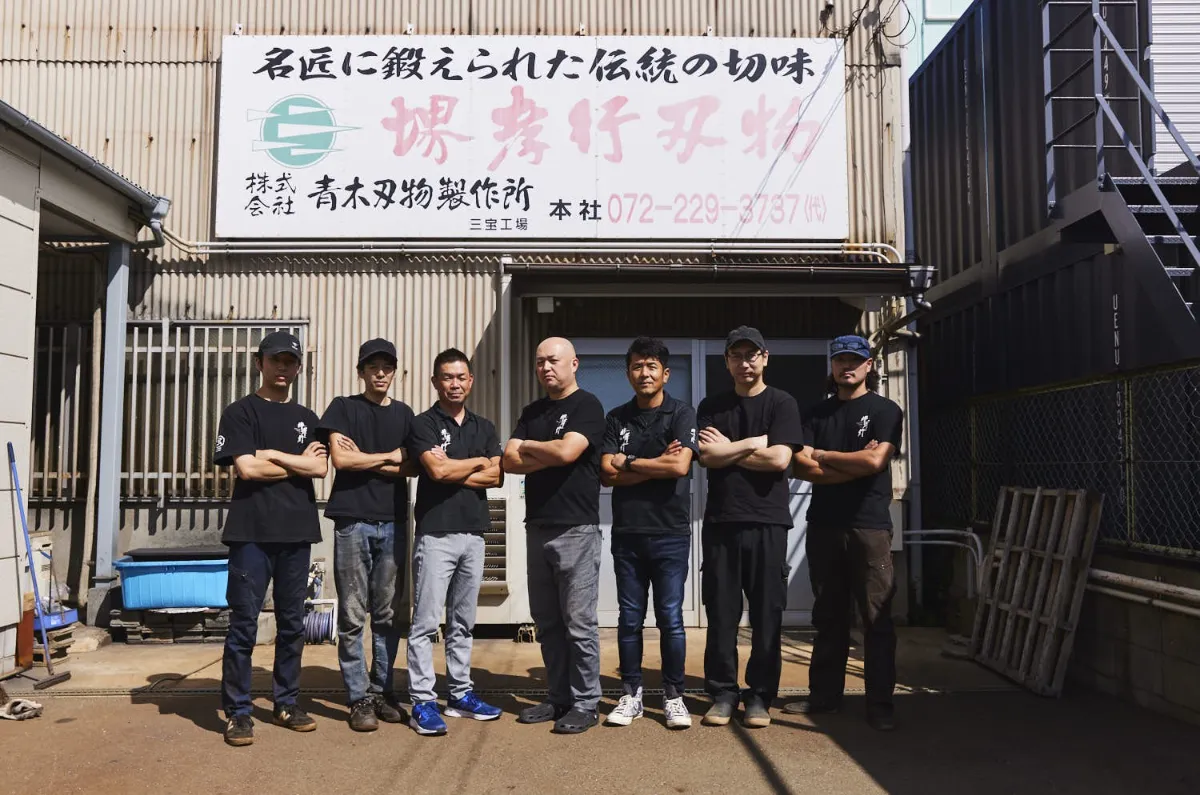
Sakai’s Blade Crafting: High Quality by Division of Labor
The stages involved in blade production, from crafting to distributing, include ‘forging’, ‘sharpening’, ‘handle attachment’, and ‘wholesaling’.
‘Forging’ is a process where steel is heated, hammered, cooled, and tempered to make it stronger and more resilient. This is an important process that defines the knife’s quality and requires years of expertise.
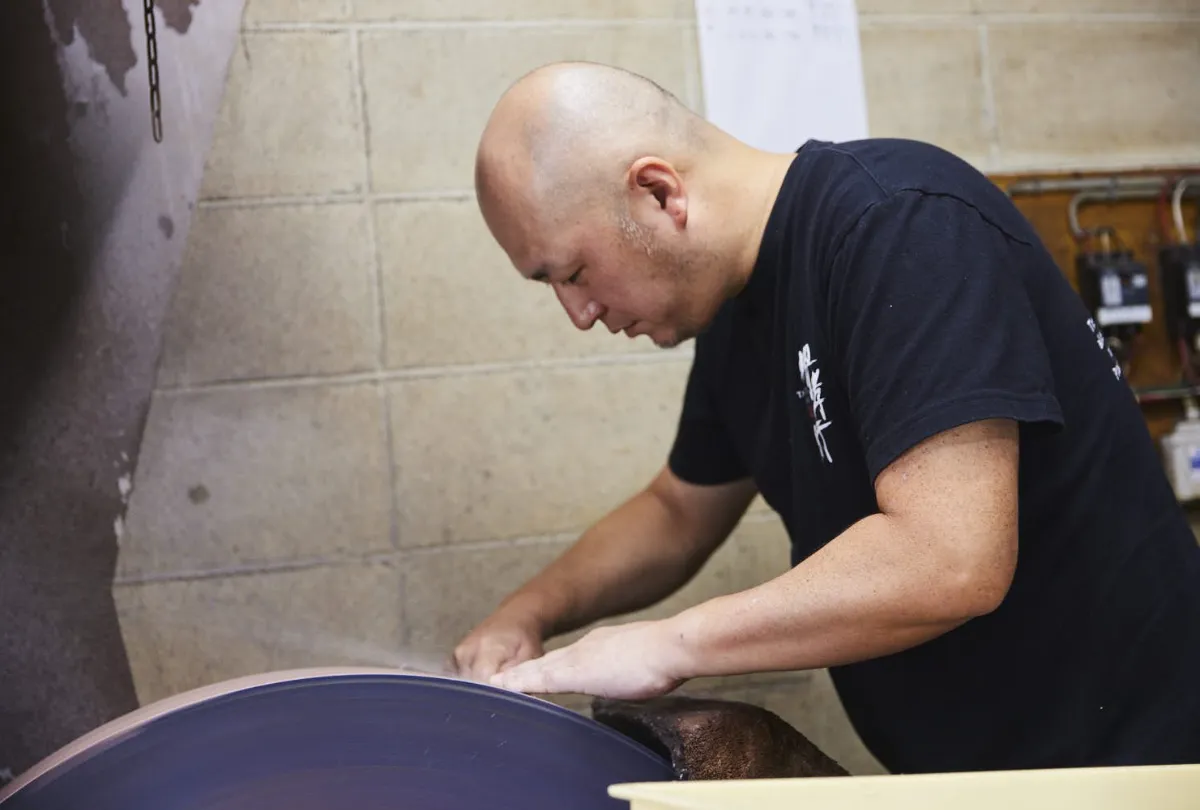
‘Sharpening (adding blade edge)’ polishes the black base metal in the shape of a knife and adds the edge. Because there are various materials and the finish varies according to each forging craftsman, careful adjustments are required.
At the wholesaler, the handle is attached to the blade (‘handle attachment’) and then it is engraved, packaged, and distributed to retail stores.
The most distinctive feature of Sakai knives is their ‘division’ of labor, which involves production by a group of professionals who have mastered their techniques in their specific areas of expertise. This system ensures that the quality of Sakai knives matches that of other regions.
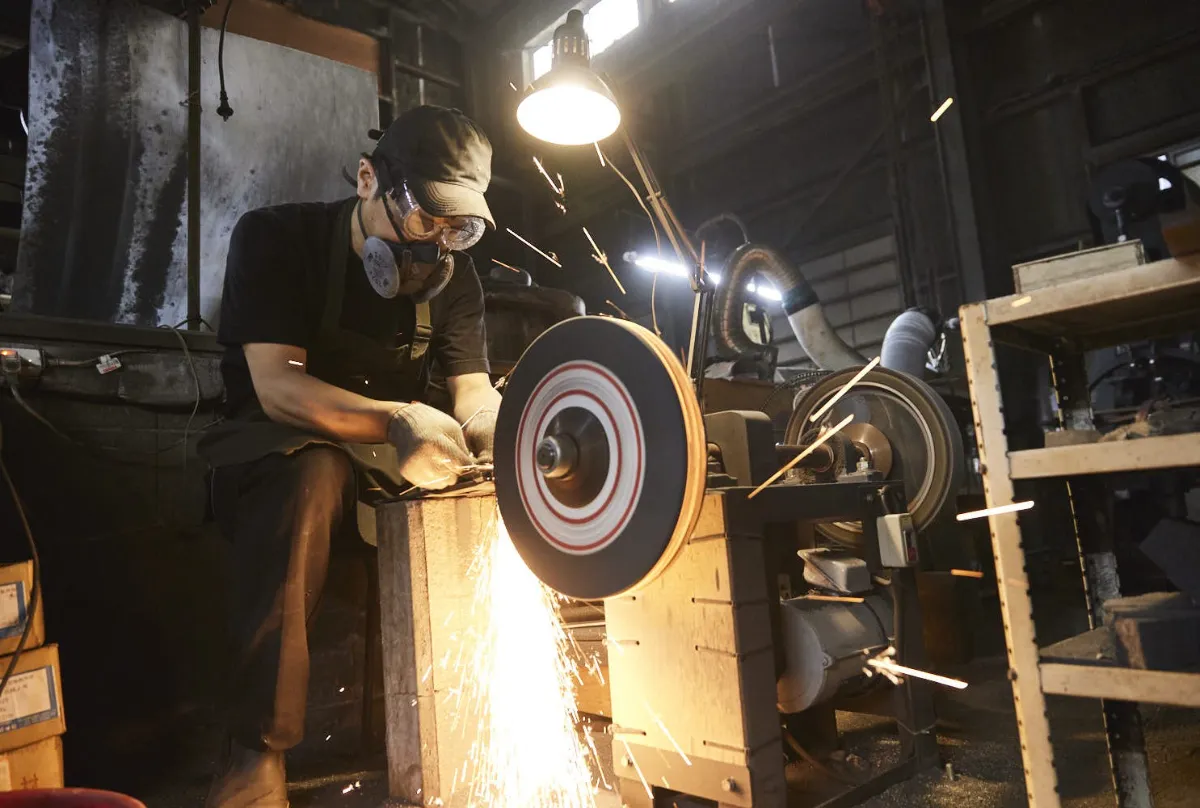
An Open Work Environment for Young Craftsmen
However, in many cases, this division of labor involved different business owners handling separate processes, often leading to extended periods for product development and improvement.
Aoki-Hamono Seisakusho Co., Ltd., one of Sakai’s leading knife manufacturers, was founded in 1947 and established their own factory 50 years ago to compensate for such drawbacks. Forging craftsmen and blade craftsmen can work together in-house to create their products.
“At our own factory, the ‘Sakai Takayuki Sanpou Factory’, we excel in quickly materializing our new product concepts, including our original items. We can also receive direct feedback from craftsmen on areas for improvement, allowing for quick adjustments and a more efficient productivity,” says executive director Mr. Toshikazu Aoki.
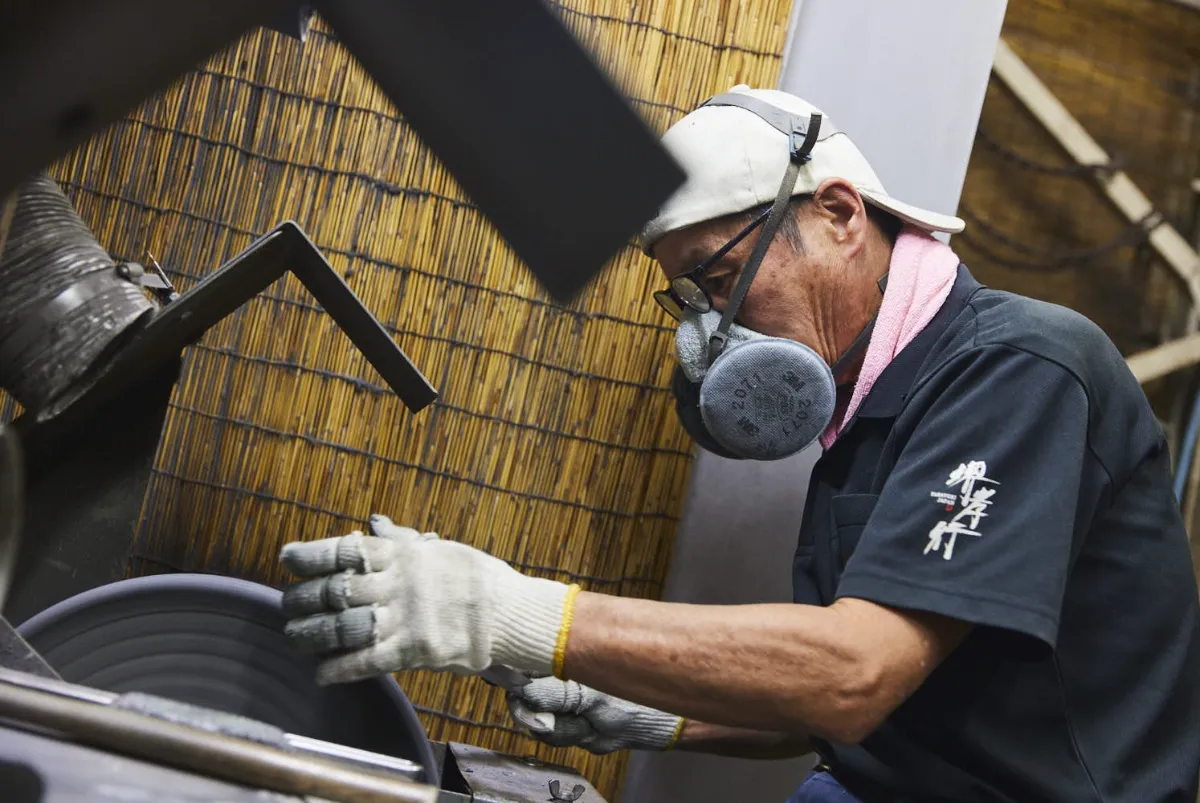
Witness the enthusiasm of young craftsmen at work in the factory.
“In an industry facing the issues of aging and a lack of successors, it’s wonderful to see young people in their 20s and 30s join us from both within and from outside the prefecture. They are energetic, quick learners and eager to take on new challenges,” says sales representative Mr. Fumiaki Yonezawa, who clearly has great hopes for the new generation of craftsmen.
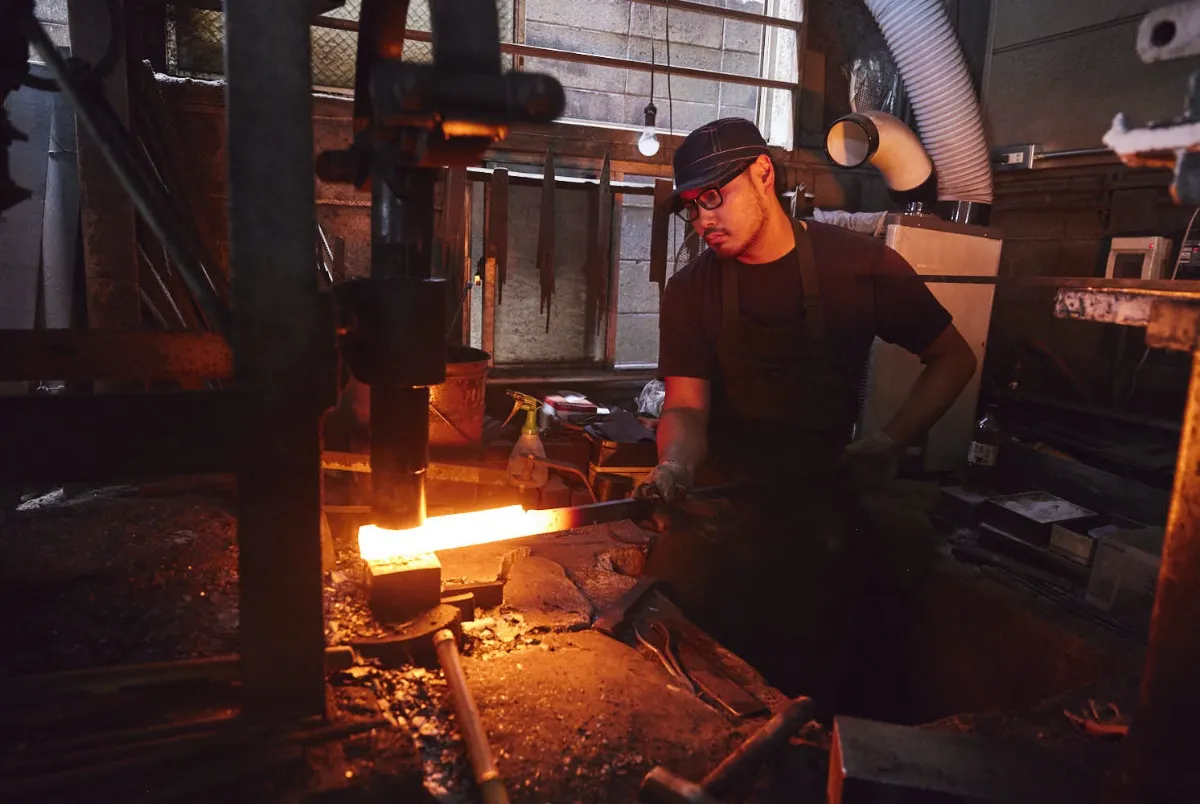
Engraving Techniques: Adding New Value to Sakai Knives
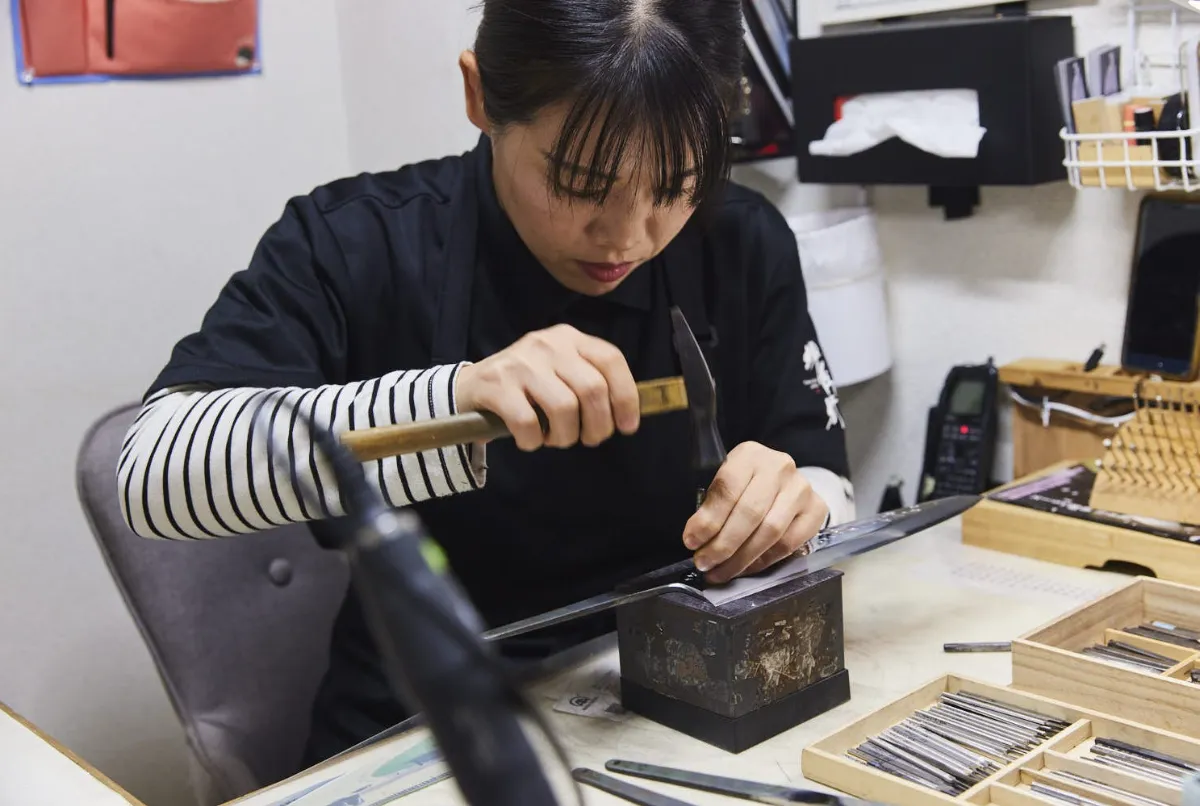
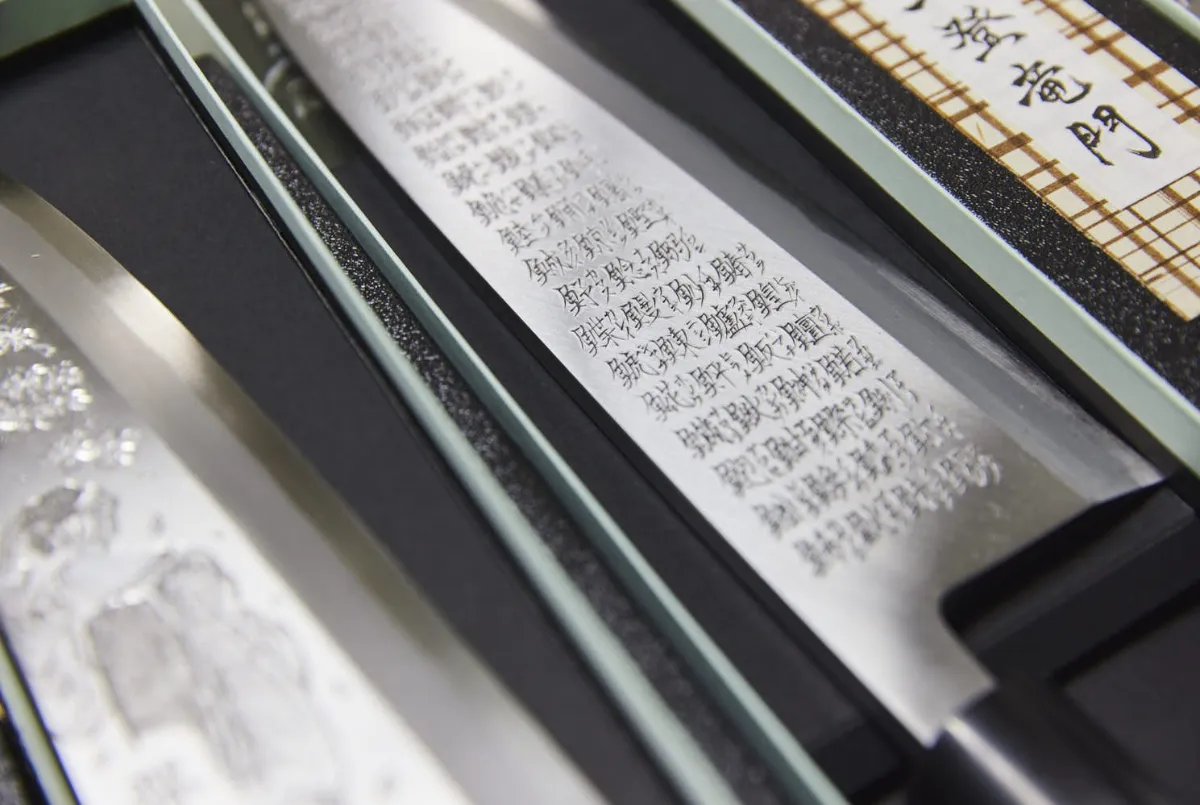
An employee who unleashed her talent within the company’s system as a ‘craftsman employee’ is Ms. Michiko Kubota. She began as a regular employee but was soon recognized for her talent and skills in engraving letters on knife blades. Today, she has been provided with her personal workspace as a knife engraver, handling more than 100 unique designs, such as cherry blossoms, carps, and the five-story pagoda. Each of her extremely delicate patterns is crafted entirely by hand, without any sketches.
“Having been interested in craftsmanship since I was a child, I take great pride in my work. I’d like to fully embrace the innovative culture our company offers and continue taking new challenges,” says Ms. Kubota.
The artistic knives have received international recognition, broadening our market and adding new value to Sakai’s knives.
Additionally, ‘Sakai Takayuki Knife Gallery’ opened near their headquarters in 2022. The sight of over 500 special knives on display is truly stunning. This gallery will serve as a platform for regular events, providing opportunities to engage with customers and promote Takayuki Sakai’s knives and Sakai knives worldwide.
Elevating Sakai City’s Traditional Industry with Our Knives
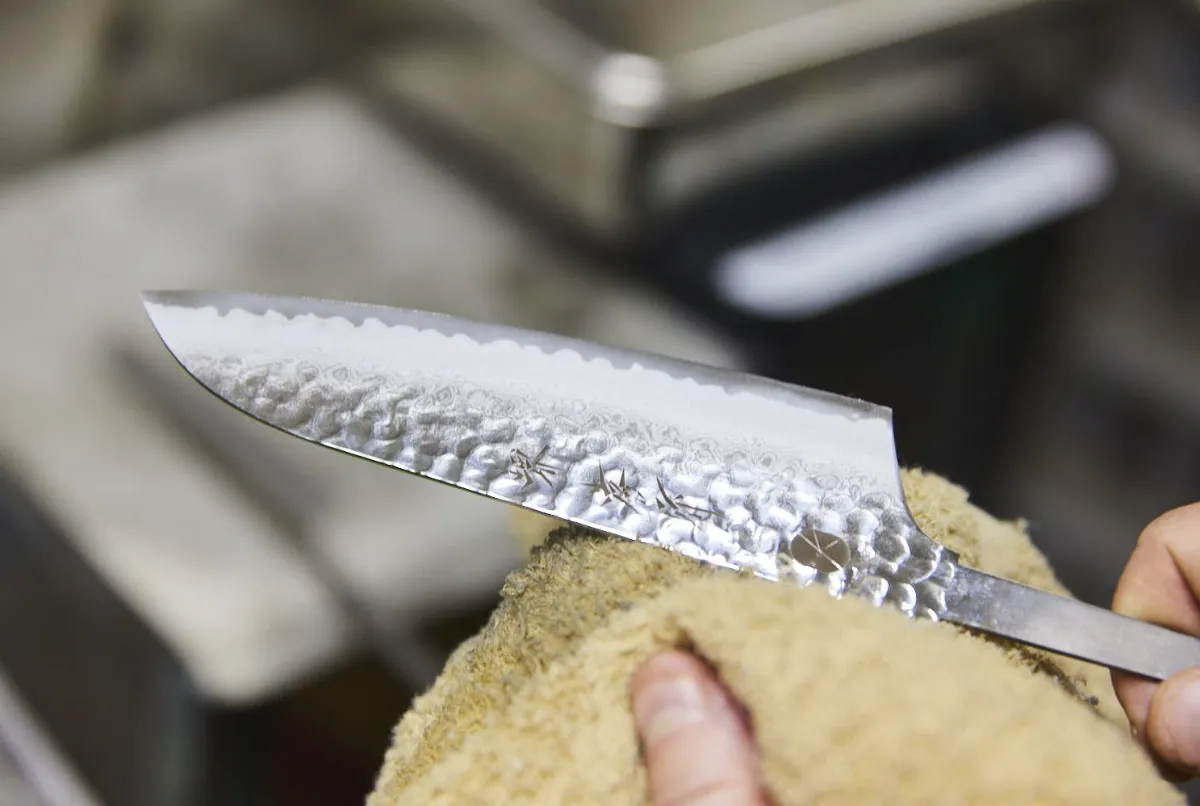
The ‘Kirin’ 33-Layer Hammered Damascus Wa-Santoku Knife (Sakai Kitchen Original) has been certified in this edition’s Sakai Kitchen Selection. It was developed by experienced sales representative Mr. Tetsuharu Miyano, with 29 years in this field.
“We have carried over the model of the previous certified item, the ‘Susuguro’ Wa-Santoku Knife (Sakai Kitchen Original), to create a stylish Santoku knife. Stainless-steel is used to ensure rust-resistance, making it manageable for everyday households. Also, our blade craftsmen sharpened it with precision for an excellent cutting edge. Despite these great features, we have kept the price affordable so that more people can experience this quality product.”
Aoki Hamono Seisakusho’s brand name, ‘Sakai Takayuki’, contains the kanji character for ‘Sakai’ (堺) which means that their popularity both domestically and internationally will contribute to the promotion of Sakai City. We look forward to seeing more products from them as they continue to enhance the traditional industry through their knives.
edit/text Tomoyo Tsuchiya
photographer Yutaka Sato