2025/10/31
Baieido Co., Ltd. 2025
A Fresh Breeze in the World of Incense:
Baieido and KEITA MARUYAMA Bridging Tradition and Mode
Around 400 years ago, Sakai flourished as a hub of international trade. Aromatic woods such as aloeswood (jinkō) and sandalwood (byakudan) arrived from around the world, merging with the knowledge of herbal merchants to cultivate a rich culture of incense making.
The presence of a Vietnamese consulate in Sakai symbolizes the deep historical ties with Vietnam—connections built through trade in rare goods such as aromatic woods, which were not found in Japan.
Founded in 1657 during the Edo period, Baieido has continued this legacy for more than 360 years. What began as a wholesaler of Chinese herbal medicine eventually evolved into one of Japan’s most respected incense manufacturers.
Baieido’s Quality, Rooted in Tradition
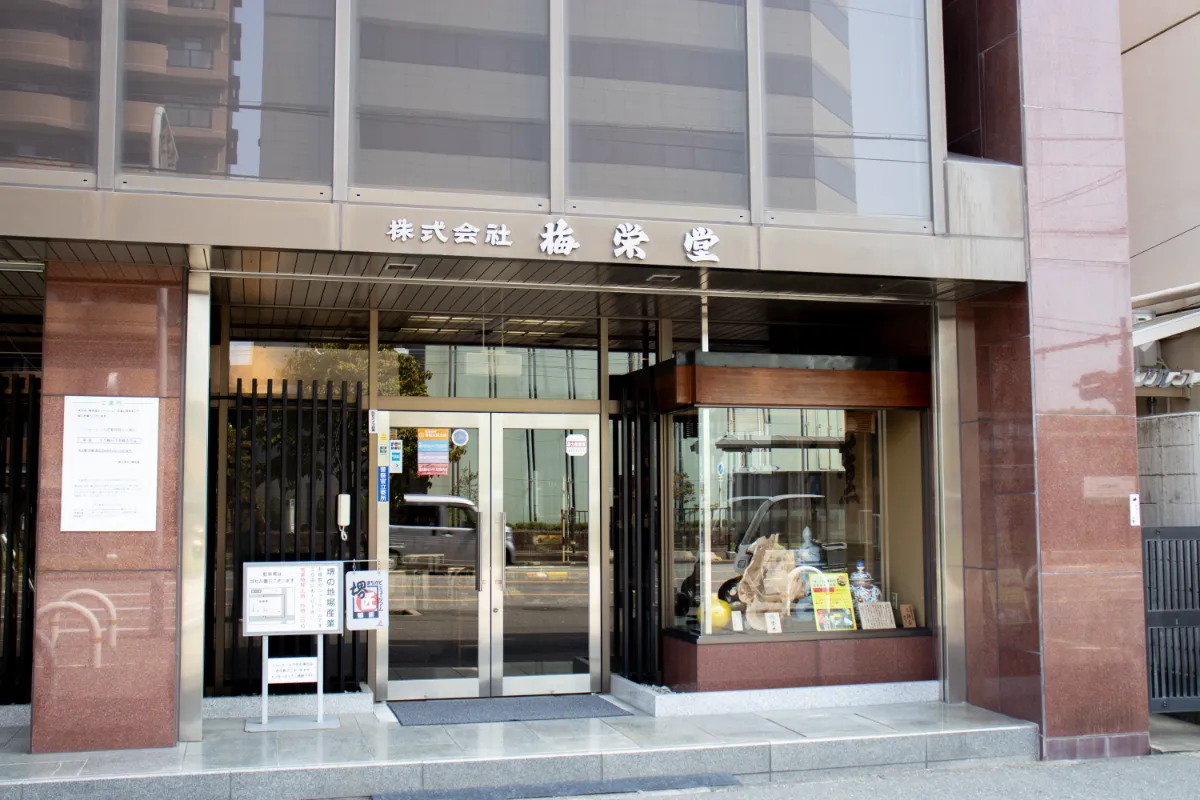
Baieido’s enduring strength lies in its uncompromising quality and deep respect for tradition.
Among its iconic long-selling products are “Kokonoekoh” (trademarked in 1903 and recorded as Japan’s oldest existing incense trademark), “Kobunboku” (1921), and “Kai un koh” (1967). Each masterpiece is carefully blended using natural aromatic woods—kyara, the highest-grade agarwood, and sandalwood—as its foundation.
These time-honored creations have earned the trust of head temples across Buddhist sects and the lasting devotion of incense lovers through generations.
A Cross-Border Collaboration Between Tradition and Mode
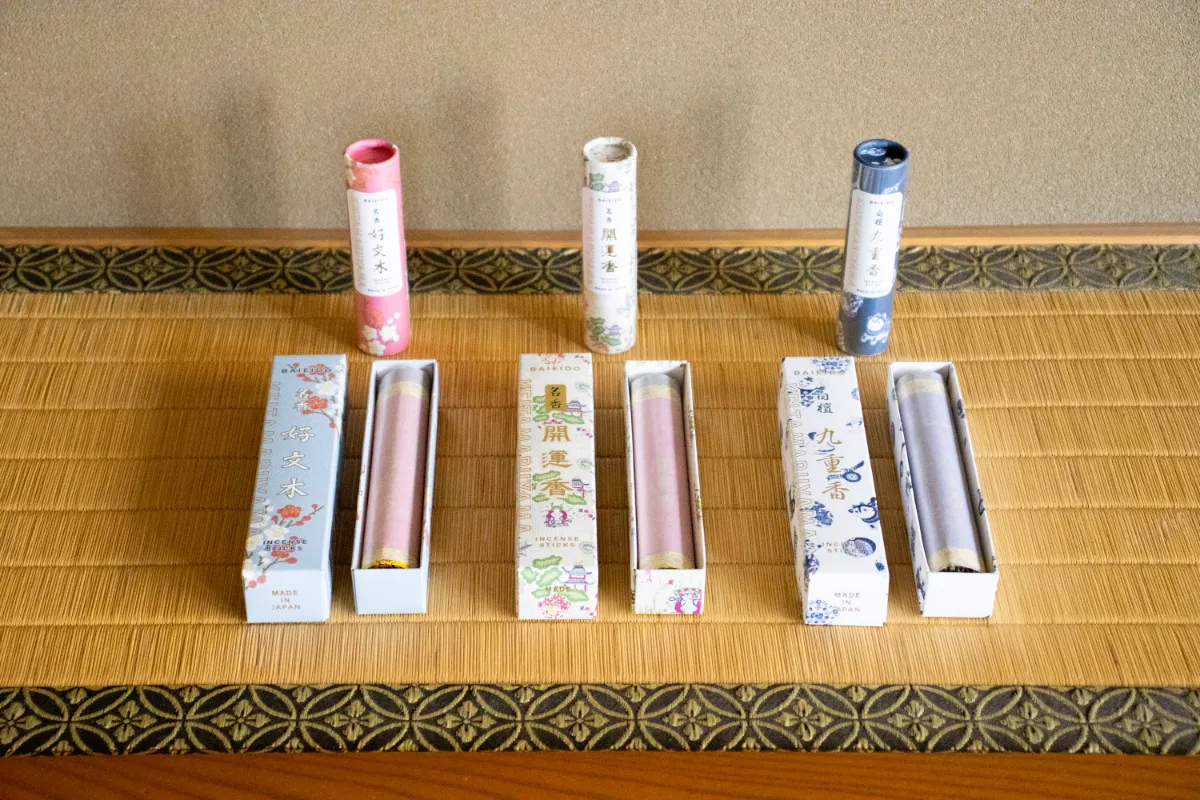
A collaboration with the fashion brand KEITA MARUYAMA has brought a fresh breeze to the traditional city of Sakai.
This project took shape from Baieido’s wish to “share the charm of incense with younger generations” and designer Keita Maruyama’s desire—on the occasion of his brand’s 30th anniversary—to explore the unexplored realm of fragrance.
Their partnership grew naturally from the shared sensibility between Maruyama’s “Oriental worldview” and the aromatic world Baieido has cultivated. Known for expressing the four seasons of Japan and traditional beauty in his collections, Maruyama brings a refined Eastern aesthetic into a fashion world dominated by Western design.
This harmony between tradition and contemporary style became the cornerstone of their collaboration.
Visiting Baieido’s headquarters in Sakai, Maruyama observed raw materials and historical archives before conceiving his design.
The resulting packaging—elegant enough to serve as interior decor—dresses the traditional world of incense in a refined sense of Oriental mode, fusing history with modern sophistication.
Fragrance as a Bridge Between Cultures
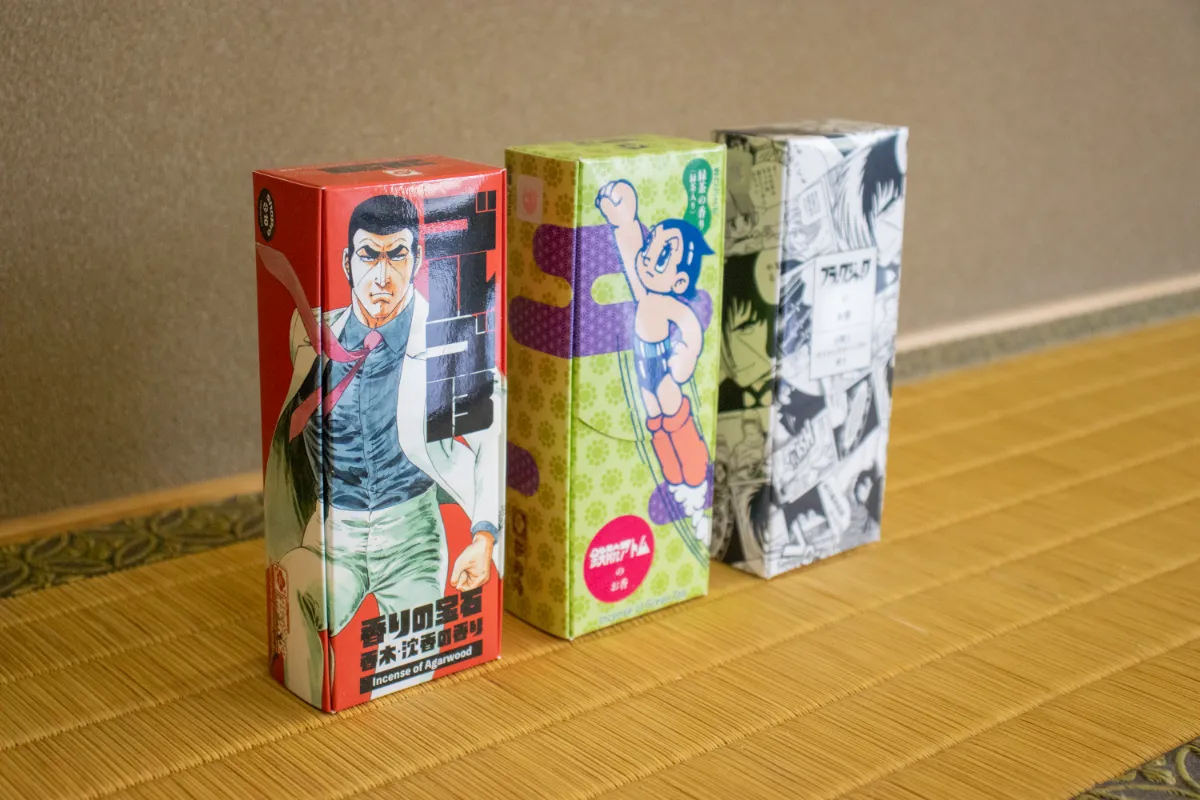
Beyond KEITA MARUYAMA, Baieido continues to collaborate across industries—spanning design, culture, and entertainment—with partners such as Tezuka Productions (Black Jack, Astro Boy), Golgo 13, and industrial designer Kiyoyuki Okuyama.
For example, the Black Jack incense was blended primarily from kampo (oriental medicinal herbs) to embody the work’s central themes of medicine and life.
As Baieido explains,
“Fragrance can express what manga or video cannot.
We hope people can experience the world of these characters through scent.”
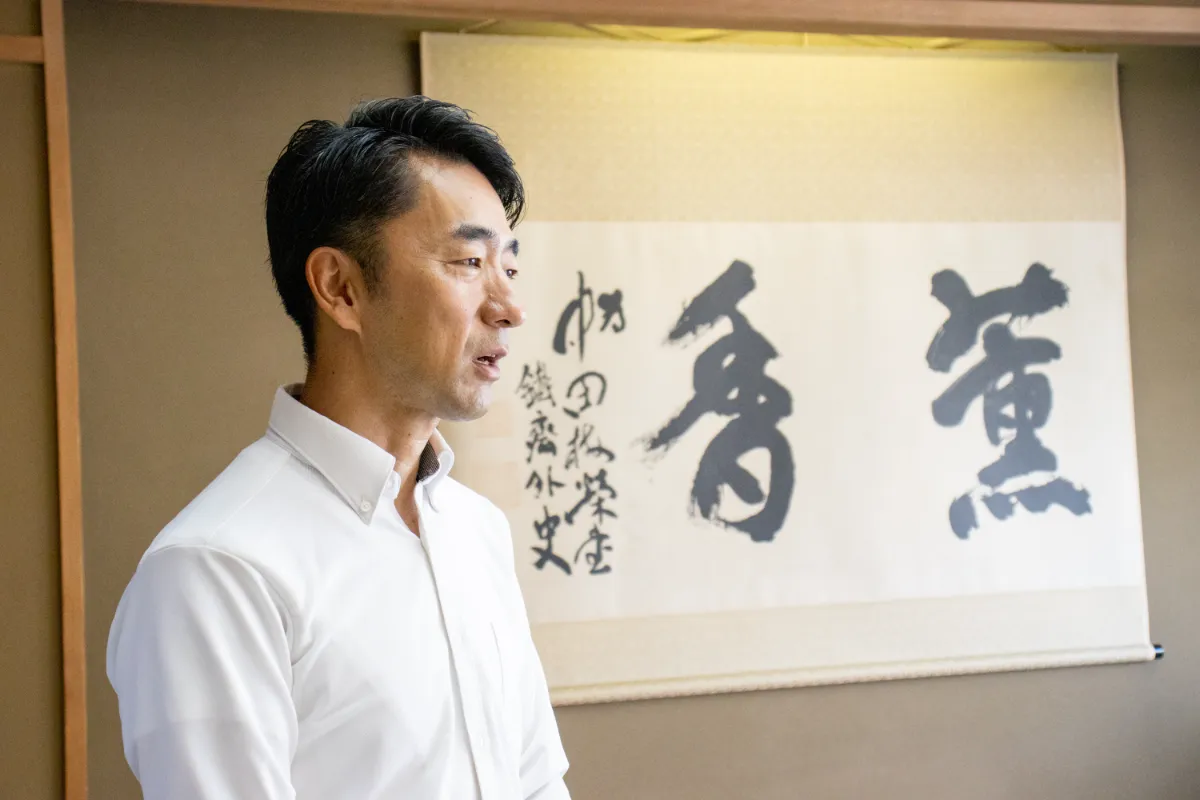
Tokiyoshi Nakata, Director
The Aesthetics of Meticulousness:
Inside the Incense Factory
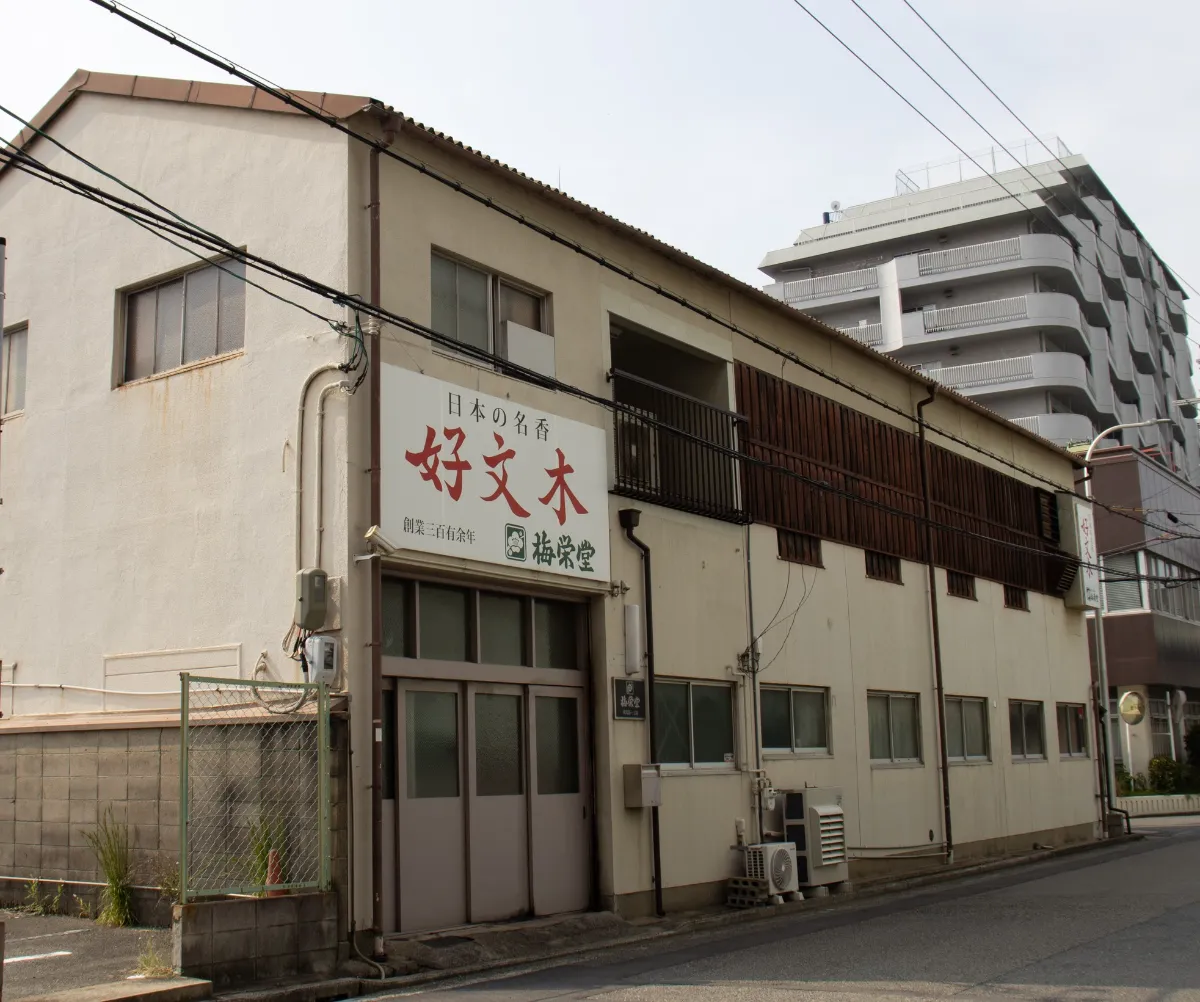
About a five-minute drive from Baieido’s headquarters stands the factory where all stages of incense production—blending, kneading, molding, drying, and bundling—take place under one roof.
The 70-year-old building remains active today, distinguished by its traditional ventilators called bekako, which let in natural air for gentle drying.
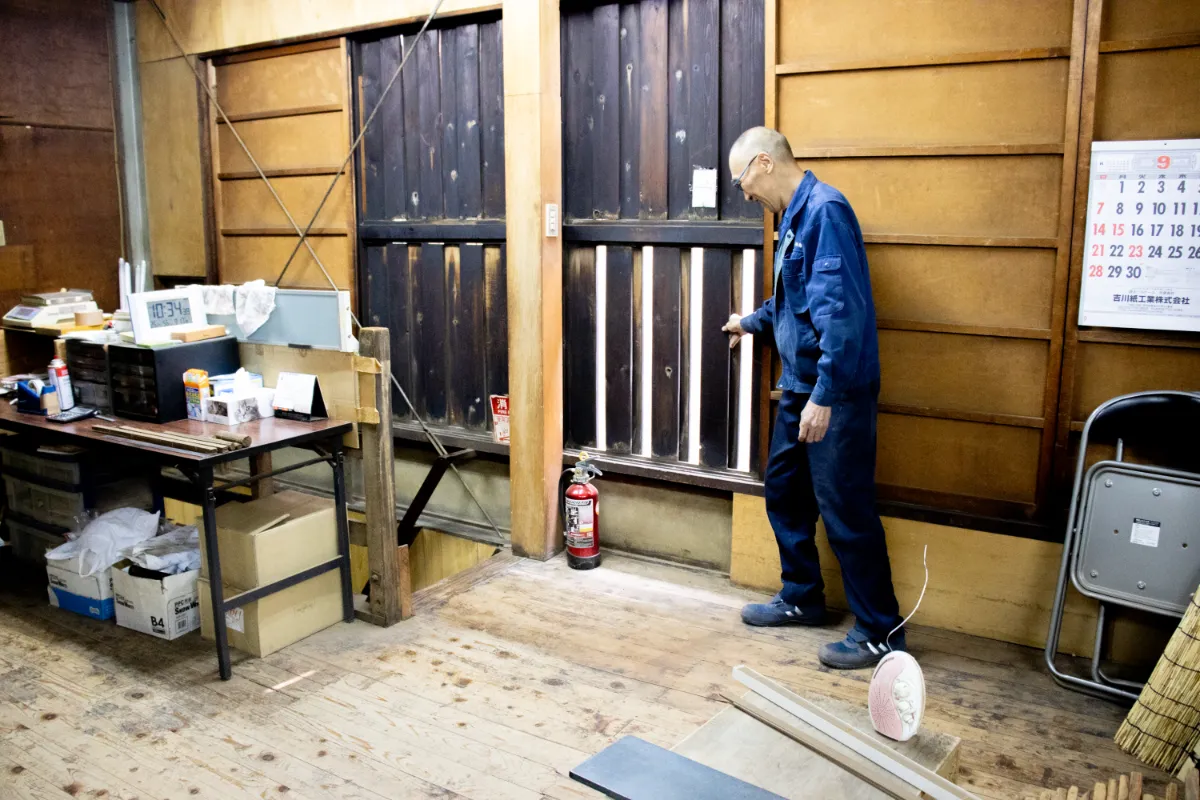
The artisans once adjusted these openings by hand to control airflow—a subtle craft that reflects the precision of earlier times.
Stepping out of the car in front of this timeworn factory, I was immediately greeted by a faint, elegant fragrance drifting through the air.
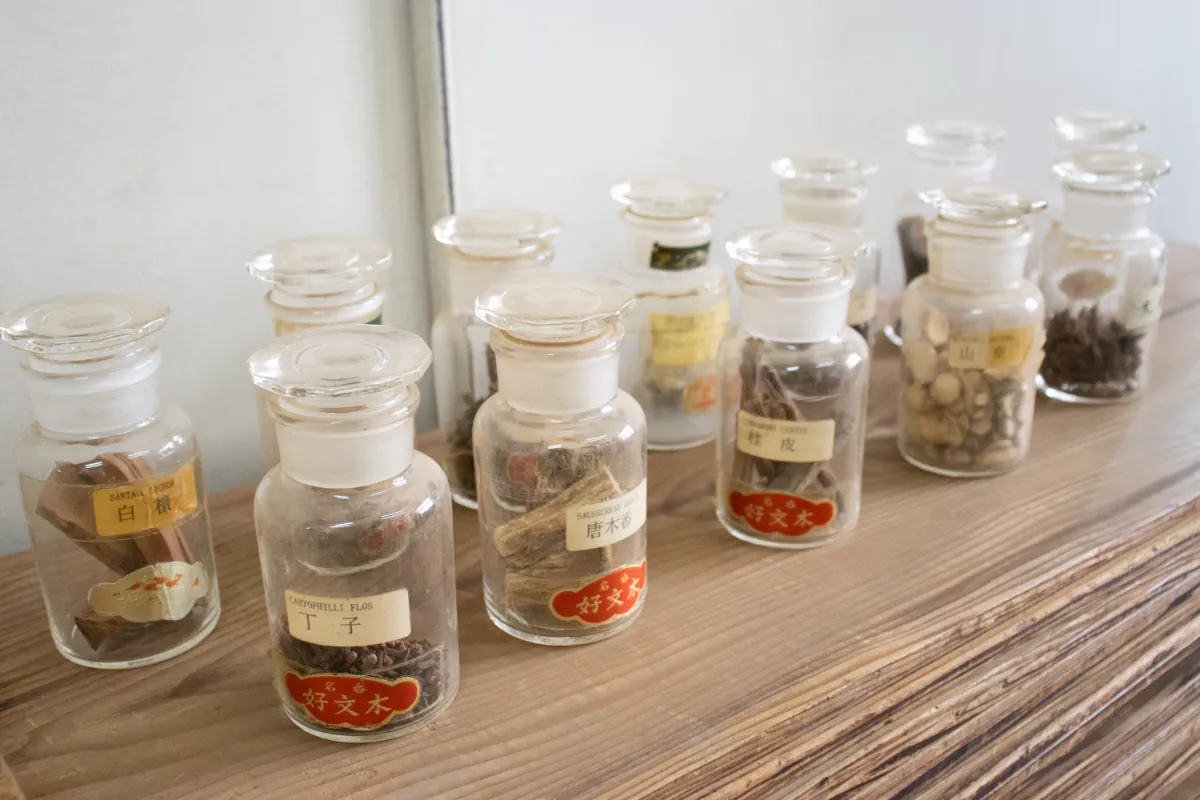
At the entrance stand rows of glass jars filled with precious raw materials: Old Mountain sandalwood from India, kyara from Vietnam, and various Chinese herbs and spices.
Kyara, in particular, is prized for its rarity and historical value. During Japan’s Warring States period, feudal lords such as Tokugawa Ieyasu, Oda Nobunaga, and Toyotomi Hideyoshi competed to acquire fine kyara and aloeswood—sometimes even writing directly to Southeast Asian monarchs to request it.
Historical records show that Ieyasu himself used these aromatic woods not merely as symbols of status, but as medicinal ingredients, blending his own incense for health and longevity.
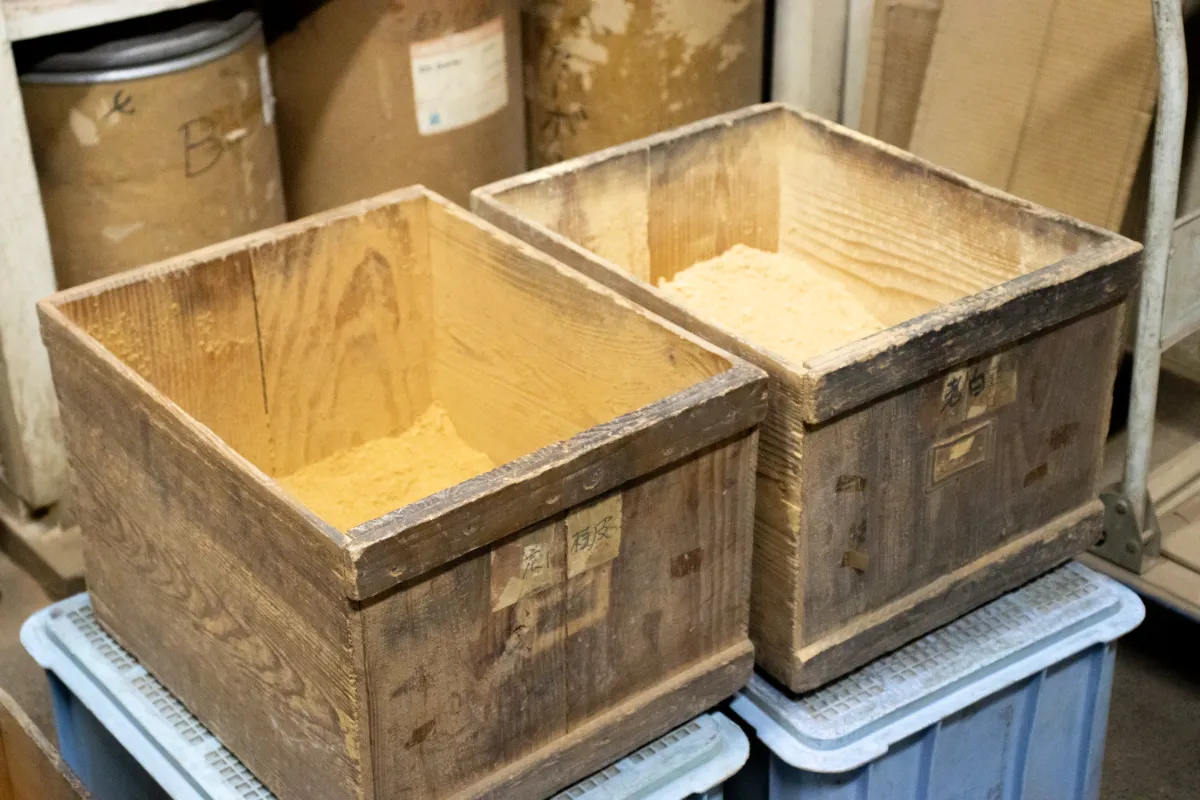
The blending of fragrance at Baieido is still managed in gram-level precision, and only the company president knows the complete recipes.
With raw materials so valuable—some costing up to 100,000 yen per gram for ultra-premium grades—artisans handle each ingredient with utmost care.
Strict oversight led by the factory manager ensures not even the slightest weighing error.
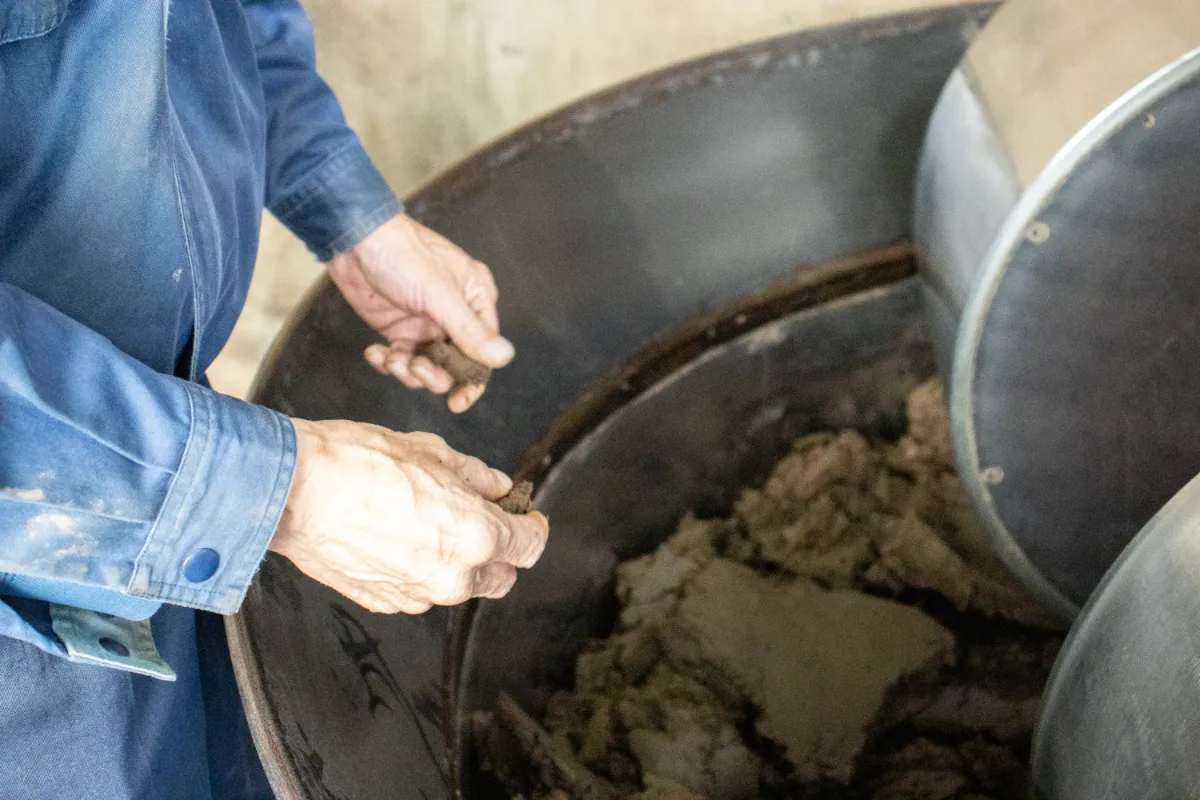
In the kneading process, mixing too much can create unwanted stickiness, while insufficient mixing leads to brittleness.
Artisans rely entirely on experience and touch to sense the perfect moment to stop.
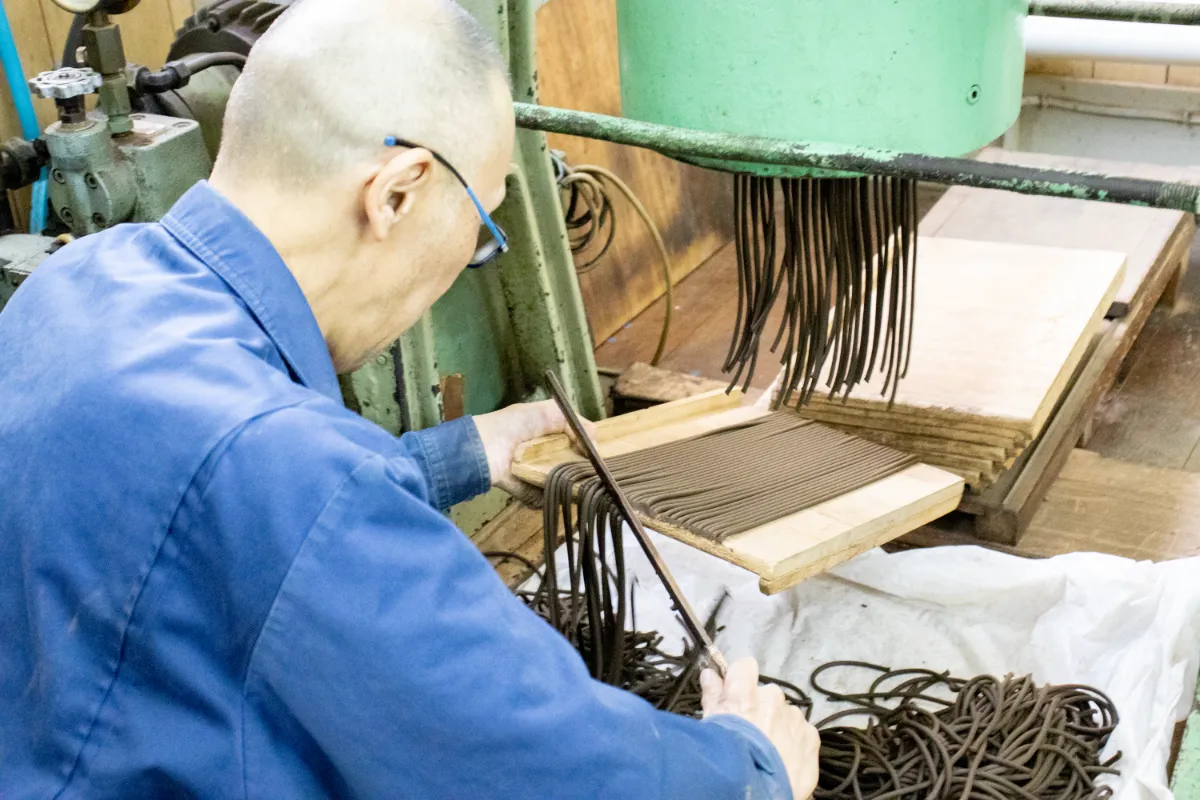
Even defective or bent incense sticks are never wasted; they are pulverized and reused.
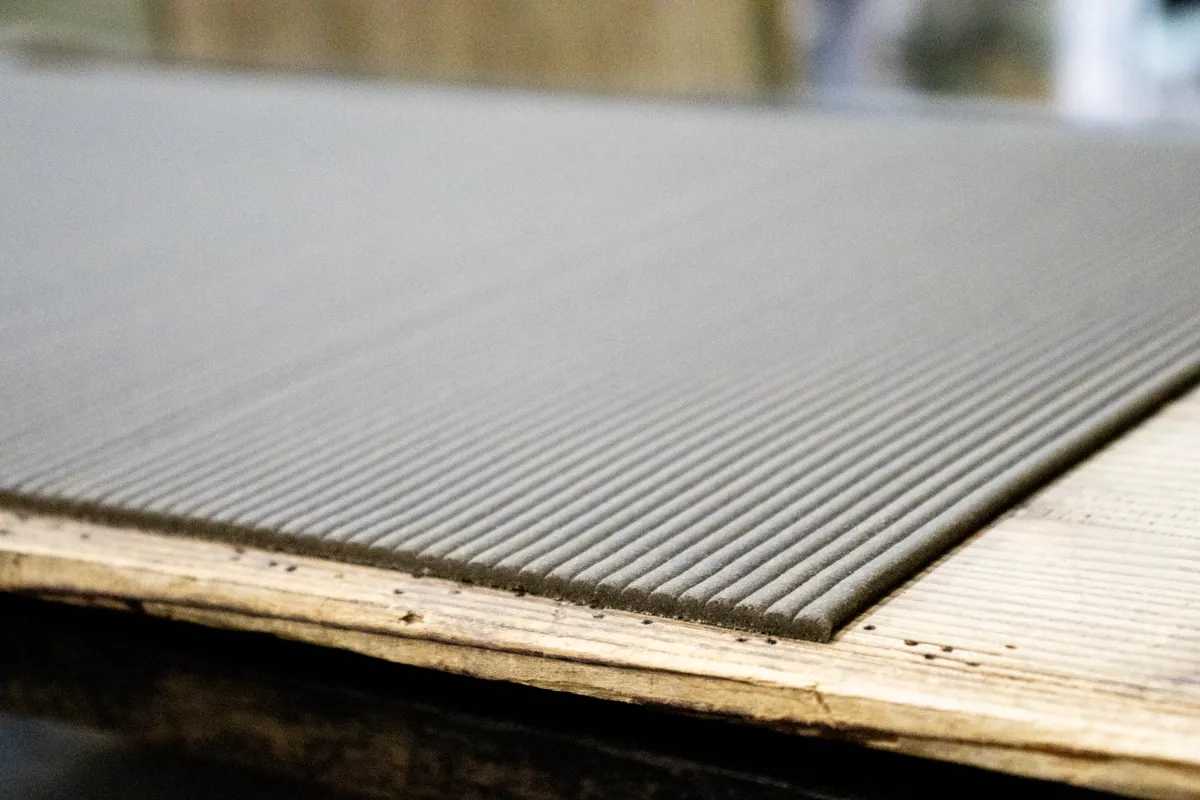
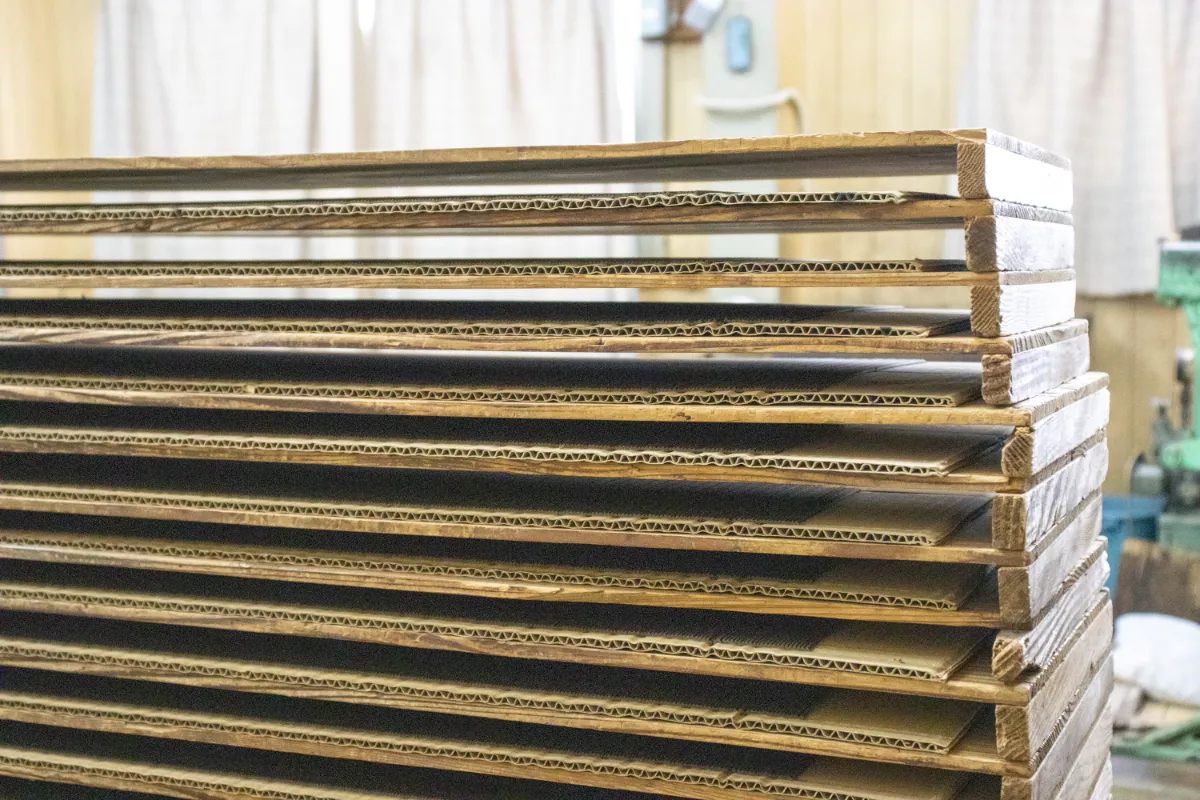
During drying, cardboard sheets are used for their hollow structure, which allows for even airflow.
Because the incense remains “alive” during this stage, humidity and temperature are carefully monitored—if the air is too moist, the sticks may curl like snakes.
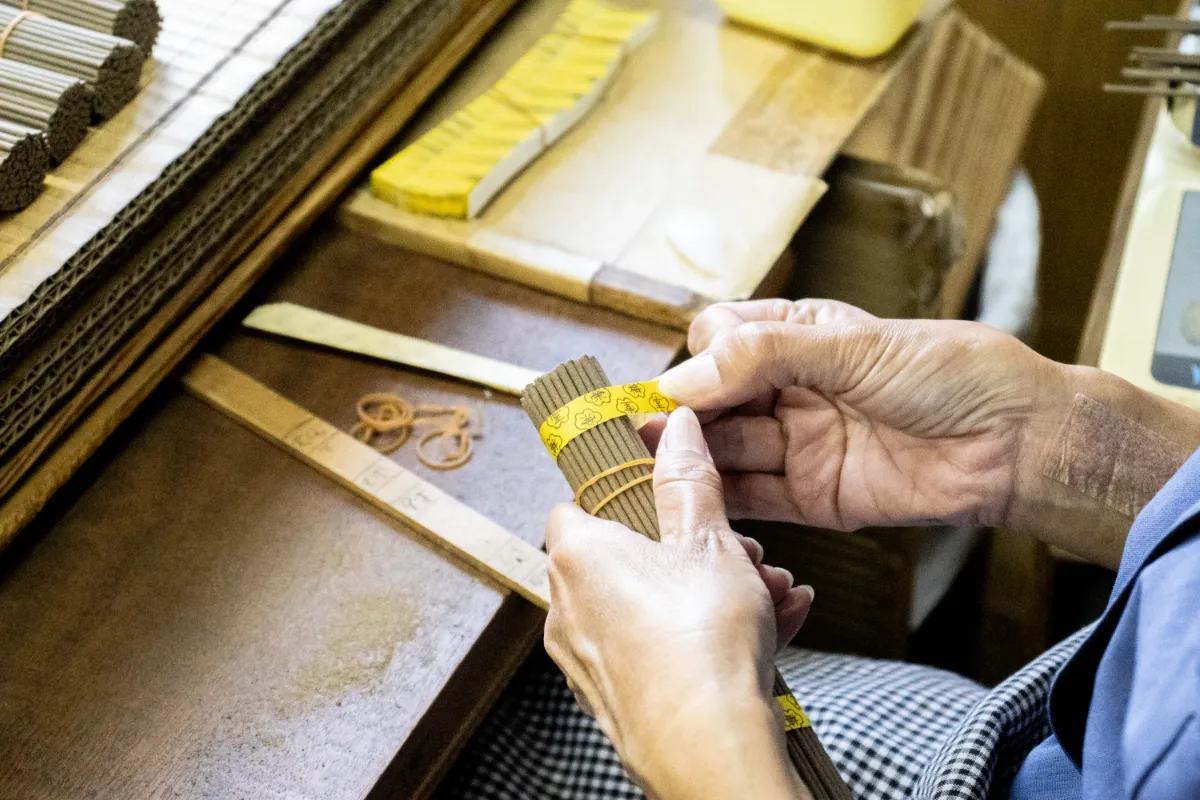
In the final bundling stage, each stick is individually checked, weighed, and tied.
Even if they appear dry, some moisture may remain inside.
To prevent warping after packaging, the sticks are secured with a paper band called an iso—a small but ingenious detail that embodies Baieido’s craftsmanship.
To the Younger Generation — A Life with Fragrance
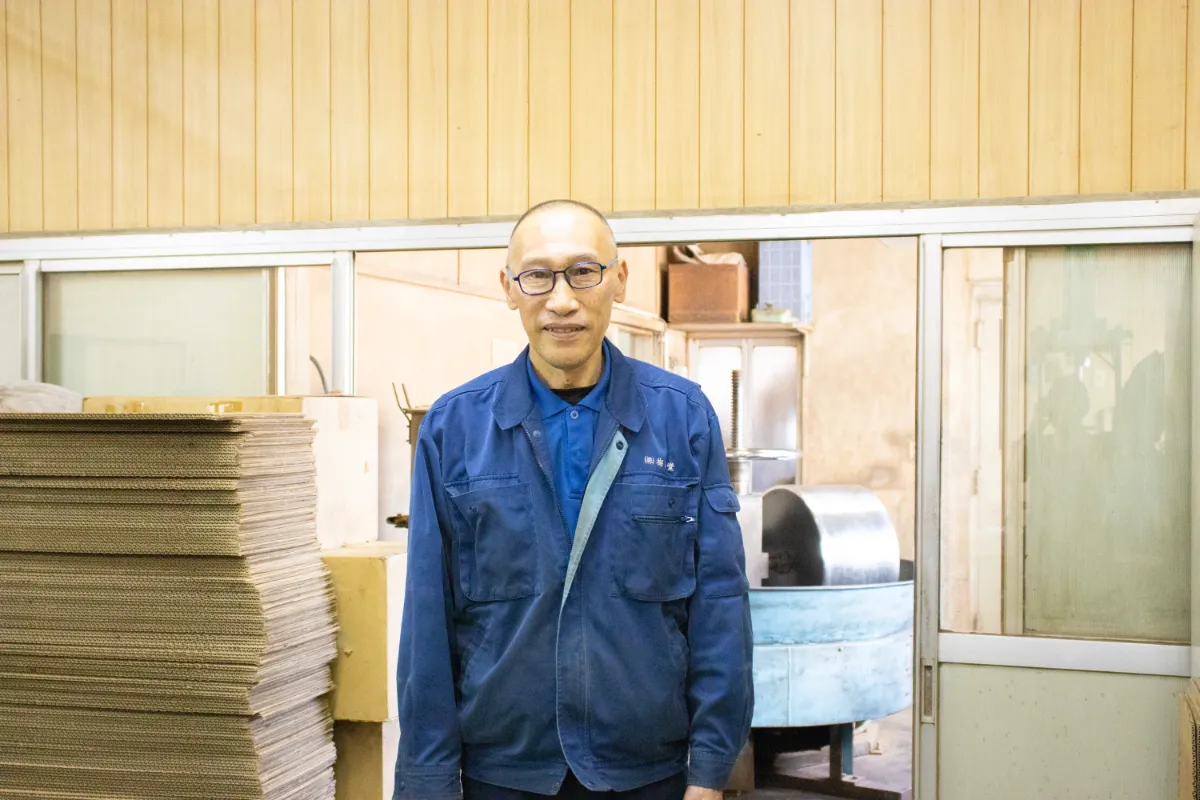
Koji Kato, a veteran artisan with more than 40 years devoted to incense making, grew up in Sakai, a city long known for its thriving incense industry. Surrounded by fragrance from an early age, he naturally followed this path.
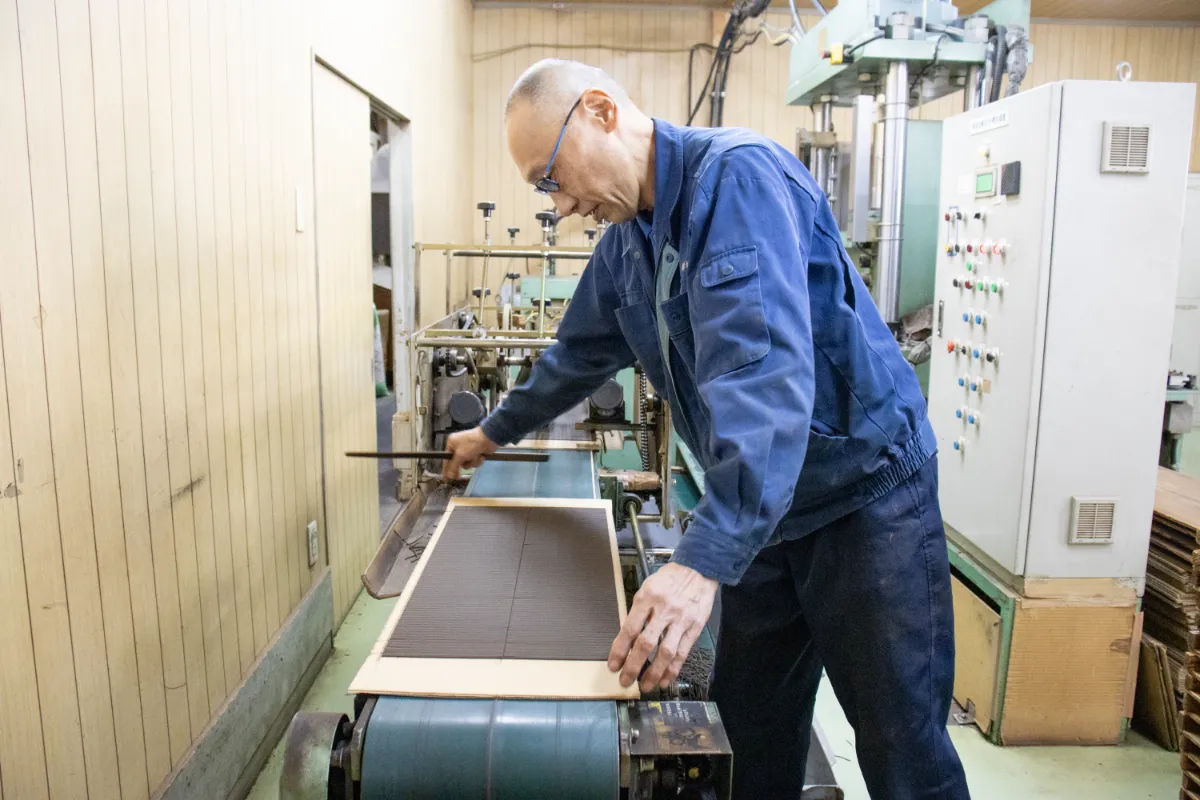
“The two most important things in incense making,” Kato says, “are fragrance and form.”
“Fragrance is invisible—but it stays deep within a person’s memory.
That’s why I want each stick to be as straight as possible.”
For him, that straightness carries meaning beyond visual beauty; it reflects sincerity and respect for the unseen.
Baieido hopes to transform how incense is perceived.
Its collaboration with KEITA MARUYAMA embodies this vision—presenting incense as a tool to compose one’s personal time.
For meditation, reading, reflection, or quiet moments before sleep, incense continues to evolve into something that gently enriches everyday life.