
2025/10/31
Kadono Sarashi Some Inc. 2025
Not Just Preserving Tradition — Kadono Sarashi Some Dyes the “Future of Wazarashi”
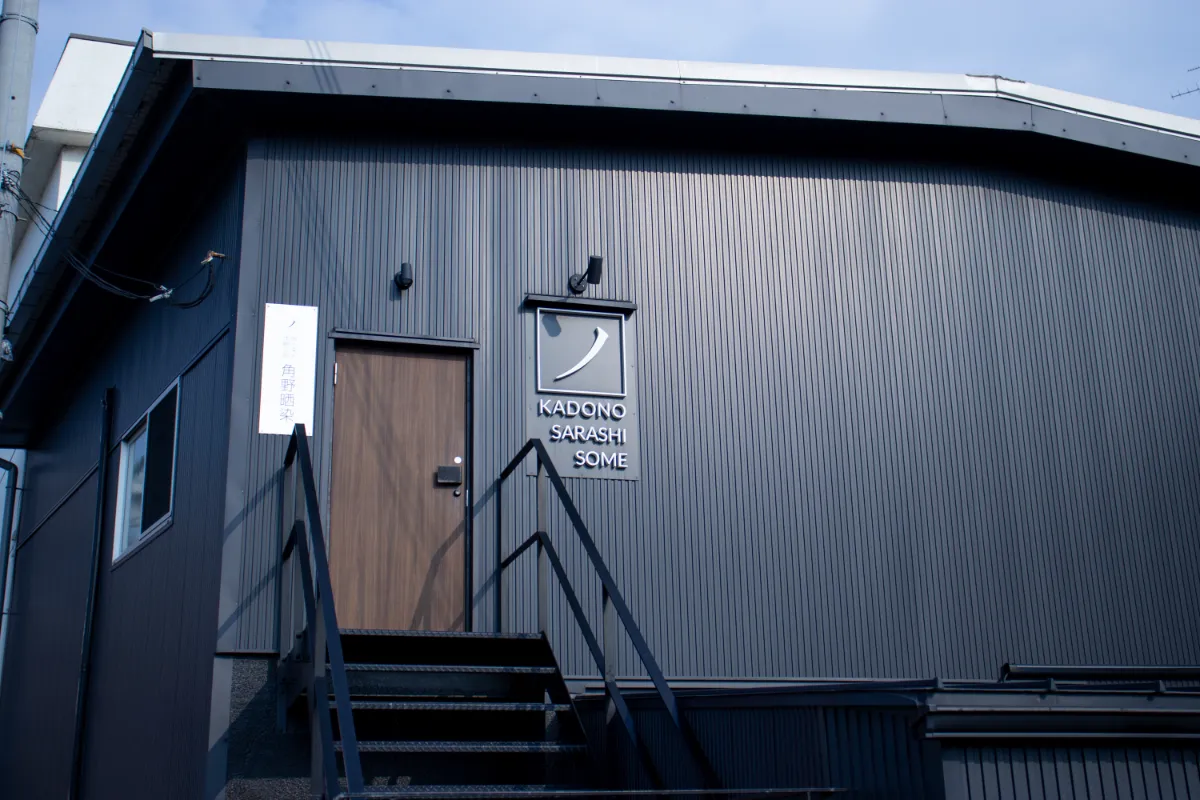
Founded in 1931, Kadono Sarashi Some Inc. is a long-established manufacturer in Sakai City with more than 90 years of history, dedicated to preserving the traditional Wazarashi technique of bleaching cotton to a pristine white.
The Ishizu River, which flows right beside the factory, has long supported Sakai’s 400-year-old cotton bleaching industry. Using this abundant water, Kadono Sarashi Some has refined its craft while growing alongside the local community. Today, the company’s fourth-generation president, Kohji Kadono, leads new initiatives that carry tradition forward while embracing modern lifestyles.

Inherited Techniques and Evolving Systems
One of Kadono Sarashi Some’s greatest strengths lies in its fully integrated production system—handling everything in-house from fabric sourcing and bleaching to dyeing and shipping.
While specialization is common in the industry, about 50 years ago the company brought the dyeing process in-house under the previous generation. This shift stabilized quality, shortened lead times, and allowed flexible, detail-oriented production to meet client needs.
The company’s product range includes yukata for professional use, gauze nightwear, nursing care sleepwear, bleached cotton (sarashi), and original tenugui hand towels.
They also excel in small-lot production, creating custom tenugui for companies and events starting from as few as 100 pieces.
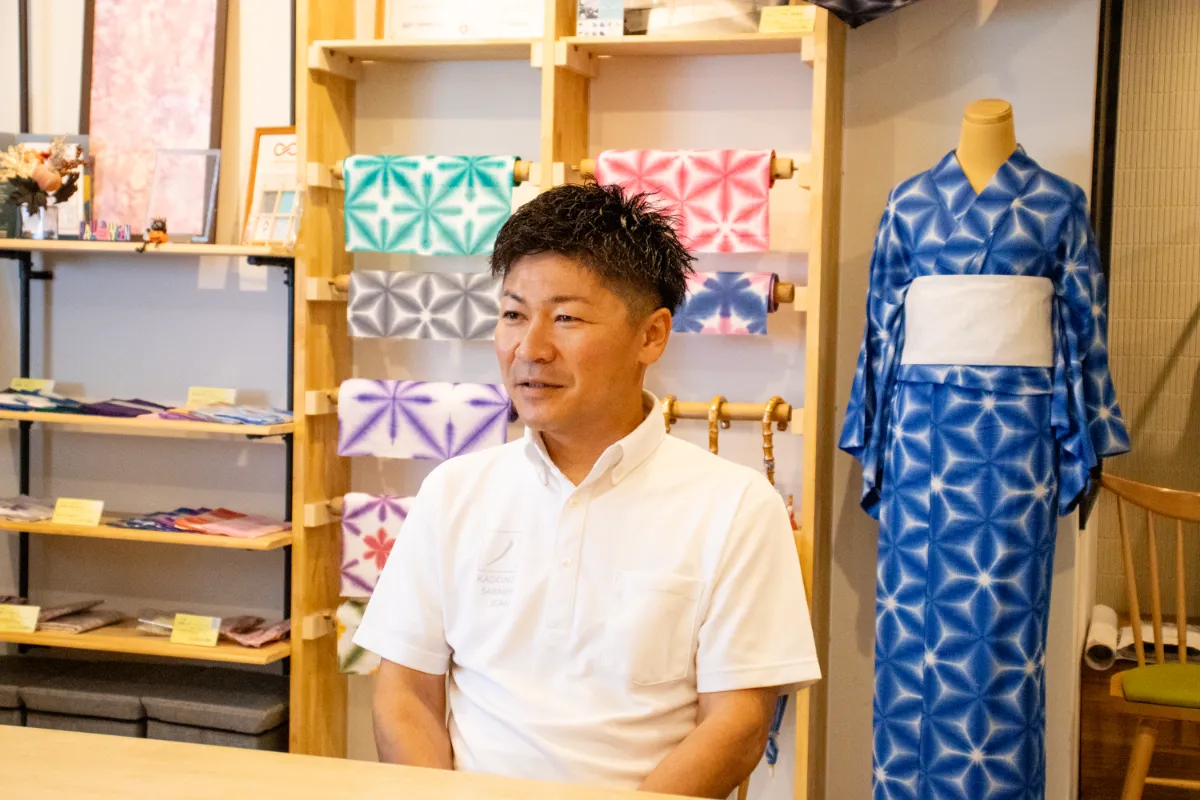
When President Kadono joined the business about 20 years ago, most revenue came from processing fees. Today, however, roughly 90% of sales come from their own branded products. Among these are several in-house brands, such as MUSUBI, which offers women’s apparel and homewear made from Wazarashi fabric—proposing new value by fusing tradition with modern design.
“We wanted to pour our craftsmanship into our own creations.”
—This vision has gradually reshaped the company.
An “Authentic” Texture Born from Inefficiency
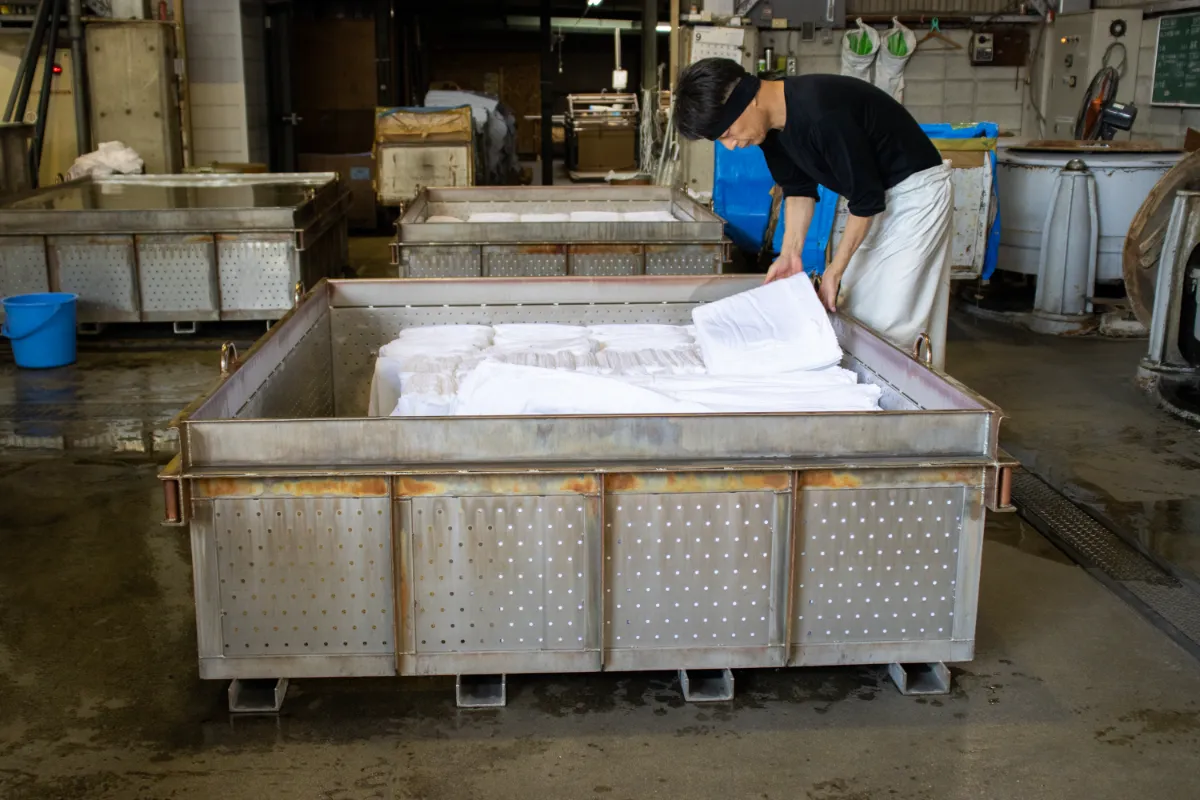
The sarashi process removes impurities such as oils, cotton waste, and sizing (nori) from raw cotton and whitens the fabric. Compared to the modern Yozarashi (Western bleaching) method, Wazarashi is remarkably time-consuming. While Yozarashi can be completed by automated refining machines in just 40 minutes, Wazarashi takes two to three days—requiring time for kiln loading, steaming, and unloading. Through this slow and deliberate process, the natural softness, breathability, and absorbency of cotton are fully brought out.
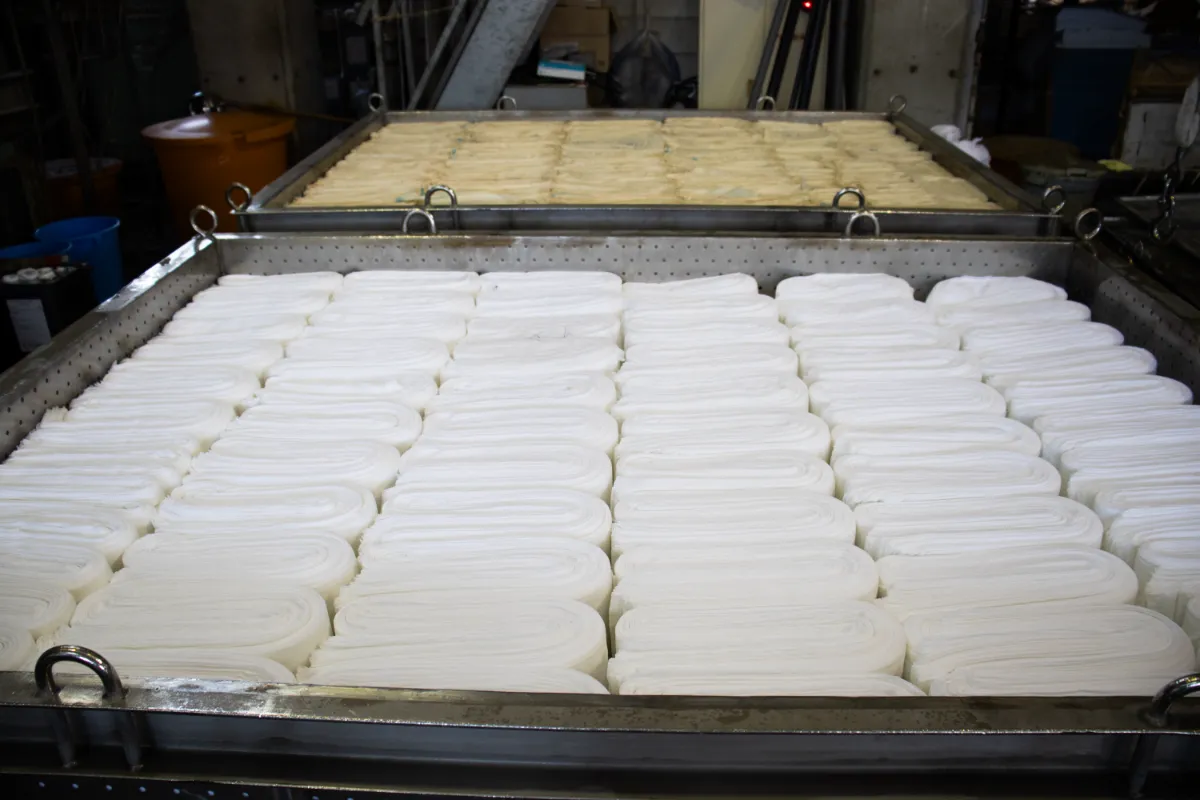
During bleaching, the fabric is packed into large metal baskets—a task that reveals the artisan’s skill. If packed too tightly or too loosely, the chemical solution won’t circulate evenly. Experienced artisans determine the perfect density purely by the feel of their hands.
This series of deliberate, seemingly inefficient steps is precisely what creates the gentle texture unique to Wazarashi.
Modern Colors Shaped by Intuition and Spirit
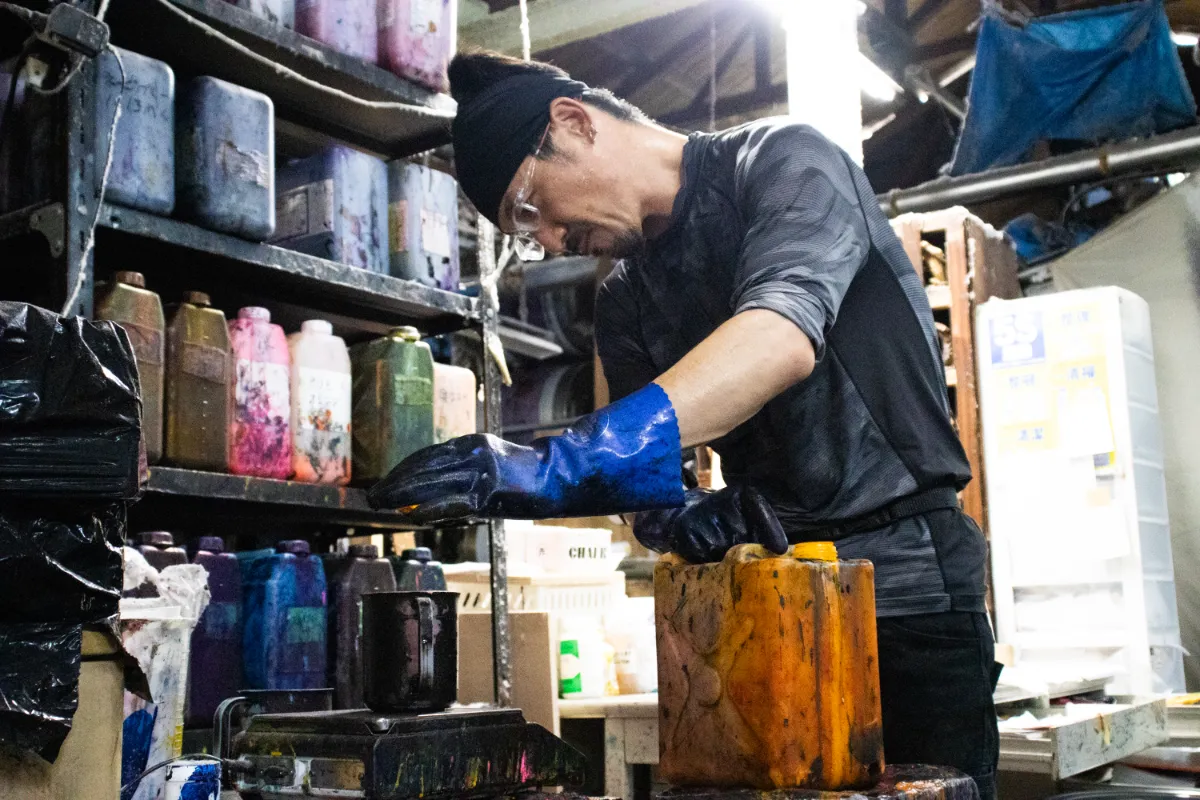
Another of Kadono Sarashi Some’s strengths lies in color creation.
Screen printing is done entirely in-house, and the person solely responsible for color formulation is the president’s elder brother, Kazuaki Kadono, the company’s senior managing director. A former dental technician, he has spent more than a decade self-studying and experimenting to establish what they call the “Colors of Kadono.”
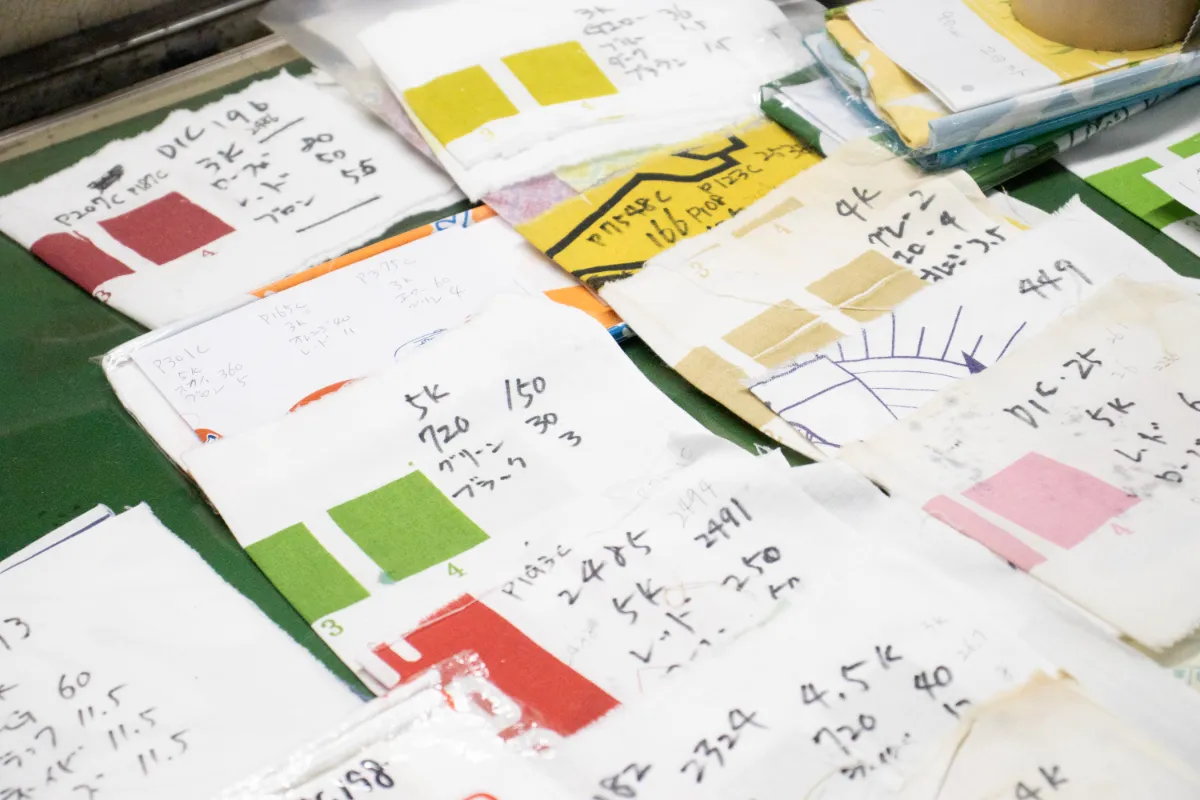
Color formulation is a delicate process of 0.1-gram adjustments. Because pigments appear differently on fabric than on paper, he continuously fine-tunes hues—reading gloss, translucence, and the balance of tones.
“We may be young in the history of screen printing, but we won’t lose to the long-established dye houses.” His quiet determination fuels his daily work.
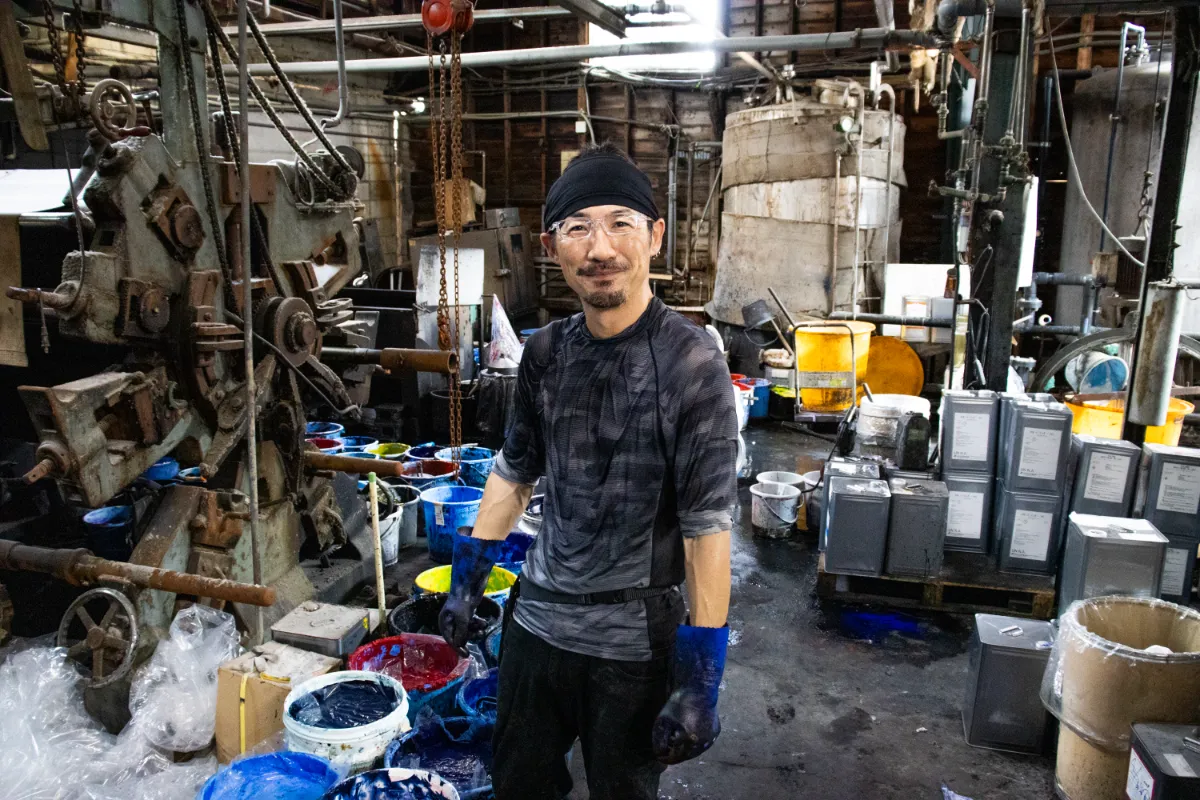
Besides his brother, the factory manager is a former classmate of the president. Together, this younger generation—deeply rooted in the local community—forms the heart of the company. The warmth of their workshop atmosphere is directly reflected in the products they create.
“tututata” — A Brand to Brighten Daily Life
To pass tradition on to the next generation, people must first experience it.
From this idea was born the factory brand tututata. The name comes from the Japanese words tsutsumu (to wrap) and tatamu (to fold), gestures that symbolize Japan’s fabric culture.
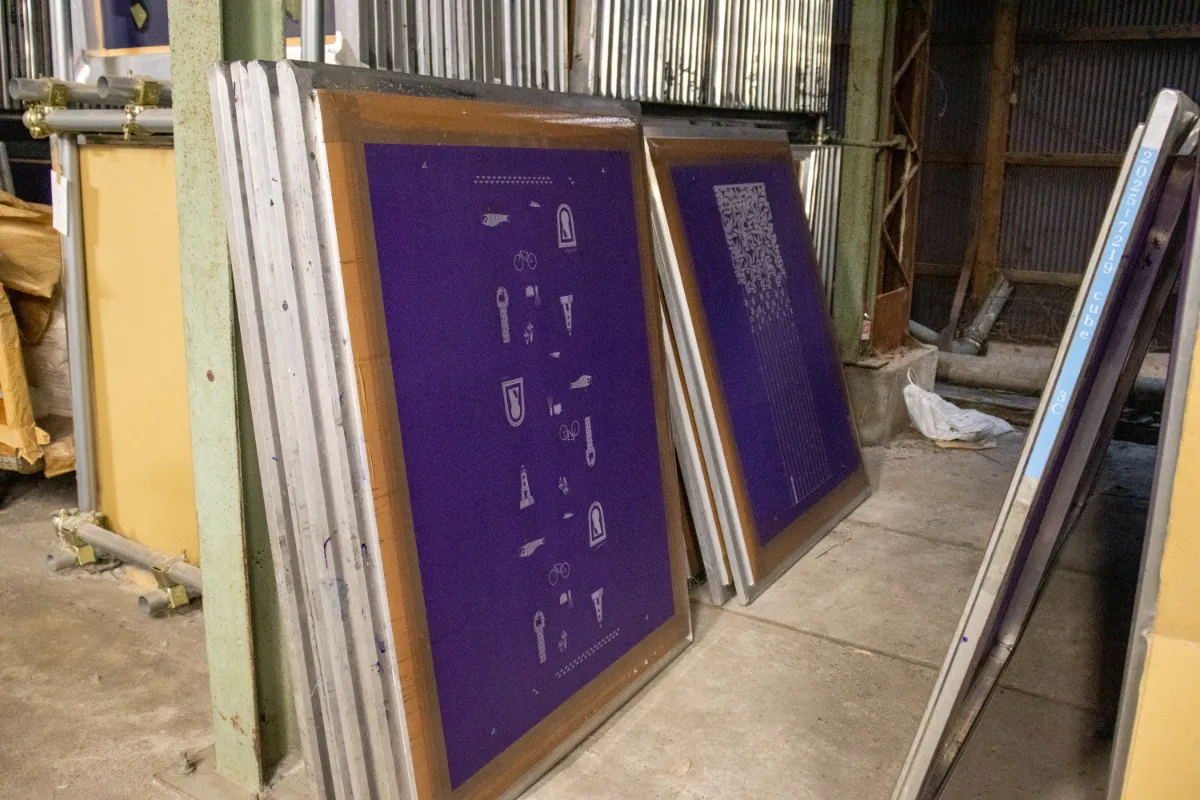
tututata combines modern, Scandinavian-inspired textile design with the soft texture of Wazarashi. It uses a premium 20-count Tokujo-Sori fabric—thicker than the typical 30-count Oka fabric used for tenugui—enhancing both absorbency and durability.
Each piece is finished with fine hashikagari (overlock) stitching, creating a sturdy item that becomes softer and more familiar with every use.
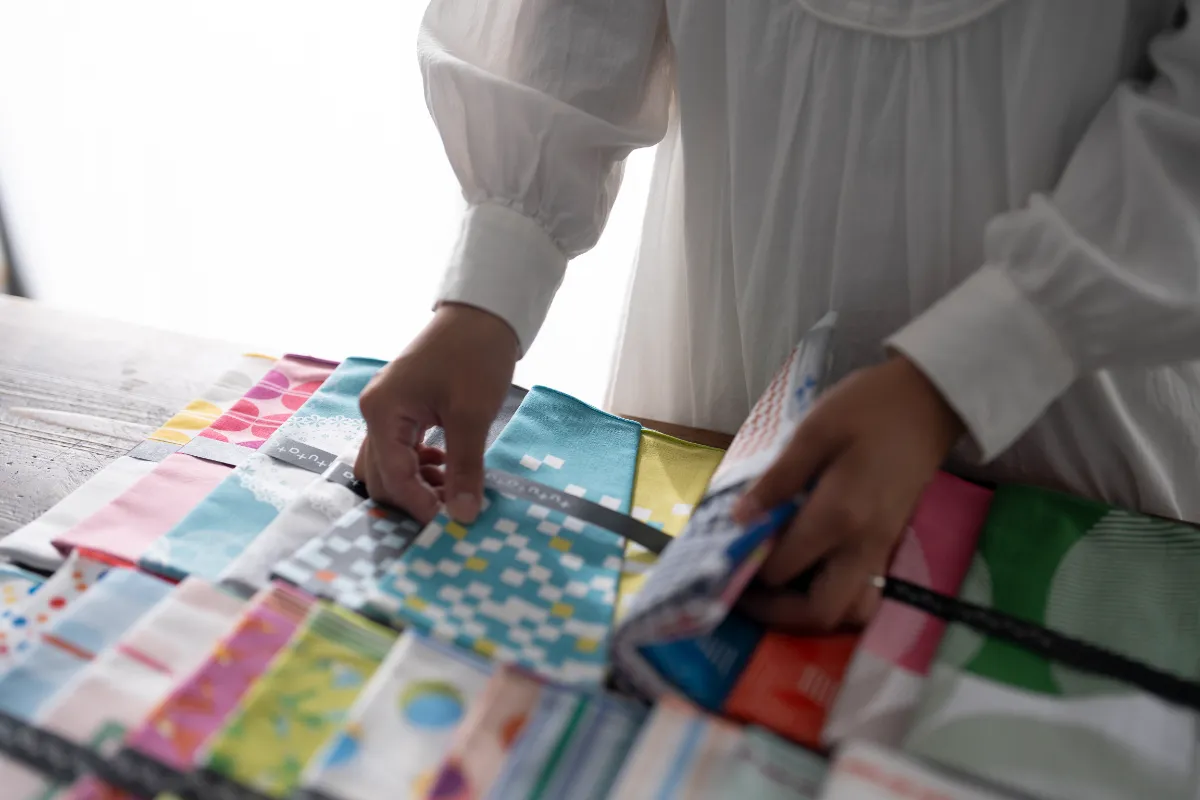
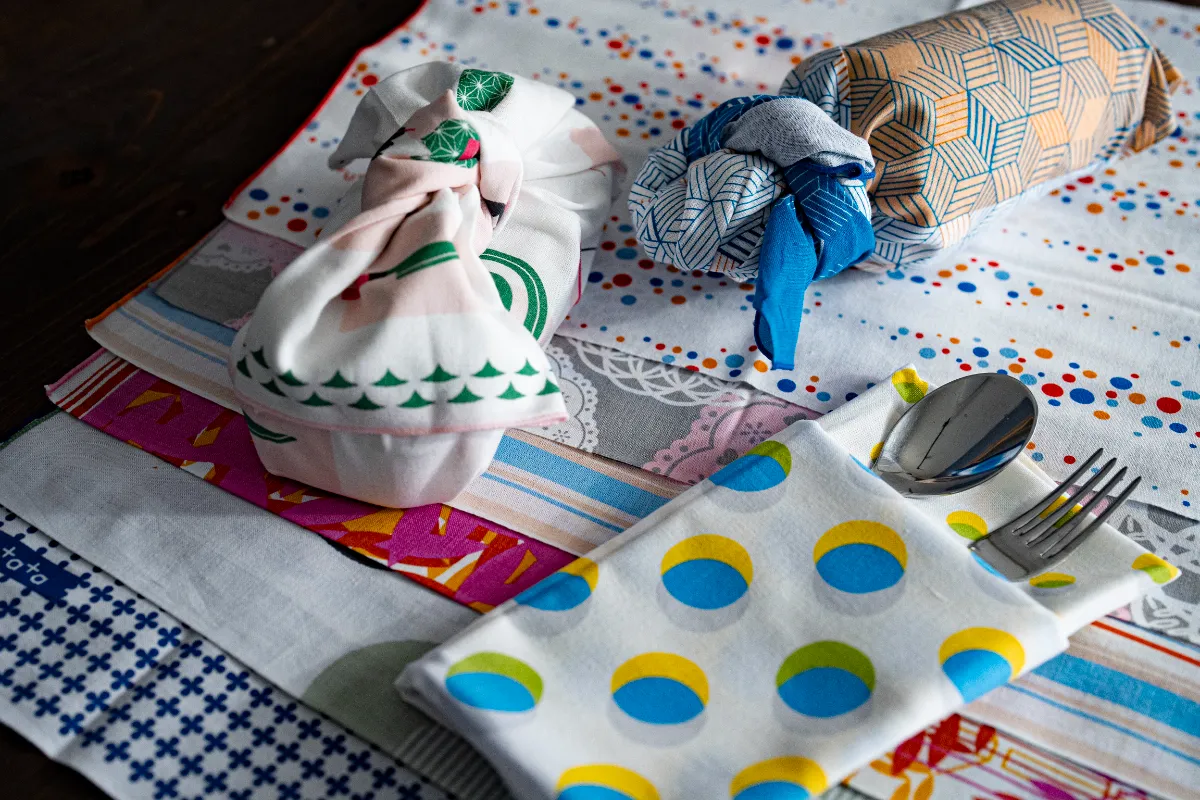
Each product comes with a leaflet called the “Tenugui Recipe,” suggesting ways to enjoy it in everyday life—as a handkerchief, lunch cloth, kitchen towel, or fashion accessory.
Transforming tenugui into a “tool for living,” tututata expands the possibilities of Wazarashi for modern life.
Creating Fans Through Experience
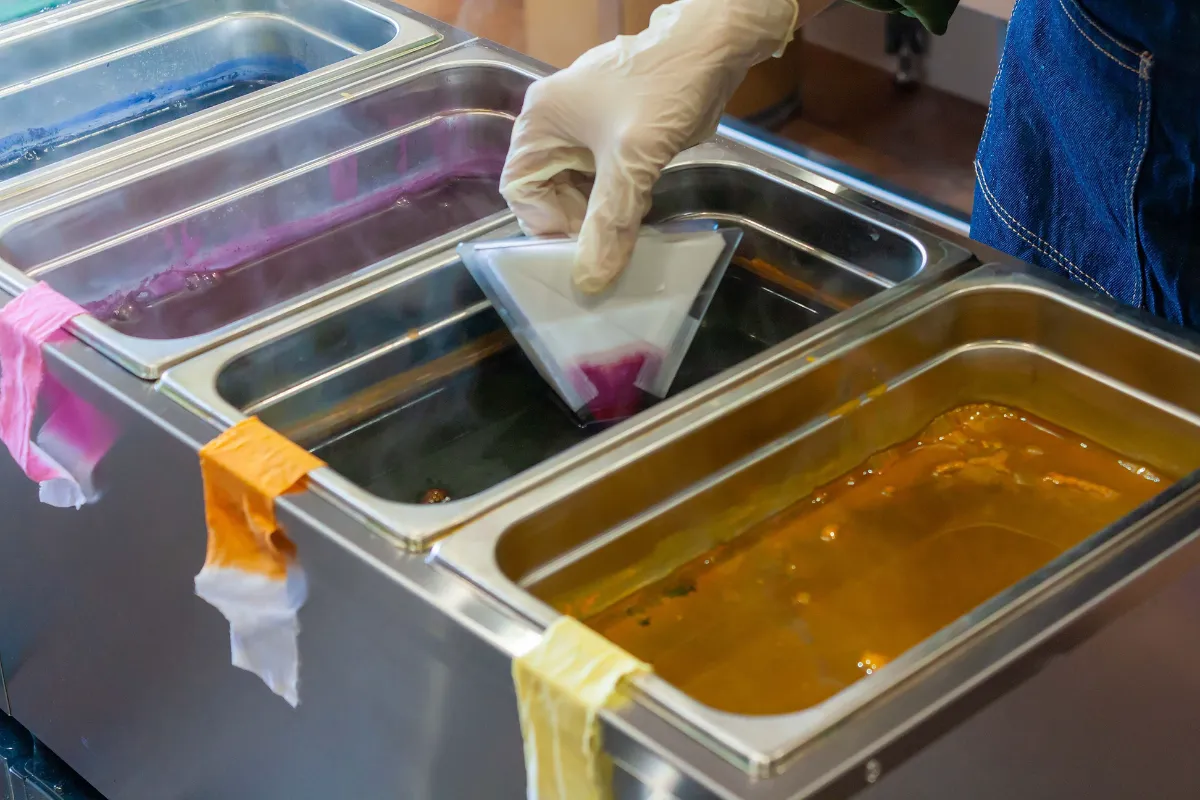
Kadono Sarashi Some actively hosts hands-on dyeing workshops.
In collaboration with local businesses and organizations, they once held a “Tenugui Fest” to share the appeal of tenugui. Among the various events, the dyeing experience corner was especially popular—people lined up for over an hour to participate.
Encouraged by this success, they opened a permanent studio within the company in March 2021. Families and students can now enjoy dyeing fabric themselves, and the program attracts visitors from abroad, including school groups from Hong Kong and the United States.
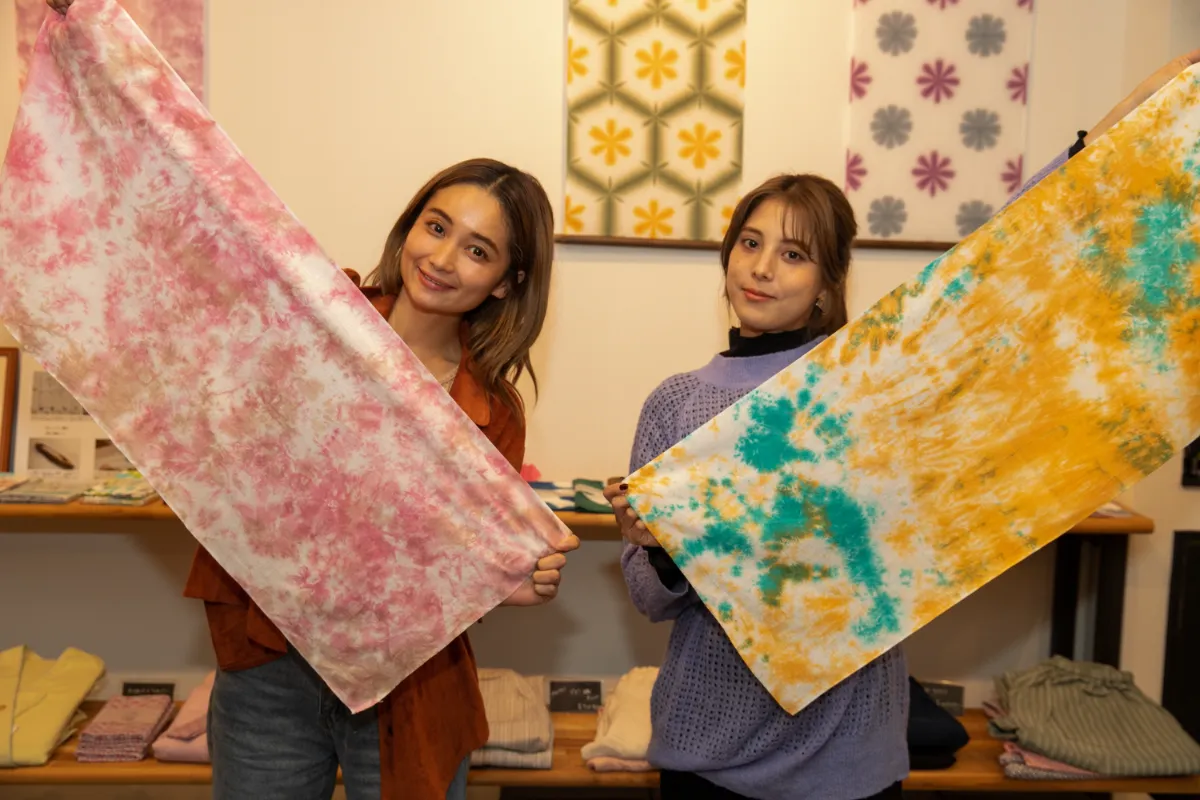
By letting people touch Wazarashi, feel its texture, and fall in love with it through direct experience, the company aims to build a fanbase that will carry the tradition into the next 100 years.
Towards a 100-Year Brand — Dyeing the Future from Sakai
As Kadono Sarashi Some approaches its 100th anniversary, President Kadono continues to take on new challenges while upholding the inherited techniques of his predecessors.
“I want this to be the company that represents Sakai when it comes to tenugui.”
The company is also focusing on hiring skilled personnel and training the next generation of artisans—steadily building a system for sustainable craftsmanship.
Rather than simply “preserving” tradition, their goal is to evolve it. This spirit is the driving force behind Kadono Sarashi Some.
When skills refined over decades meet new sensibilities, Wazarashi is reborn as the “fabric of the future.”
The craft of Kadono Sarashi Some—woven from the passion of its people—continues to be handed down quietly yet powerfully, coloring the future with the power of dyeing.