
2025/10/31
Takeda Sarashi Kojo Inc. 2025
The Future of Wazarashi: Where Tradition and Innovation Intertwine — Takeda Sarashi Kojo Inc. Proposes a New Future for “Good Old Things”
Since its founding in 1911 (Meiji 44), Takeda Sarashi Kojo Inc.—a traditional cotton bleaching company based in Sakai, Osaka—has carried on the heritage of wazarashi, Japan’s time-honored bleaching technique, for over 110 years. Once, more than 200 producers thrived in the Izumi region, but today, only six factories specializing in wazarashi remain across Japan. Amid this harsh reality, Takeda Sarashi Kojo Inc. has transcended its role as a traditional processor, launching its own brand Sasasa to breathe new life into the craft and integrate it into modern lifestyles.
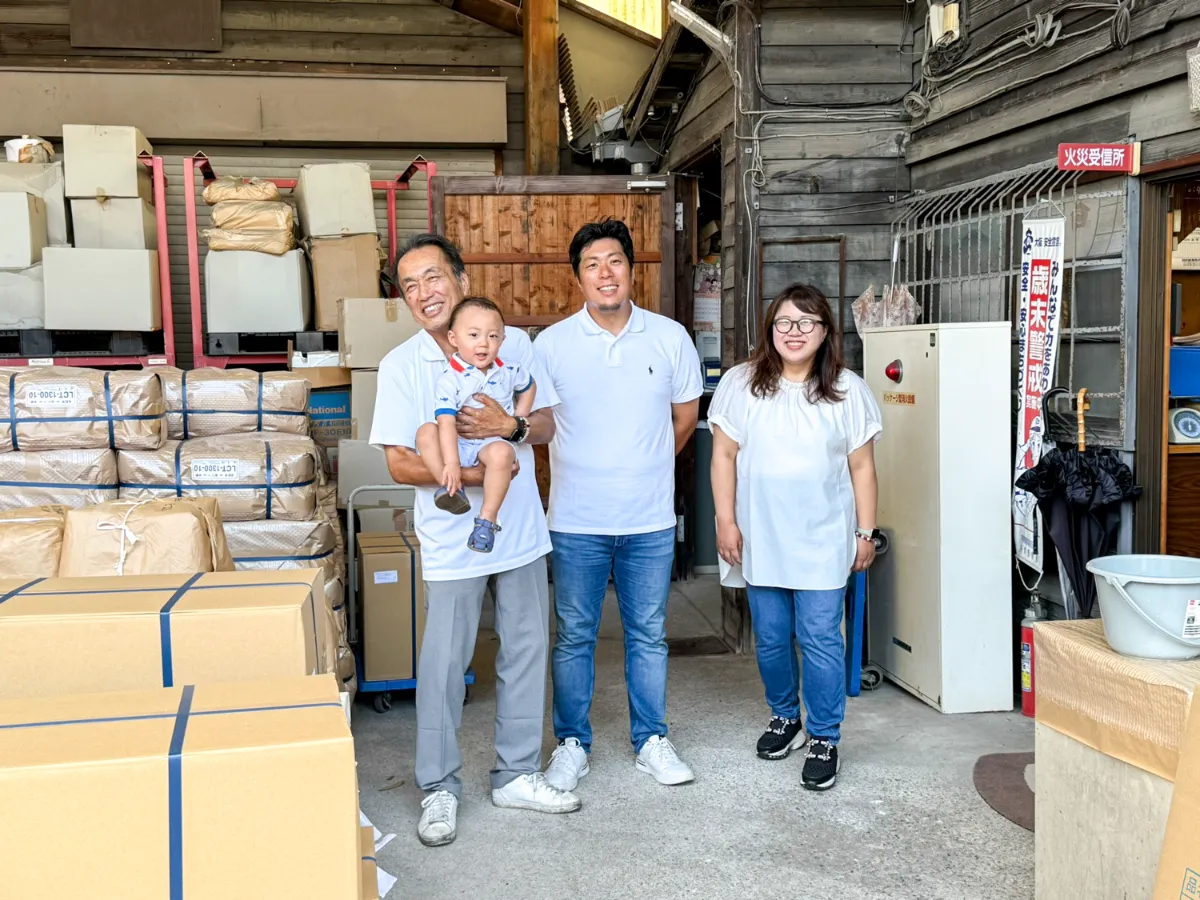
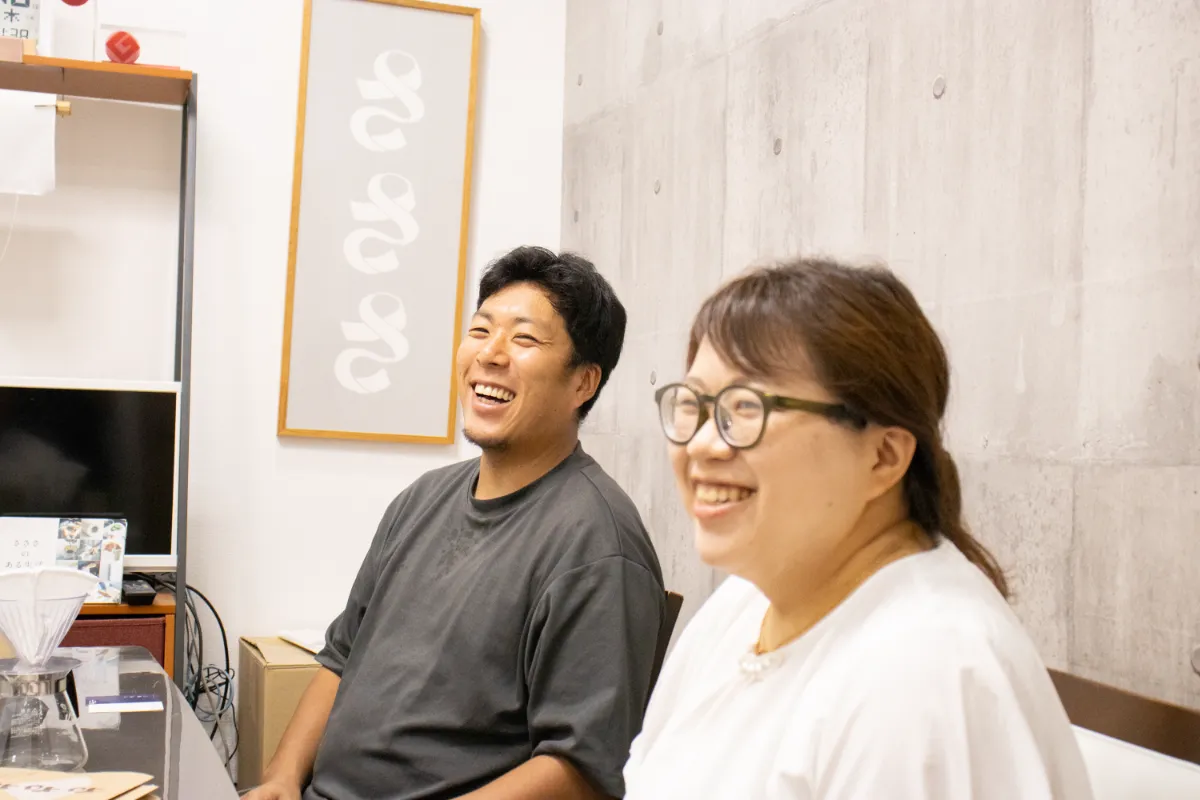
From left: Fourth-generation President Kiyotaka Takeda, his grandson, Shinichi Takeda, Managing Director, and Maiko Takeda from the Sasasa business division.
Weaving Innovation, Inheriting Tradition
While safeguarding its traditional techniques, Takeda Sarashi Kojo Inc. has skillfully adapted to changing times by introducing modern machinery and evolving its production systems.
Fourth-generation president Kiyotaka Takeda collaborated with his father (the previous president) and machinery manufacturers to co-develop and install Japan’s first mechanically controlled “Kaku-so-gama” (square-vat kiln). With his scientific background, President Takeda even contributed to the programming process, transforming what had once relied entirely on artisan intuition into a system capable of finely controlling production volume and timing while maintaining exceptional quality.
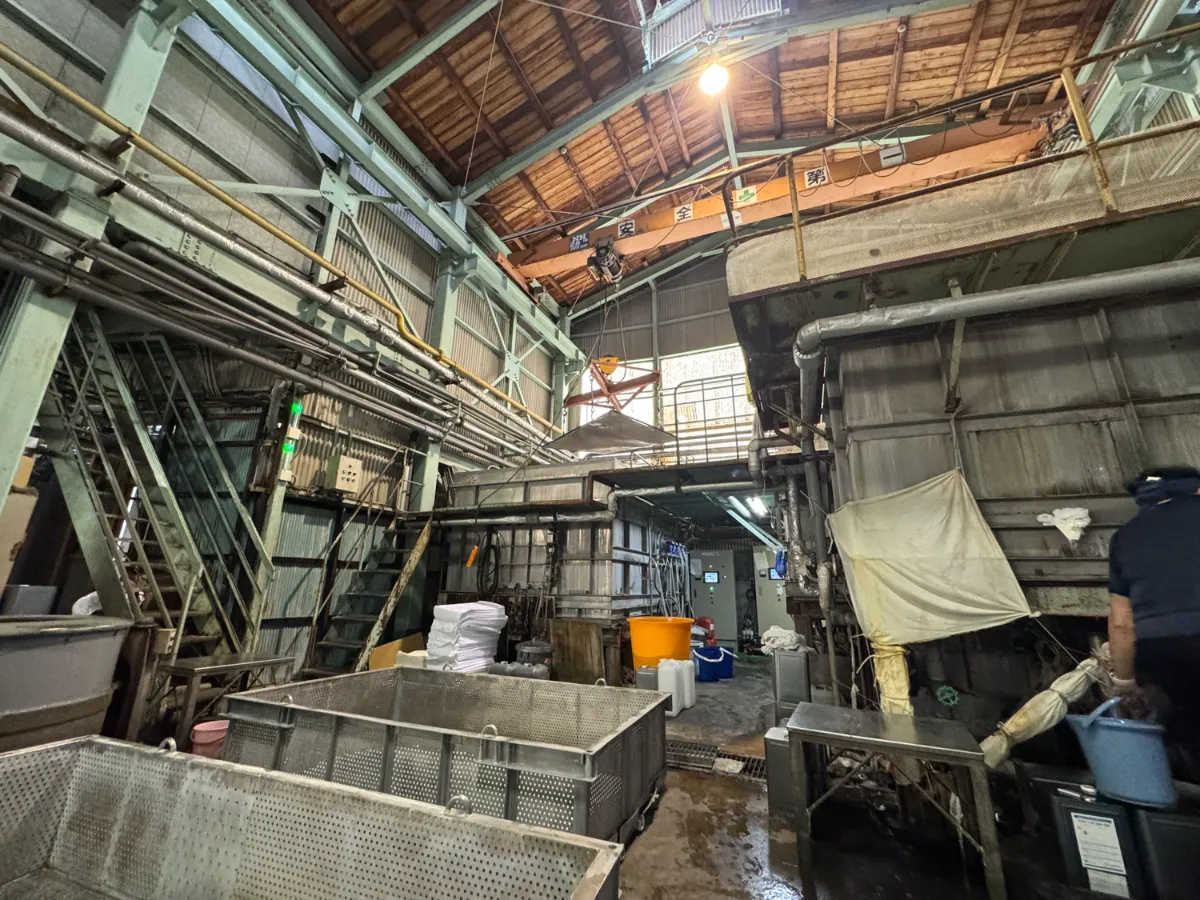
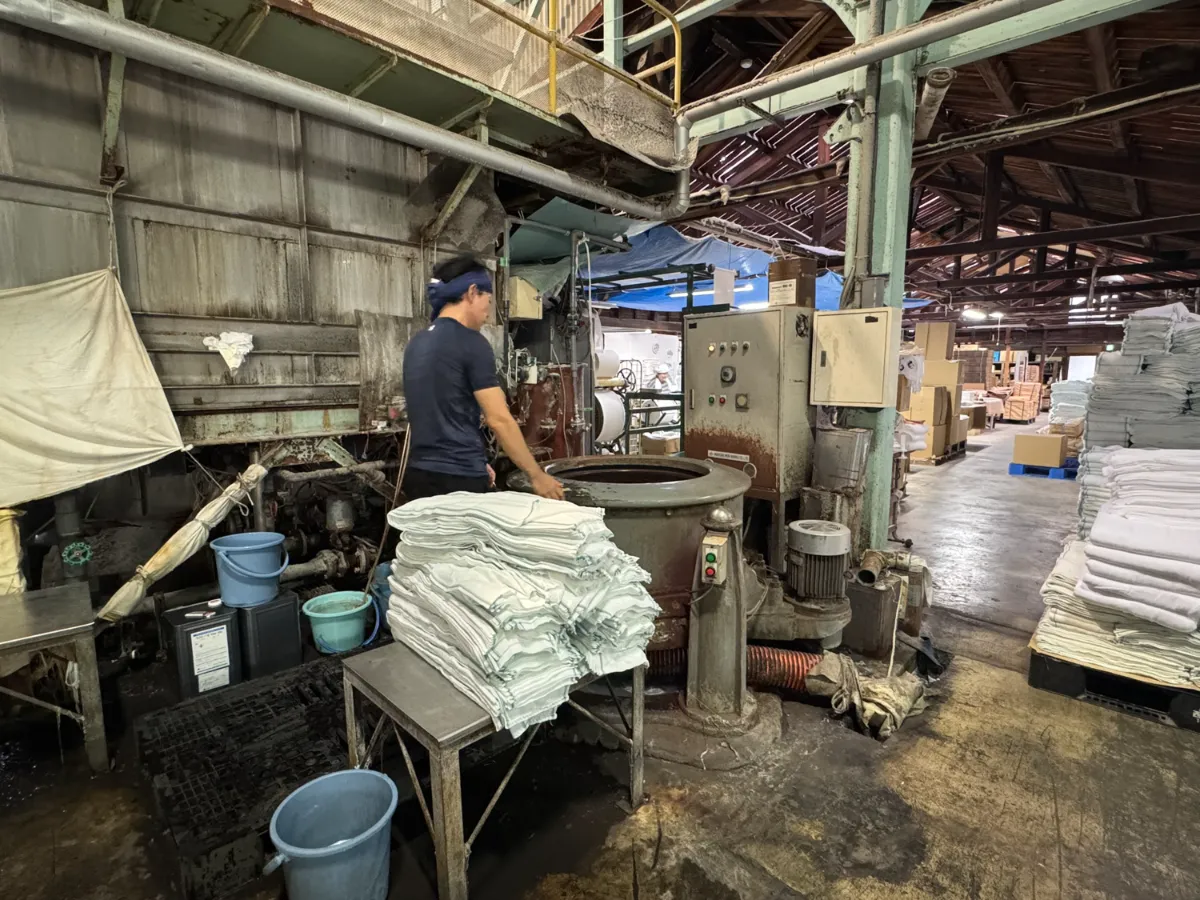
A defining strength of Takeda Sarashi Kojo Inc. lies in its refined technique of finishing fabric through only “scouring and desizing” (seiren / norinuki), without the bleaching stage. By avoiding fluorescent agents and bleach altogether, the company preserves the cotton’s natural softness and kinari (ecru) tone, producing fabric gentle and safe enough to touch the mouth. This unique know-how, cultivated over many years, forms the basis of the Sasasa product line.
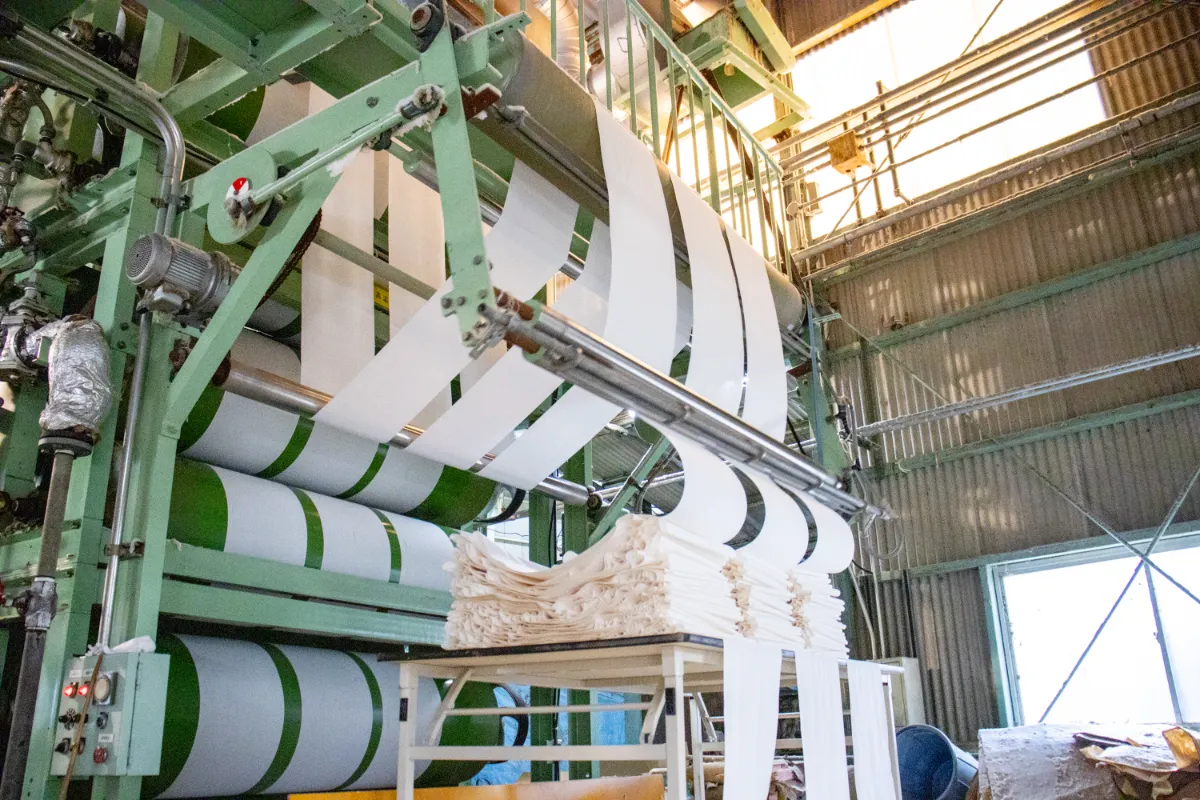
Inside the factory, one of the most impressive sights is the powerful movement of the Tenter machine, which stretches the bleached fabric to a uniform width. The tenter grips the fabric’s edges with clips, stretches it with steam, dries it, and cools it to set the shape. Takeda Sarashi Kojo Inc. operates rare machines capable of handling both narrow and wide fabrics—meticulously maintained each day to ensure flawless operation.
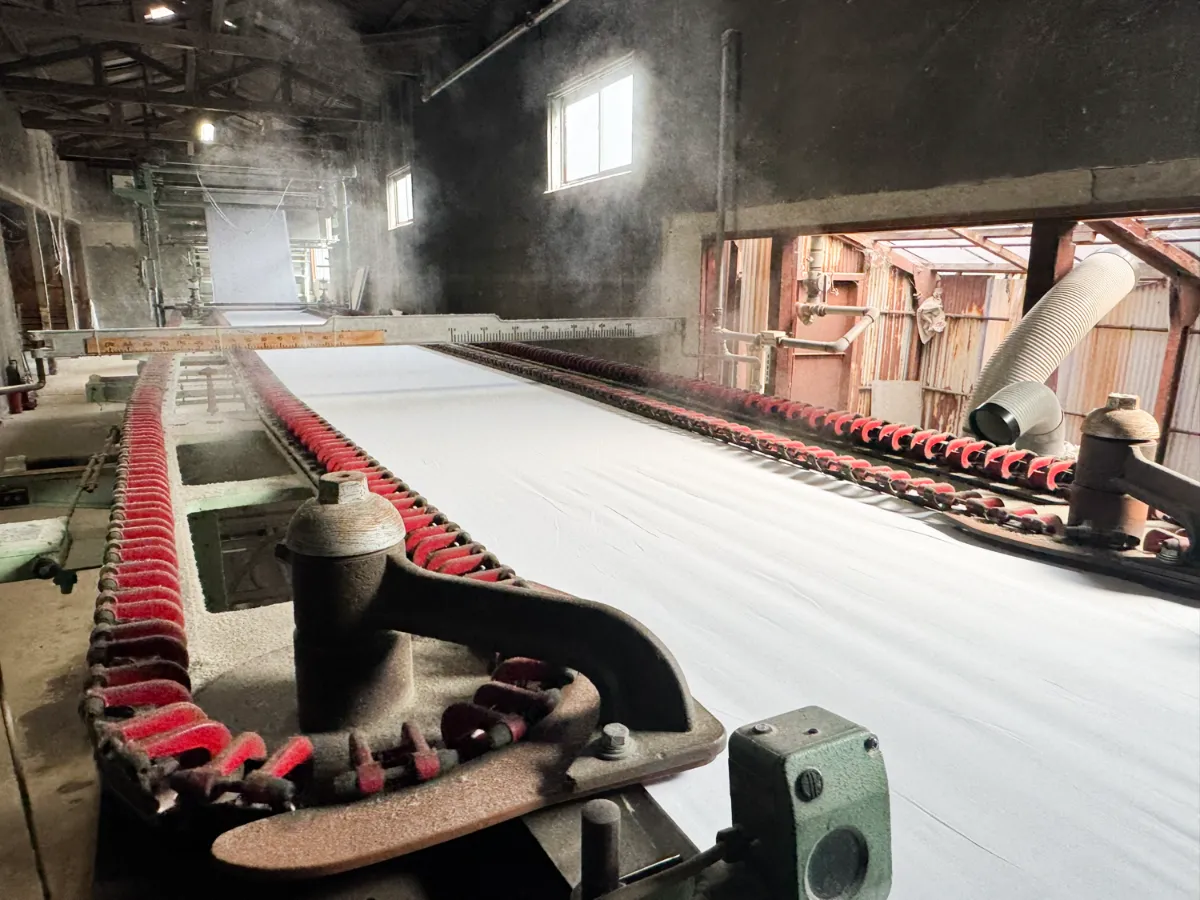
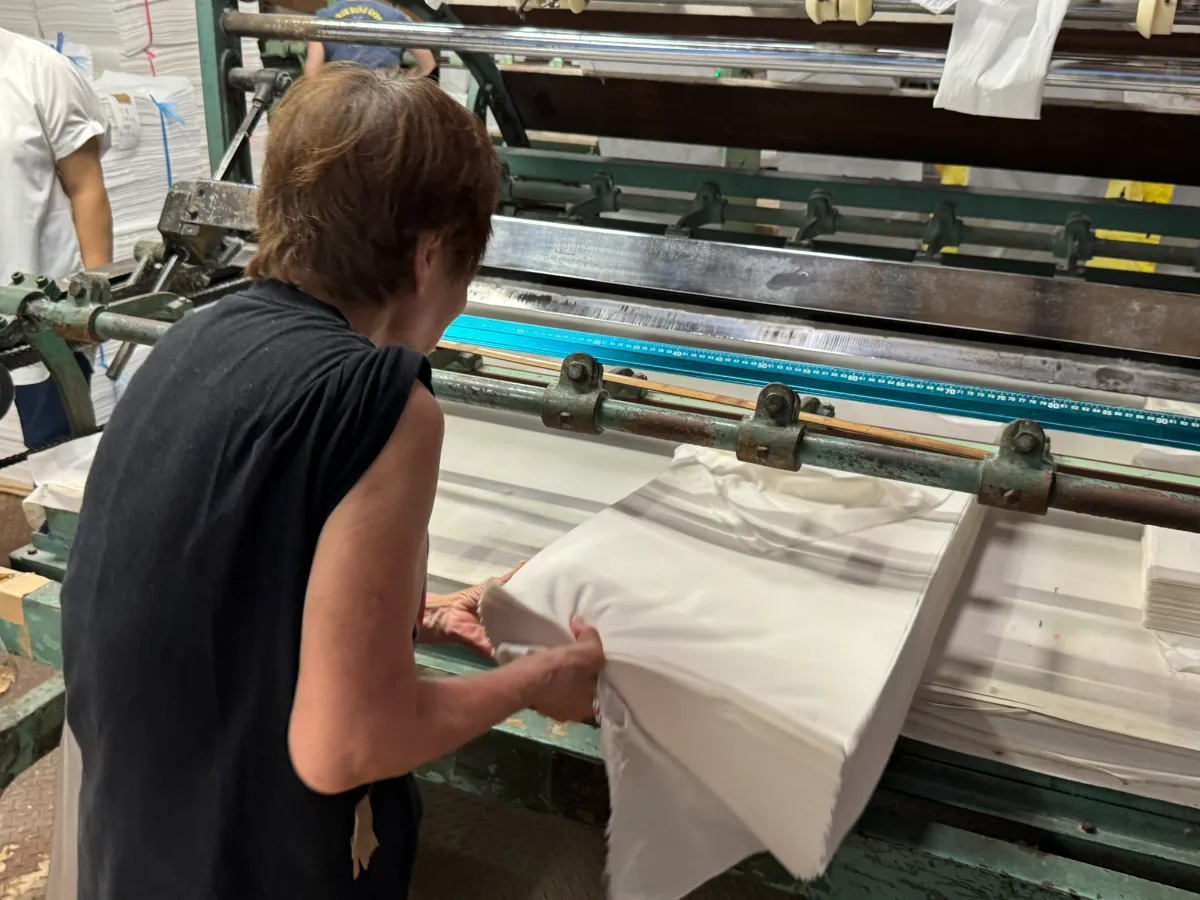
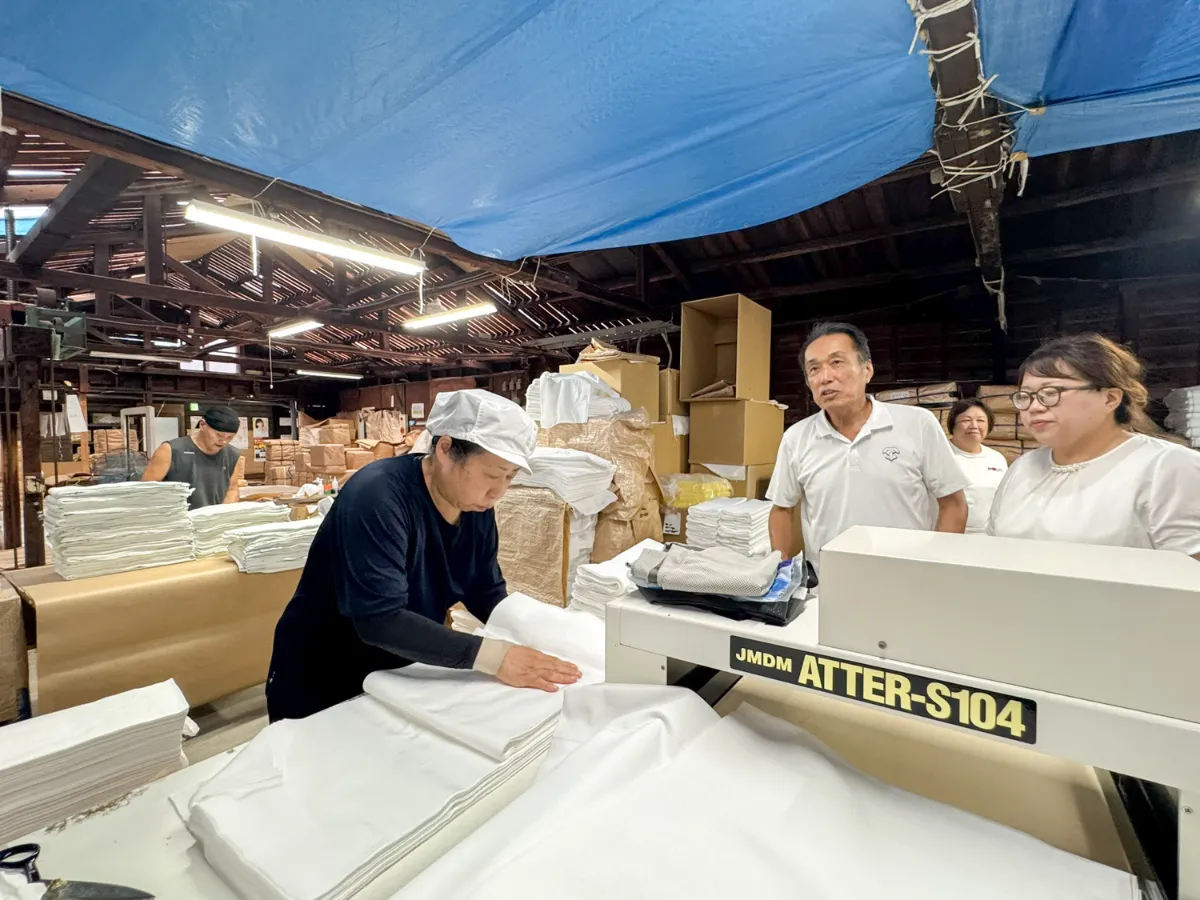
Veteran artisans who have known Managing Director Takeda since his childhood.
Because It’s “All-Purpose,” It Needs a Purpose
In the textile industry, sarashi (bleached cotton) has long been called an “all-purpose fabric.” Yet precisely because of that versatility, its specific features and uses were often poorly understood.
Fifteen years ago, the company collaborated with a designer to launch “Tenshi no Koromo” (Angel’s Garments) baby underwear, hoping to bring wazarashi into daily life—beyond kimono shops and department stores. However, in a market saturated with low-cost goods, they struggled to convey the true value of wazarashi.
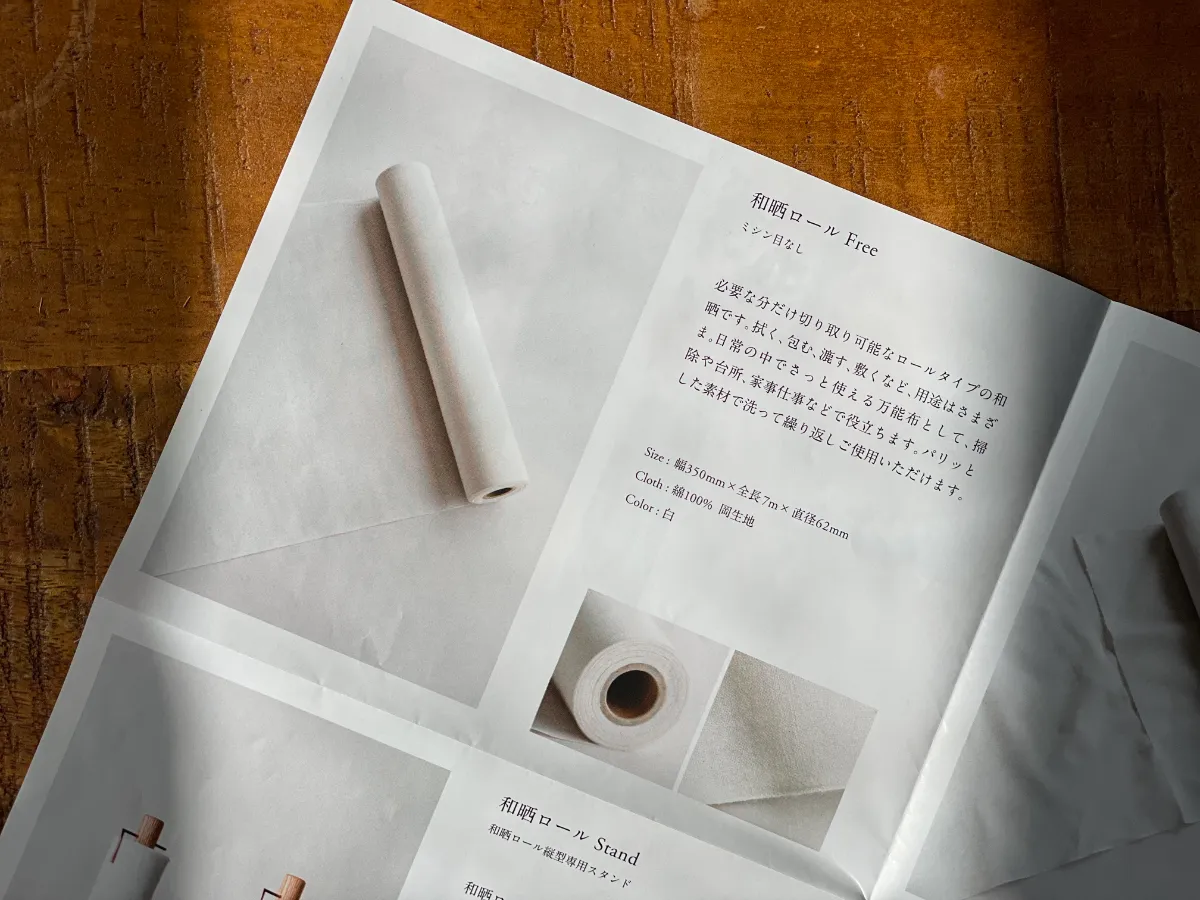
The turning point came with advice from a business consultant: “First, you need a product that lets people experience wazarashi itself.” Acting on that suggestion, the company shifted from selling traditional 10-meter bolts (tanmaki) to convenient rolls that anyone could easily pick up. In 2020, Takeda Sarashi Kojo Inc. made a decisive pivot toward becoming a factory brand.
Special attention was given to packaging. Believing that “No matter how good a product is, it means nothing if people don’t pick it up,” the team created ten different logo and package variations to express the brand’s worldview.
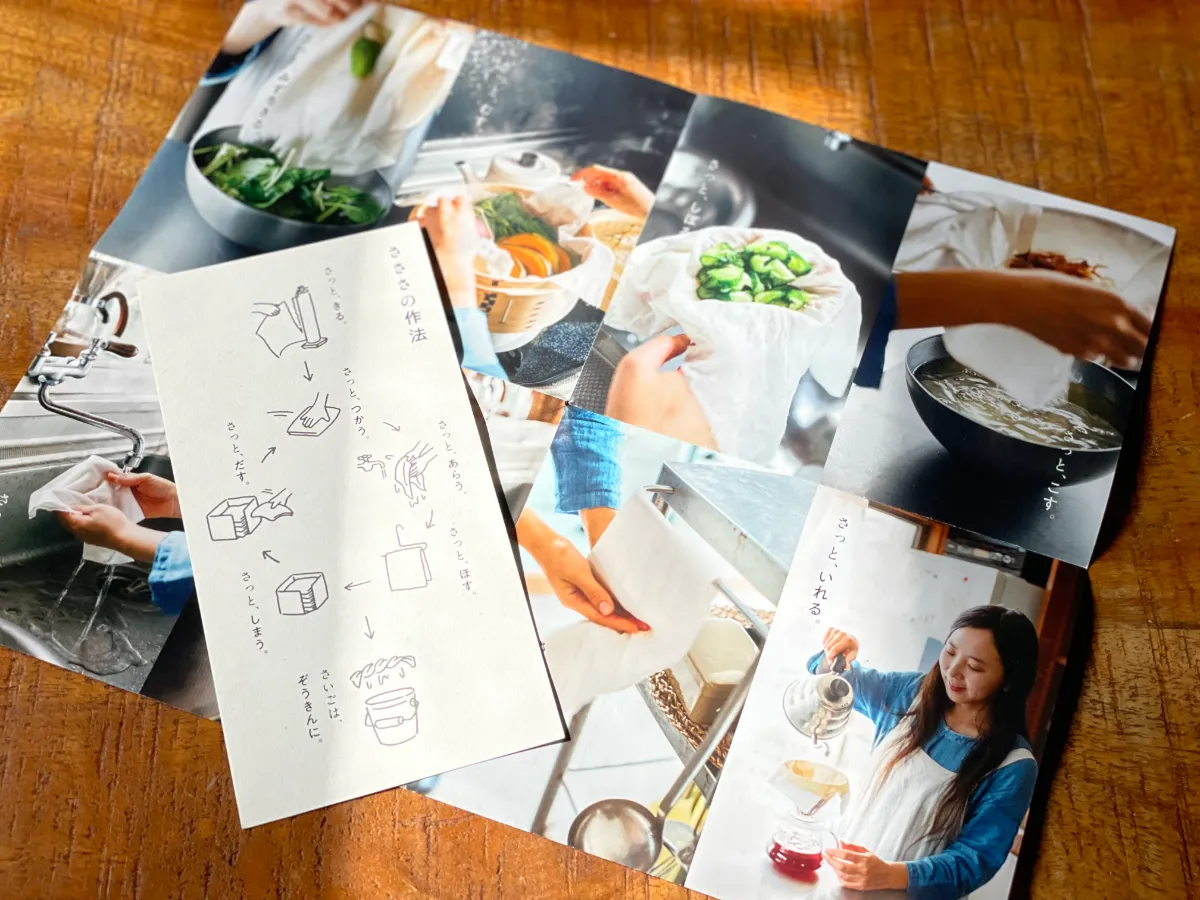
The brand name Sasasa comes from the phrase “sasasa-tto tsukaeru sarashi”—“sarashi you can use quickly and easily.” The fabric’s uses are endless: straining dashi broth, draining vegetables, steaming dishes, wiping a baby’s skin, or using it as a gentle face cloth. When it finally wears out, it can still serve as a cleaning cloth. This relatable practicality quickly gained attention, especially among younger generations who said, “If it’s that easy to use, I want to try it.”
From Discovery to Development: The Coffee Filter
During a photo shoot demonstrating Sasasa in daily life, a staff member happened to brew coffee with it—and discovered it produced an exceptionally smooth and flavorful cup. This accidental find sparked a new product idea.
At department store events, when staff introduced it with the line “You can also brew coffee with it,” the response was overwhelming—particularly among male customers. The company soon began developing a dedicated coffee filter.
To meet the expectations of coffee lovers worldwide, Takeda Sarashi Kojo Inc. sought supervision from Overview Coffee Japan. Following expert guidance, they optimized every aspect—from fabric weave to filter shape and stitching—for ideal extraction.
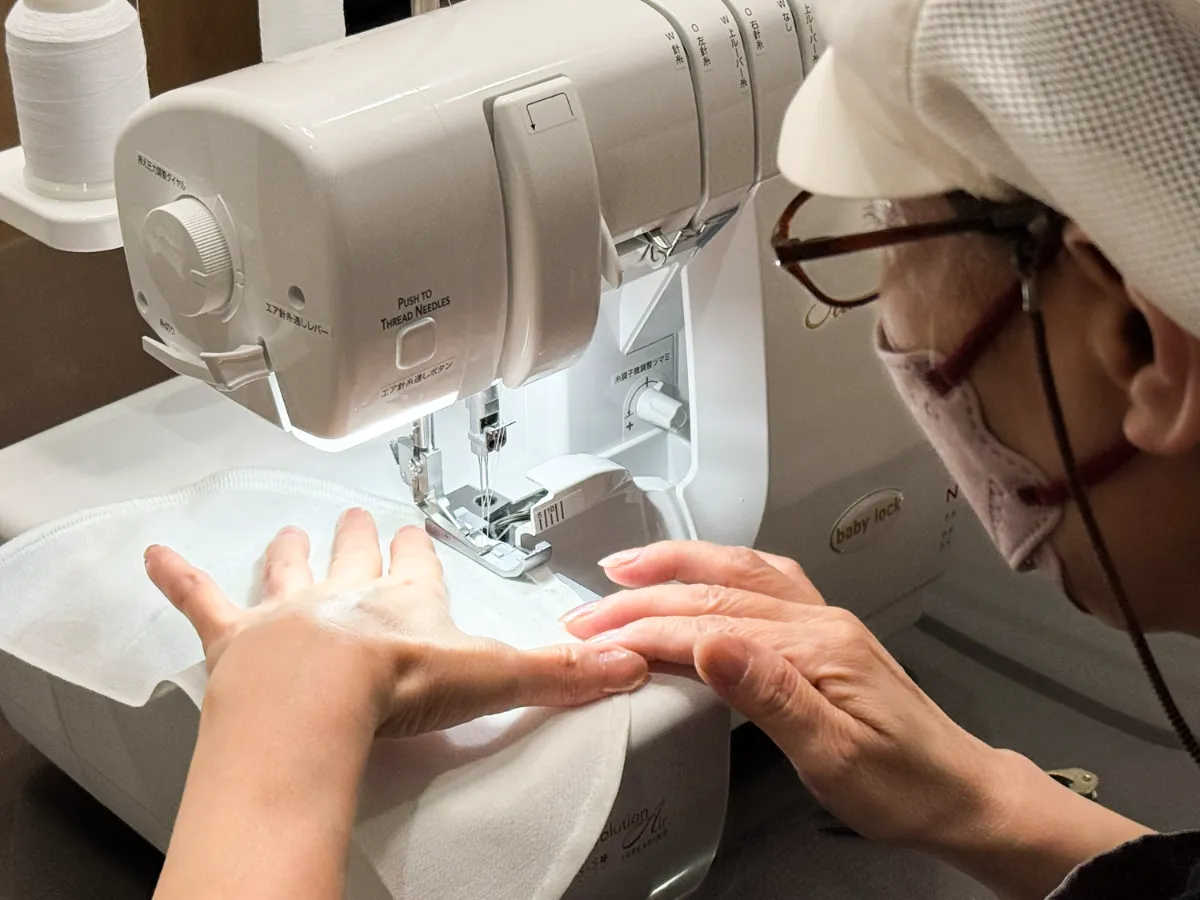
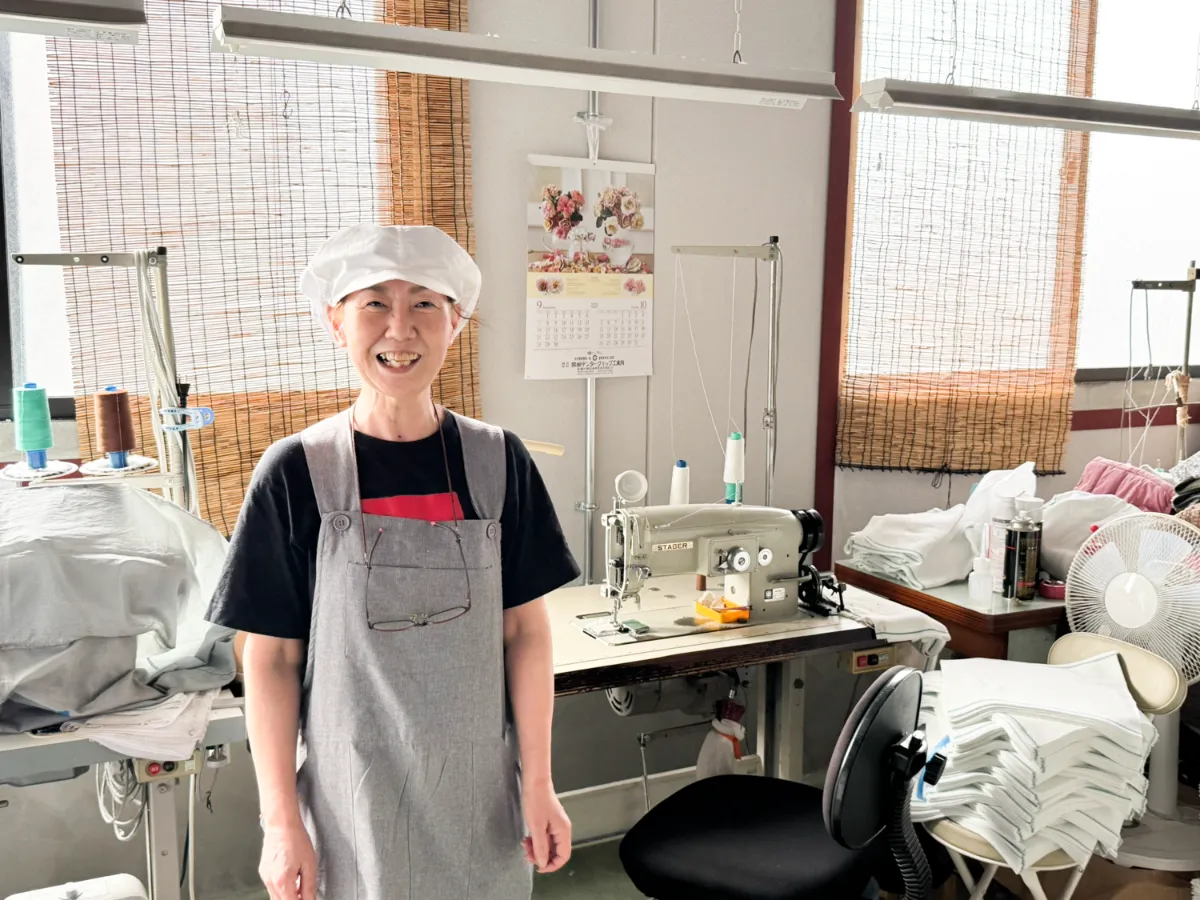
Each filter is hand-sewn by three artisans, who continue refining details like seam allowance and form, constantly asking themselves, “How can we make it even better?”
The charm of the wazarashi coffee filter lies in the mellow, rounded flavor it produces. It allows the natural oils of the coffee beans—often lost with paper filters—to pass through, bringing out a deep richness and full-bodied taste.
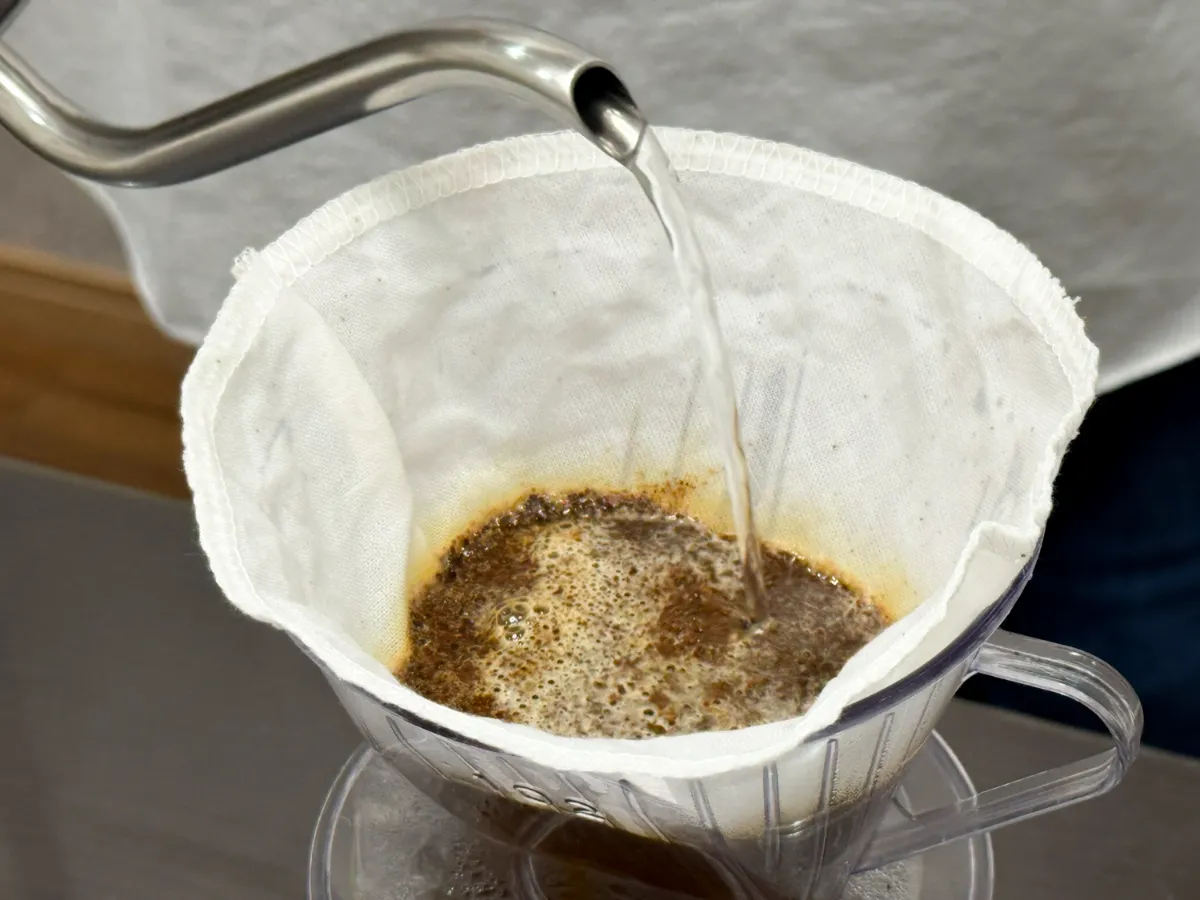
Another unique appeal is the sense of “aichaku”—emotional attachment—that develops over time. The unbleached kinari (ecru) fabric gradually deepens in color with each use, letting you enjoy the process of nurturing your very own filter. It is a product that perfectly embodies the Sakai Kitchen philosophy: “To love your tools is to love your life.”
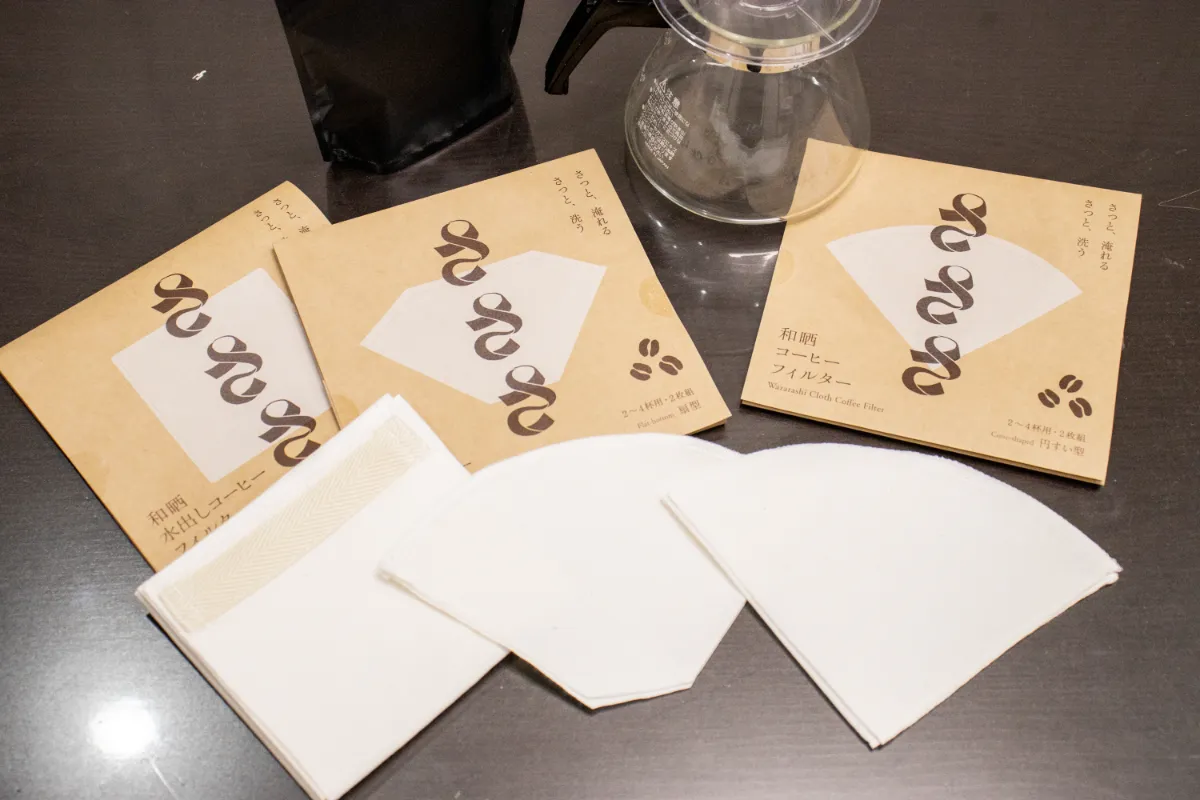
From left: Cold brew / Flat-bottom / Cone-shaped
Carrying the Future of Wazarashi from Sakai to the World
Takeda Sarashi Kojo Inc. aims to share the beauty of wazarashi both in Japan and around the world. Domestically, the company is steadily working toward its goal of expanding to retail stores in all 47 prefectures. Internationally, it has already begun sales in Taiwan and is looking toward environmentally conscious markets in Europe and Scandinavia.
“Our top priority is to make people aware of wazarashi’s quality,” says Managing Director Shinichi Takeda. “Beyond that, we hope to spark a renewed appreciation for Japan’s good old things—like the textile industry, tenugui hand towels, and yukata cotton robes.”
As traditional industries face crossroads in modern times, Takeda Sarashi Kojo Inc. strives to create “an era where the old feels new and inspiring.” By blending artisanal skill, scientific logic, and innovative thinking, the company continues to shape the future of wazarashi—a craft where heritage and creativity meet.