Recommended Use of a Tenugui
In ancient times, tenugui (washcloth) were used as accessories in Shinto rituals. With the rise of cotton cultivation in the Edo Period, commoners began to use tenugui as well. They were used in a variety of ways including wiping hands and bodies, wearing on heads to block the sun or protect from dust, functioning as bandages, and repairing the maetsubo (front part) of zouri (sandals).
Tenugui, valued for their quick-drying properties, were used in public baths. Today, they are recommended for washing faces and bodies, as their fine fibers gently and effectively remove dirt without causing much friction for smoother skin. Lightweight and compact, they are more convenient to carry in your bag than handkerchiefs or mini towels. Although they are durable, the fabric can be easily stripped for emergency first aid. Being larger than a standard face towel, tenugui can also be used to wrap items or be worn around the head or neck, making them practical in the case of disasters.
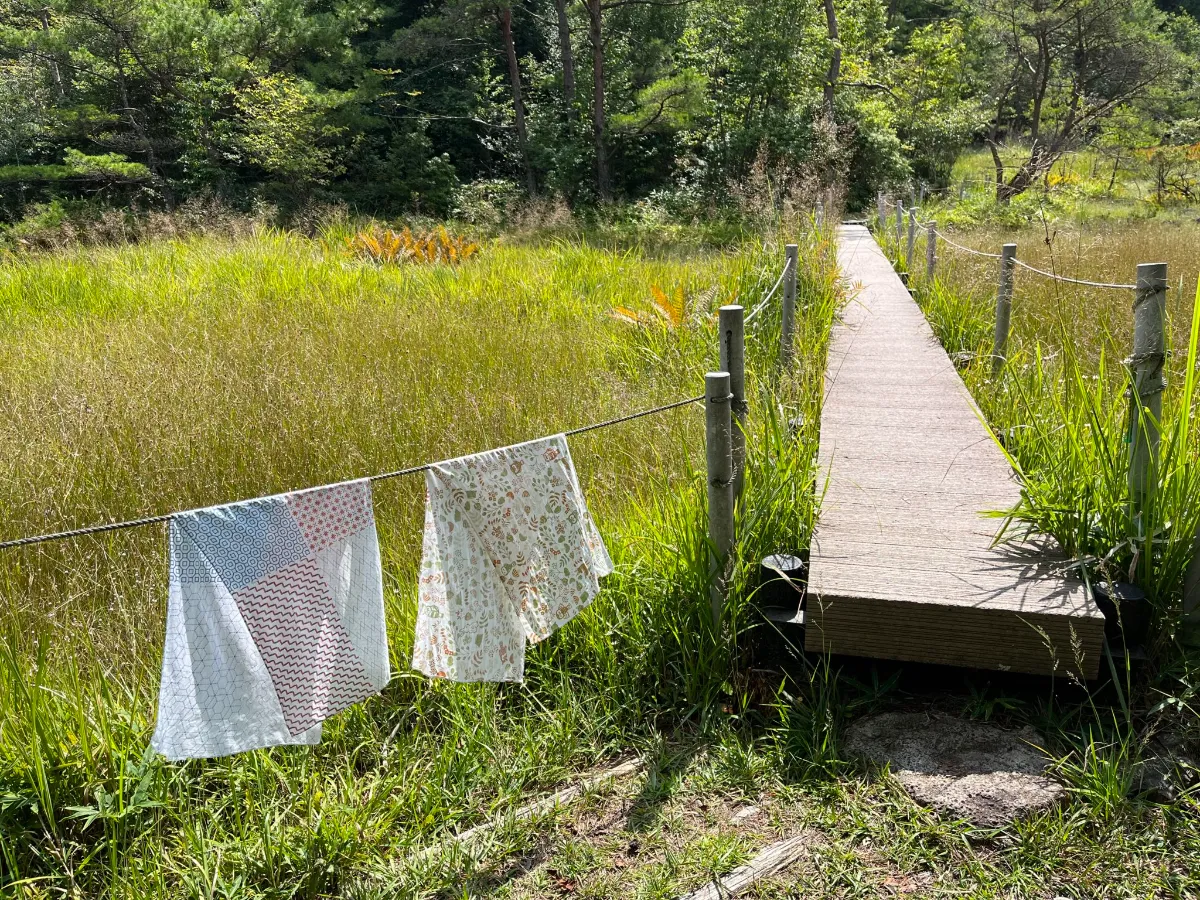
The colorful tenugui are perfect for interior decor, such as using them as table linens. They are easy to wash, have excellent breathability, and can also be used as scarves.
Adorn your neck with this stylish tenugui to elevate your outfit, while also protecting yourself from the cold and the sun.