Sakai Incense History
The Incense Trade in Sakai Flourished During the Azuchi-Momoyama Period
Sakai, a city that flourished through international trade such as the Japan-China and Nanban trade during the Warring States period, became a hub for the import of aromatic woods like sandalwood (byakudan), agarwood (kyara), and aloeswood (jinko).
This trade attracted many medicinal herb merchants to the area. It is believed that the history of Japanese incense began in this trade-rich city.
During the Azuchi-Momoyama period (1574–1600), Konishi Yajuro Kiyoshi*, a medicinal herb merchant from the Shukugaya district and a supplier to Toyotomi Hideyoshi is said to have traveled to the Korean Peninsula. There, he learned incense-making techniques introduced from China and brought them back to Japan.
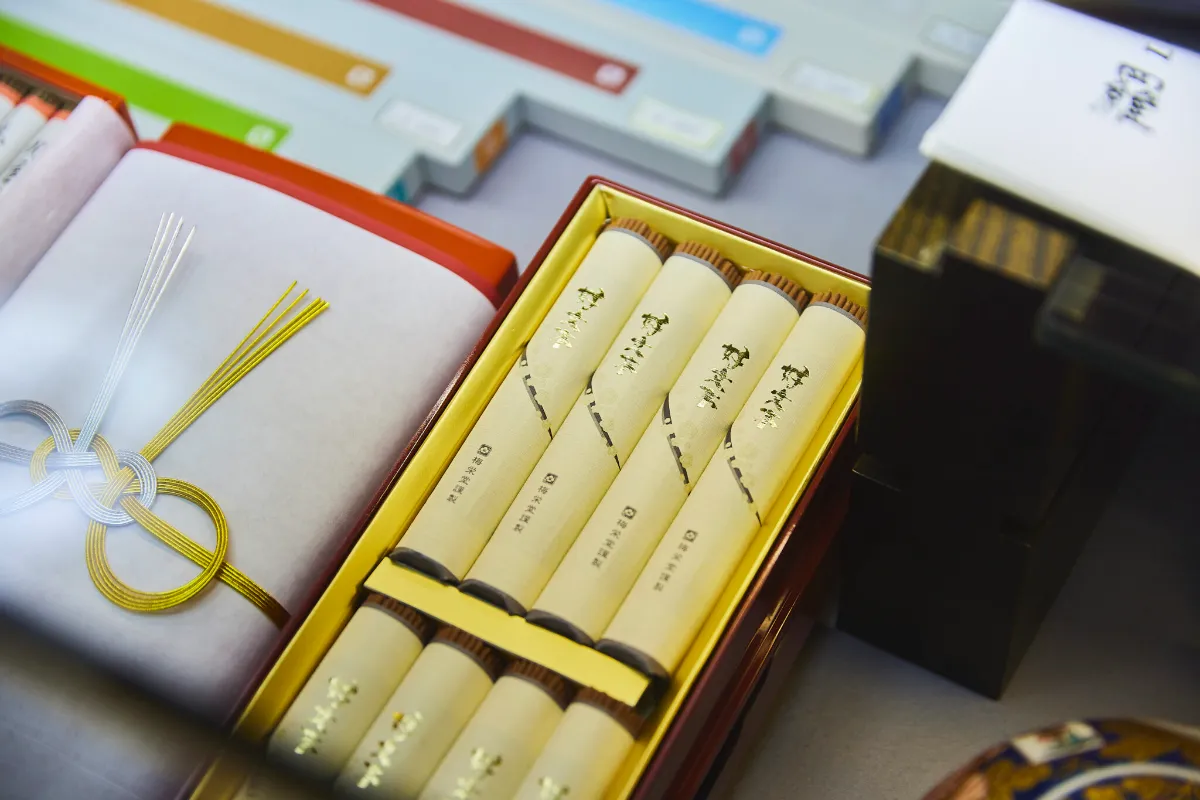
By combining these techniques with Sakai’s own traditional methods of blending fragrances, the distinct Sakai incense was born. Burning incense, symbolizing a compassionate heart, is said to purify the mind and body while connecting with the Buddha.
Incense production in Sakai grew increasingly active during the Edo period (1603–1867). Sakai-made incense spread beyond the Kansai region, known for its many temples, and throughout Japan. As the temple registration system was established and Buddhist altars became common in households, the demand for incense surged.
Sakai incense, recognized as the first incense made in Japan and renowned for its exceptional quality, was officially designated as a traditional craft by the Osaka Prefectural Governor on February 5, 1986.
- Konishi Yajuro Kiyoshi: This name refers to either Konishi Josei, the elder brother of the Sengoku warlord Konishi Yukinaga, or Konishi Ryusa, his father.