2022/10/1
Kyouwa Dyeing and Bleaching Factory Co., Ltd. 2022
Fade-resistant and Breathable Traditional Dyeing
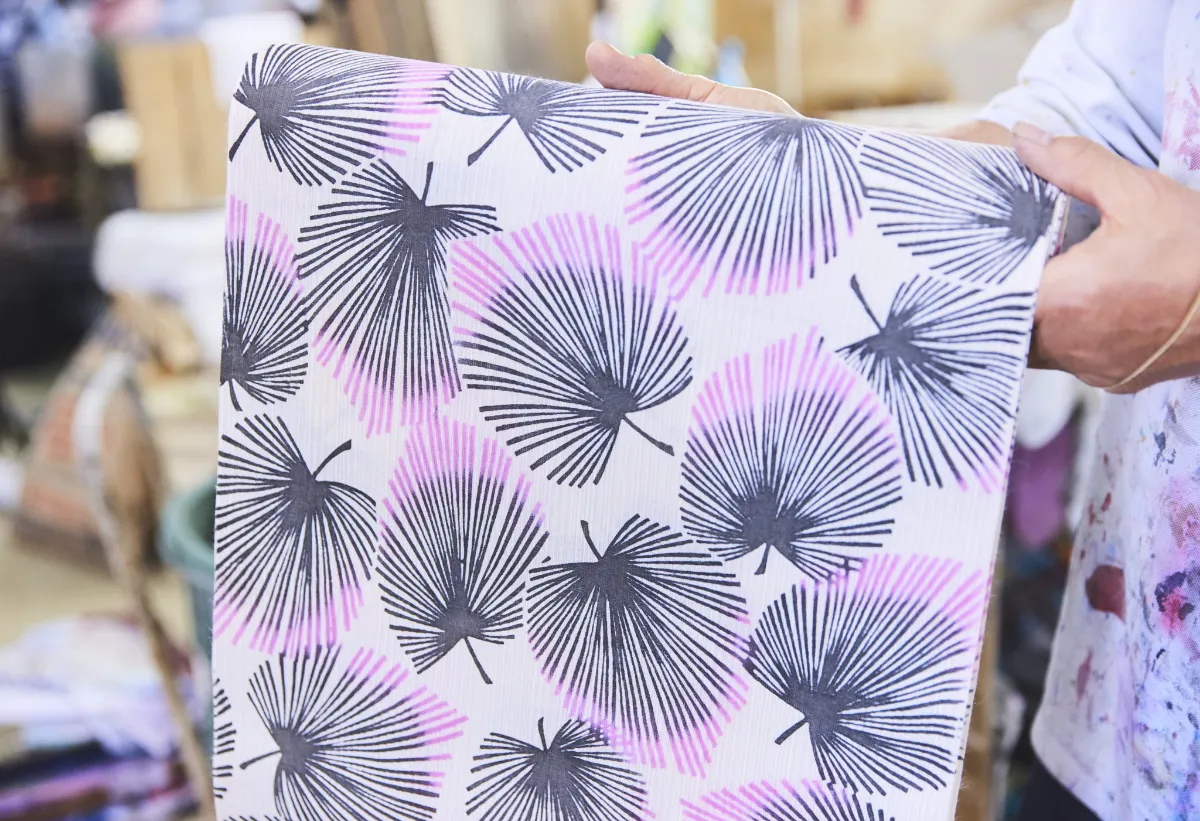
‘Chusen’ (注染), as the kanji characters suggest, is a dyeing technique in which dye is ‘poured’ (注) onto the folded fabric to create patterns (染). Single-color dyeing in indigo was the mainstream in this field until the introduction of multiple colors and gradients unlocked innovative color options that had never been realized before.
One of the benefits of this technique is that it can dye the front and back of the fabric simultaneously, creating identical patterns and colors on both sides. Moreover, dyeing the thread itself instead of merely the surface of the fabric ensures fade-resistant colors, enhanced breathability, and a soft finish.
This technique was designated as a national traditional craft under the name ‘Naniwa Honzome’ by the Minister of Economy, Trade and Industry in November 2019.
Chusen Culture: Nurtured by a Rich Water Source
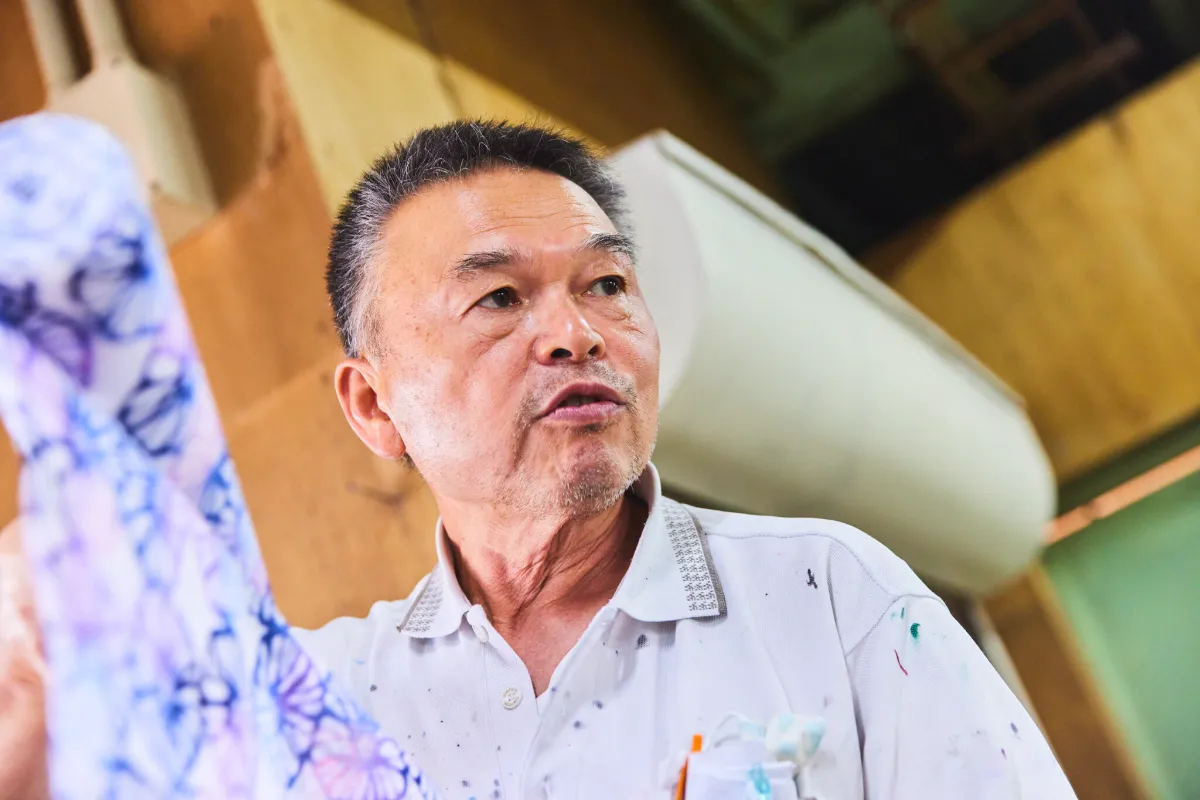
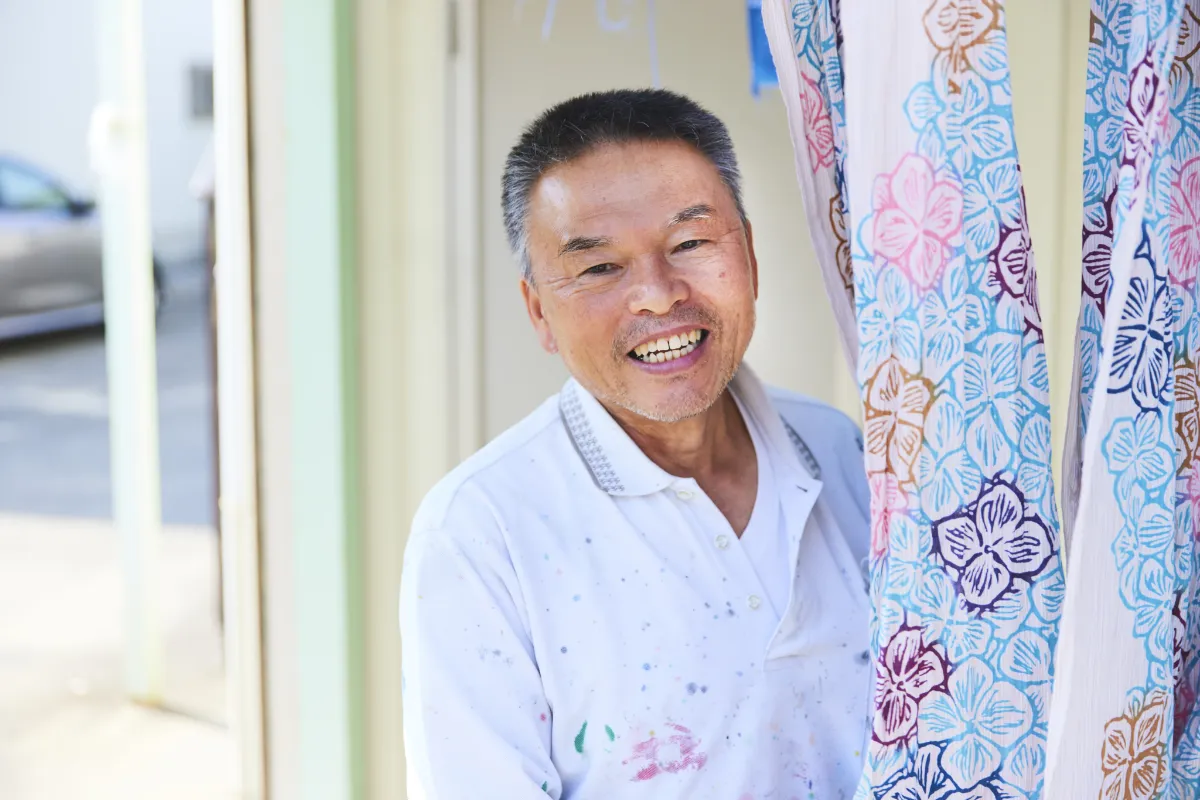
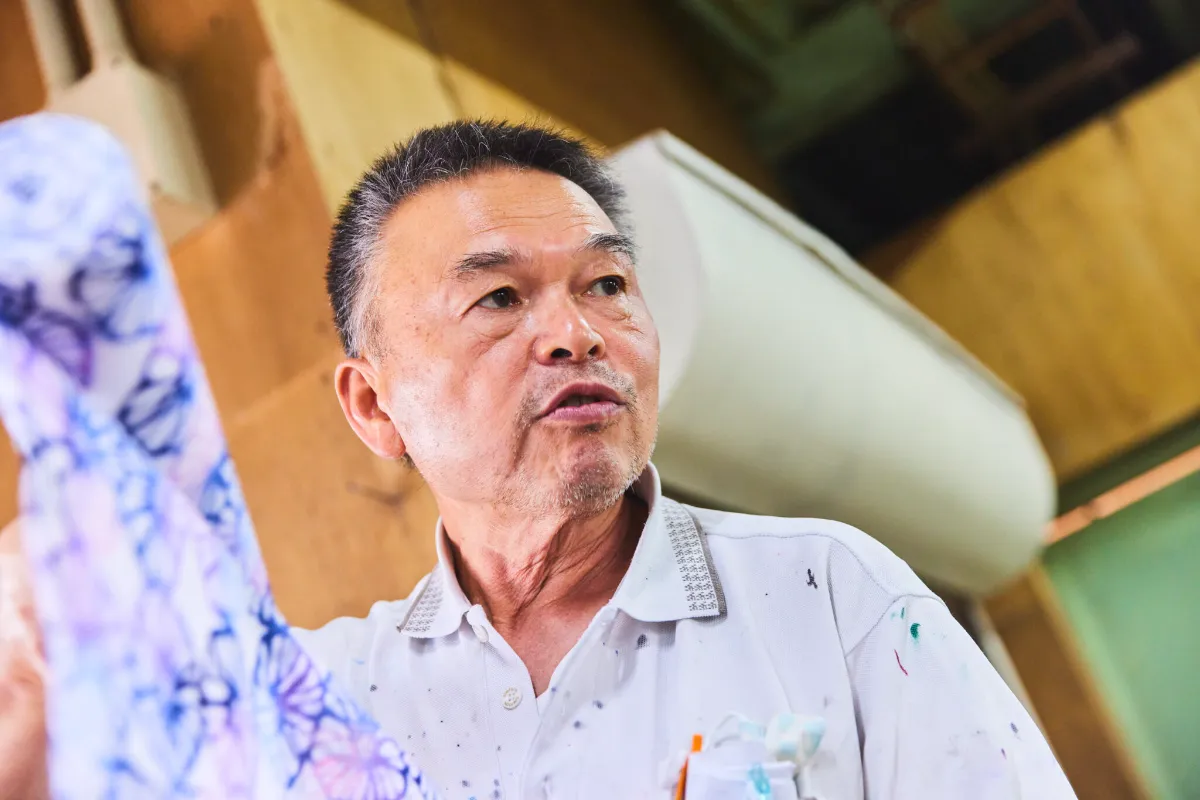
One manufacturer that has carried on this tradition for three generations so far since their founding in 1952 is Kyouwa Dyeing and Bleaching Factory Co., Ltd. They specialize in chusen yukata (casual kimono), chusen tenugui (washcloth), and nassen tenugui. Mr. Takao Komatsu, the representative, is also a traditional master craftsman who has received awards such as the ‘Contemporary Master Craftsman’ and the ‘Yellow Ribbon Medal’.
Upon visiting the factory along the Ishizugawa River in Kenacho, you will notice colorful fabrics fluttering in the wind, letting you know at once that you have arrived at a dyeing factory.
“Cotton cultivation along the Ishizugawa River in Sakai City dates back to the time of Hideyoshi Toyotomi. In the early Edo period, a traditional bleaching wazarashi industry emerged in the Tsukuno and Kena regions, supported by a rich water source, expansive land for sun-drying, and dried sardines for fertilizer. It became a leading cotton trading center by the mid-Edo period, distributing textiles to Osaka, Kyoto, and the Hokuriku route. It was actually Sakai City that became home to Japan’s first cotton textile factory founded by the Satsuma Domain.”
Wazarashi refers to both the process of removing impurities from textiles and threads by bleaching and the fabric produced from those bleached threads. The soft and absorbent wazarashi has long been a popular choice for tenugui and yukata.
Meanwhile, due to the impact of World War II, dyeing businesses for yukata and tenugui in Osaka City relocated to Sakai City one after another. This is how ‘tsugizome’ took root in Sakai City and began to flourish.
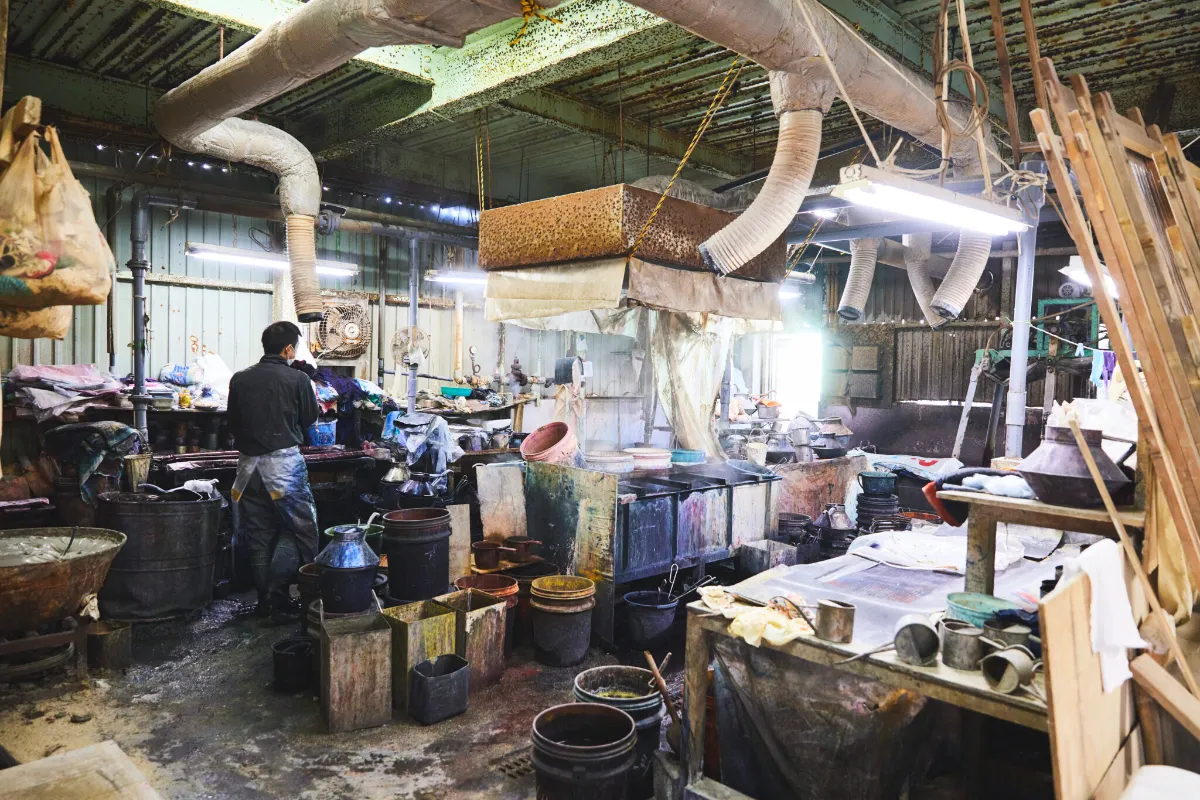
A Distinctive Method for Efficiently Dyeing Multi-Colored Patterns
The chusen technique, developed by a dyer in Osaka around 1887, is uniquely Japanese and can efficiently dye multi-colored patterns. A piece of sarashi (bleached fabric) is over 20 meters long and can make 20 to 24 tenugui. Two to three pieces are dyed at once without cutting.
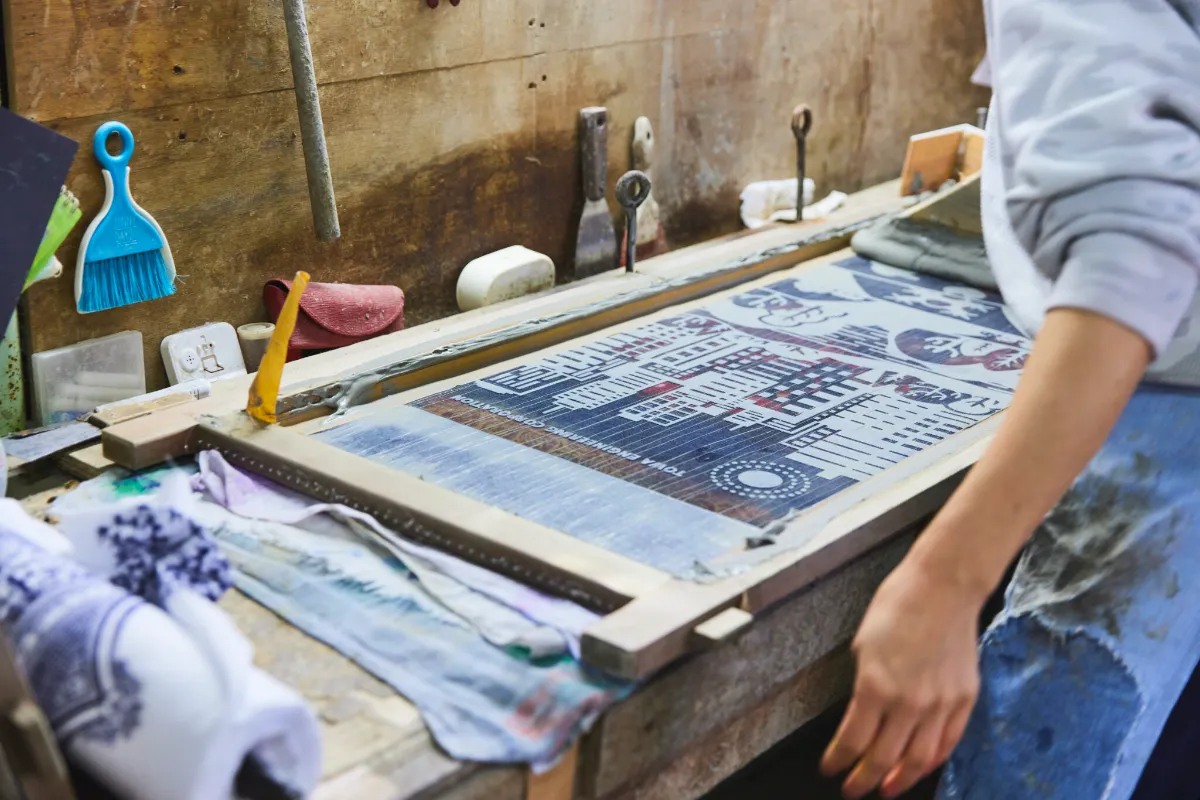
To begin, the pattern paper is secured on top of the fabric, and a ‘dye-resist paste’ is applied with a wooden spatula to carefully layer the fabric.
“This may appear to be a simple task, but requires the most concentration. A slight misalignment can affect the whole pattern on the sarashi, making it an important procedure that cannot be corrected later,” explains Mr. Komatsu.
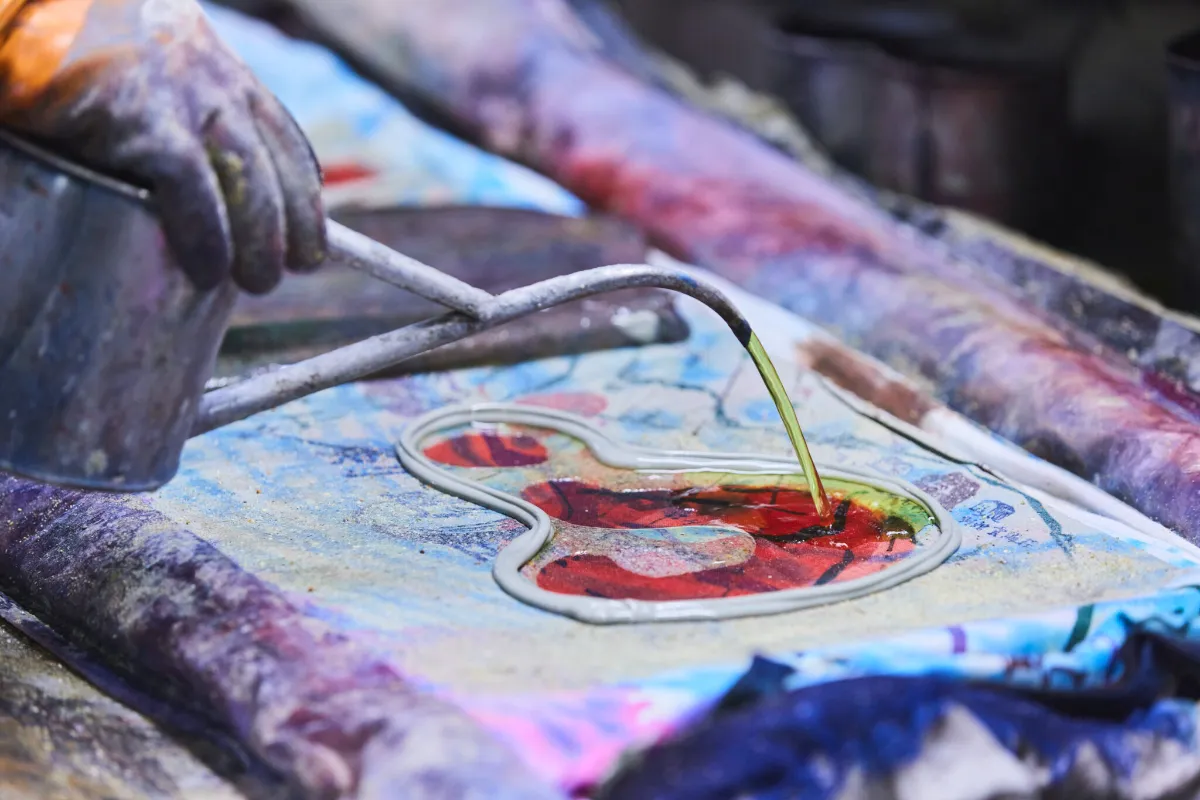
Dye is then poured over the piled layers of fabric, allowing it to penetrate the areas without the resist paste. To prevent unwanted dye flow, starch is piped like whipped cream to create a sort of barrier.
“Our clients request that their items be dyed in the exact same colors as the design. Dye artisans have about 50 types of dye available, which they mix to perform the ‘irodashi’ (color matching). They do this for each individual color, relying on their experience and intuition.”
While pouring the dye into the barrier with a watering can-like tool, they activate a vacuum tank set beneath the dyeing table using a foot pedal to draw the dye from below. The fabric, arranged in bellows form, is then dyed carefully on both sides.
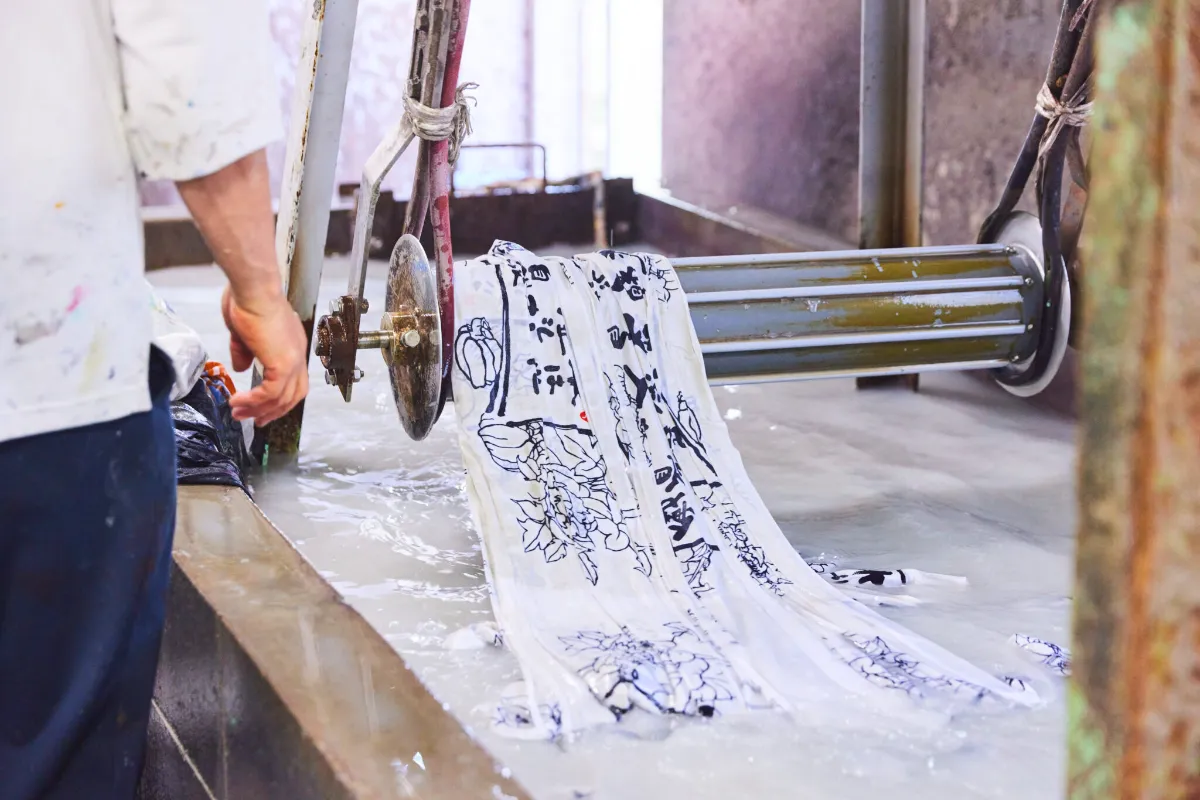
Finally, in the washing area referred to as ‘river’, they wash off the resist paste and excess dye. As the fabric is vigorously washed, the folds unravel to reveal a stunningly beautiful continuous pattern on the sarashi.
Insatiable Curiosity Expanding the Possibilities of Chusen
Delicate patterns, subtle hues, and beautiful gradations are the product of skilled craftsmanship. Chusen is mass-produced yet unique, with each piece exhibiting its own texture, which adds to its charm.
“Our belief is to invest time and effort. Even when we receive rather unconventional orders, we always give them a shot instead of deciding they’re impossible. By raising our standards and putting in the effort, we can improve our skills as a result.”
By sticking to this style, they have recently succeeded in applying chusen to fabrics other than sarashi, such as linen and knit materials. Driven by their insatiable curiosity, they continue to explore the limitless possibilities of chusen.
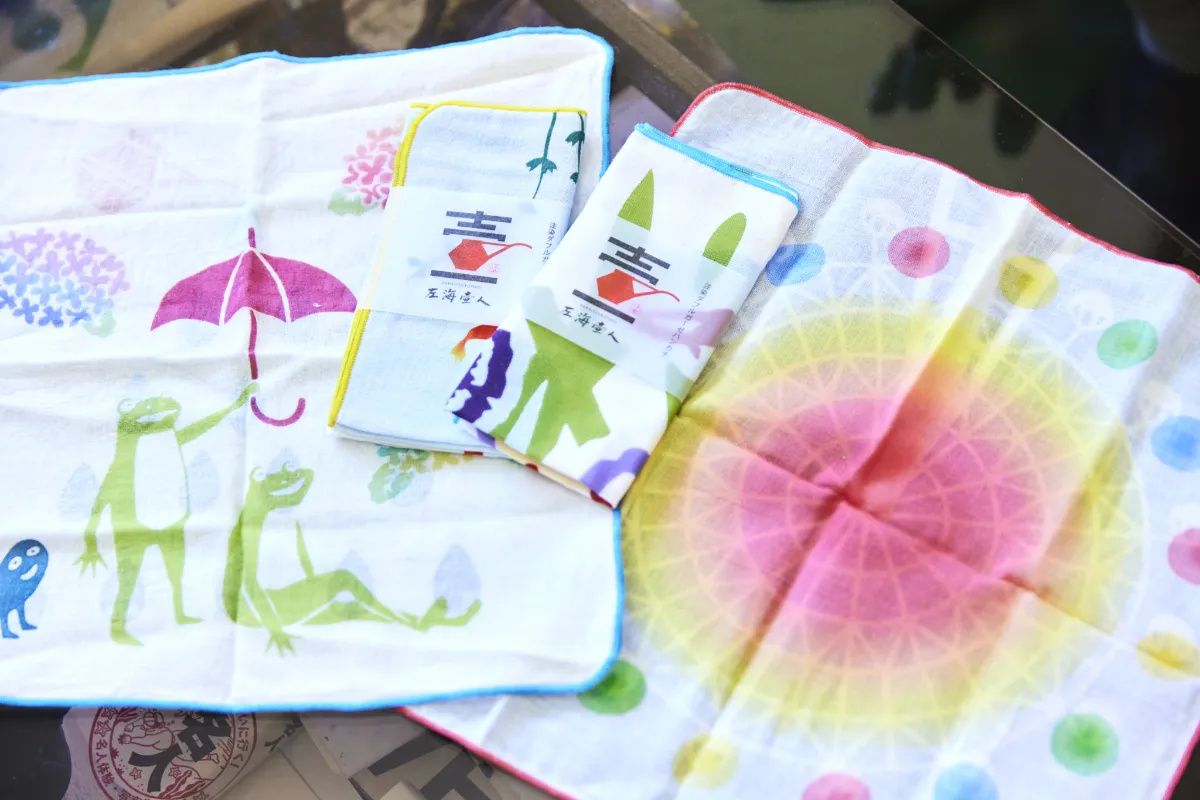
‘Chusen Double Gauze Handkerchief’, certified by this edition’s Sakai Kitchen Selection, also reflects this flexible and creative approach.
“Since both sides are fully dyed, the colors faintly show through from the opposite side, creating a single pattern when they are layered. It is quite fascinating to be able to enjoy designs from both the front and back.”
The handkerchief is durable due to its two layers, and the soft fabric provides a pleasant feel against the skin. This gem of an item is offered at an affordable price and comes in a variety of colors and patterns that will make you want to buy more.
Edit&Test Tomoyo Tsuchiya
Photographer Yutaka Sato