
2022/10/1
Takahashikusu Co., Ltd. 2022
Blacksmithing techniques developed through the construction of ancient burial mounds
Sakai’s knife production has a history of 600 years, originating in the fifth century during the construction of Japan’s largest burial mound, the Nintoku-tenno-ryo Kofun (Emperor Nintoku’s tomb). Artisans settled in Sakai and crafted iron tools such as hoes and plows, which fostered the development of forging techniques.
An opportunity arose in the 16th century when Japan was introduced to firearms and tobacco by Portugal. Sakai utilized its knife-forging techniques to actively produce firearms and tobacco knives for cutting tobacco leaves. These sharp tobacco knives gained recognition from the Edo shogunate and were awarded the ‘Sakai Kiwame’ hallmark, allowing them to thrive in prosperity.
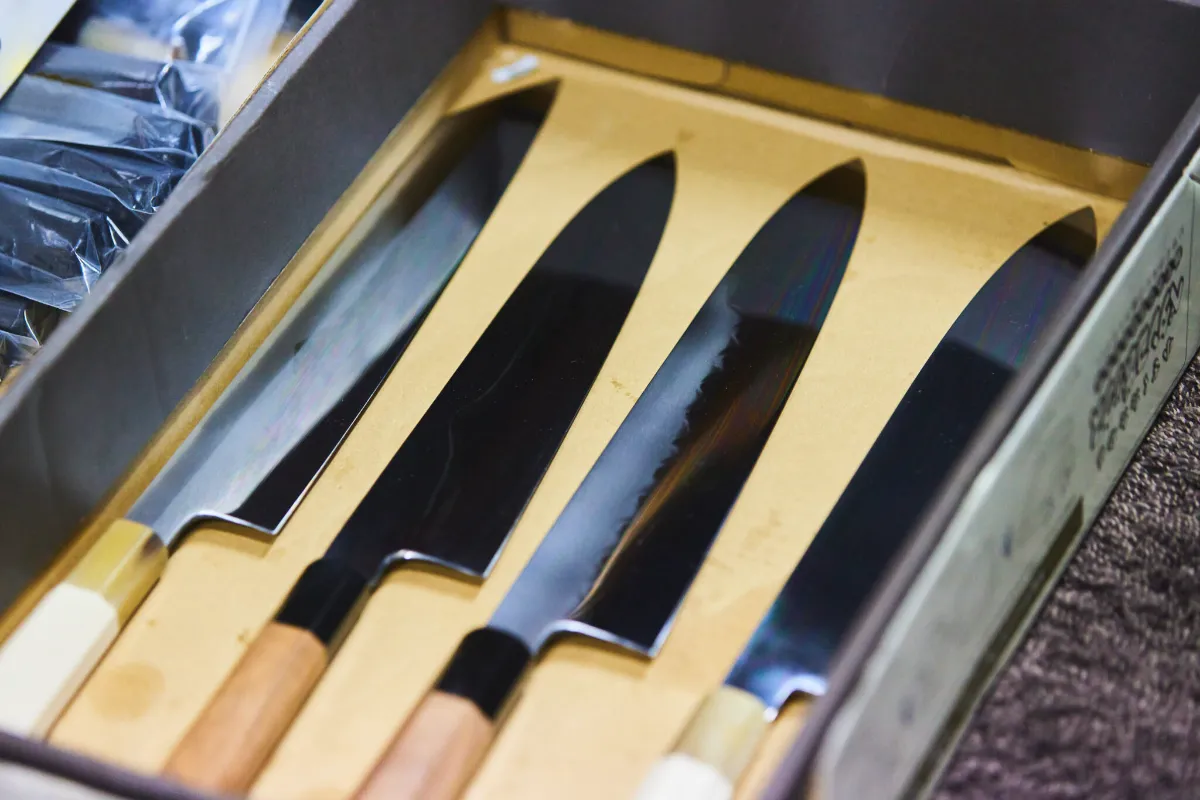
A Century of Expertise: A Longstanding Wholesaler
Carrying on the tradition of ‘Sakai Forged Knives’ is Takahashi Kusu, founded in 1917. For over a century, it has served as a bridge between makers and users, specializing in the production and wholesale of Japanese knives. Fourth-generation representative, Mr. Yusuke Takahashi, has a unique background, having worked in a foreign IT company, earned his MBA, and held positions in management consulting and the corporate planning department of a Tokyo Stock Exchange-listed company before joining the family business. He shares the charm of Sakai forged knives in a logical yet warm manner:
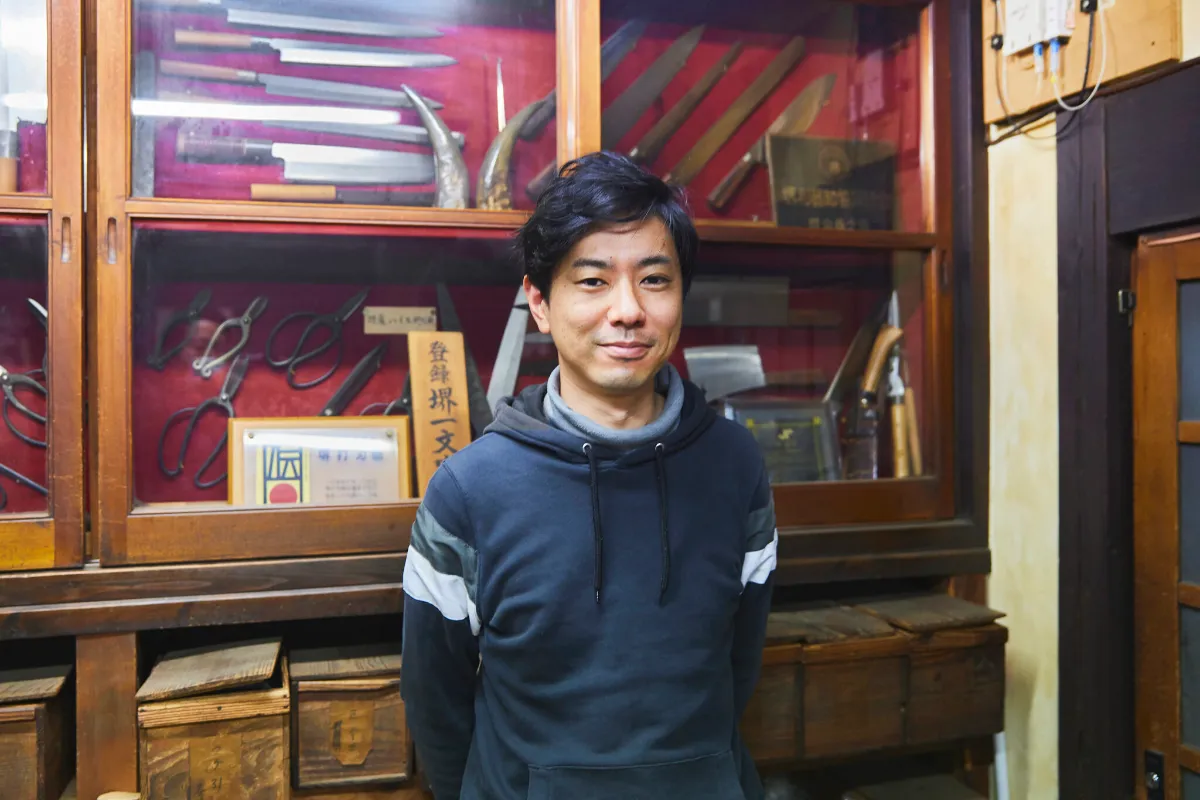
“The characteristics that distinguish Sakai knives are their single-edged design and forged blades. Compared to the common double-edged knives, their sharp angles allow a crisp and clean cut, producing smooth cross-sections. Even delicate ingredients like sashimi can be sliced without damaging its fibers and cell membranes, which means the delicious flavors are preserved and the texture is maintained.”
With a food culture centered on fish and vegetables rather than meat, Japan often enjoys fresh ingredients in their natural state. This is said to have led to the evolution of unique knife designs to meet this specific need.
“The name ‘uchihamano’ (forged knives) is derived from the repeated hammering process. This technique refines the steel’s molecular structure, providing the knife with durability, flexibility, and long-lasting sharpness,” he further explains.
Masterpiece Quality for Household Goods
Takahashikusu’s signature series is called ‘Ittosai Kotetsu’. The name is derived from the Edo-period swordsmith, ‘Kotetsu’, and was given by the founder, Kusutaro Takahashi, to mean ‘the knife of Kotetsu’. Only the finest knives are engraved with the ‘Ittosai Kotetsu’ mark.
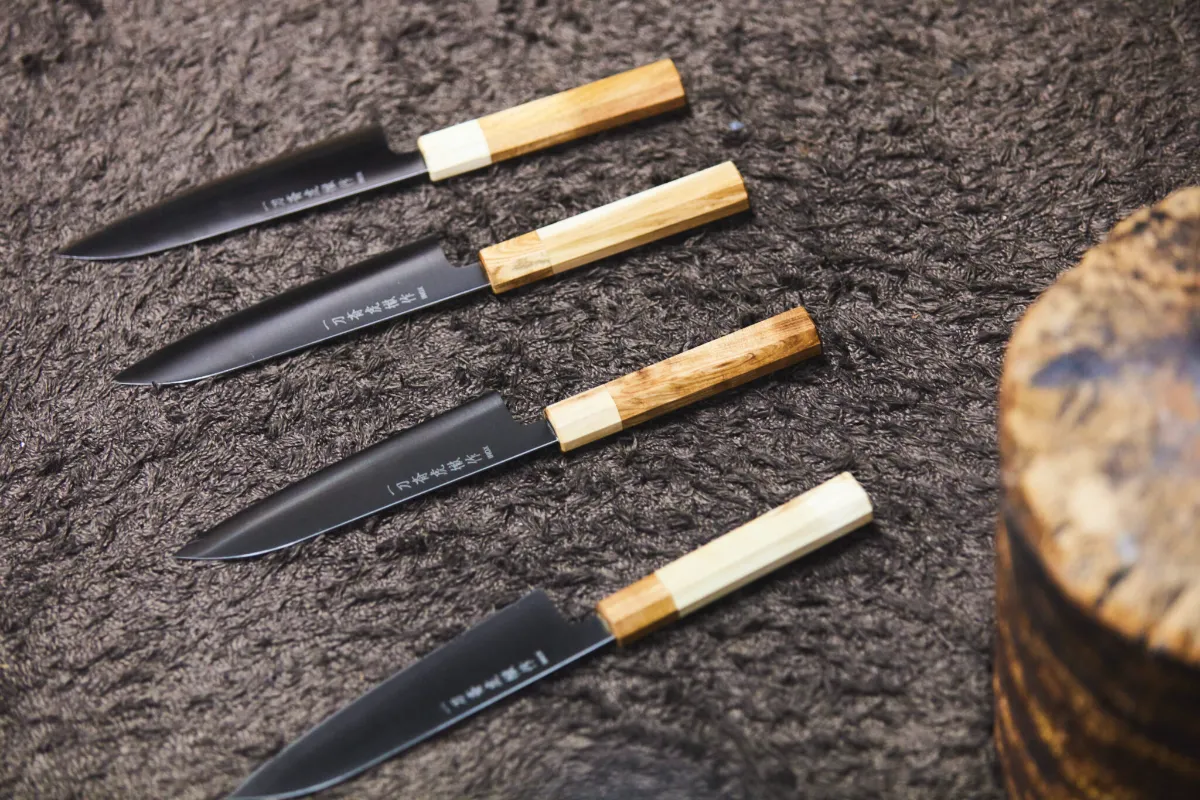
Their ‘INOX Wa-Santoku Knife with Thinned Wood and Octagonal Handle’ has been certified for this edition’s Sakai Kitchen Selection. This product incorporates the same premium quality found in high-quality knives, making it suitable for daily use in ordinary households.
An environmentally friendly thinned wood from Japanese pagoda and black walnut trees has been selected for the handle, exhibiting a warm texture and expressive grain patterns. Among its many charms is that it will gain character with extended use.
“The blade is made by one of Japan’s best double-edged knife craftsmen, who typically has a waiting period of one to two years. Thanks to our long-standing relationship, we are able to make special requests.”
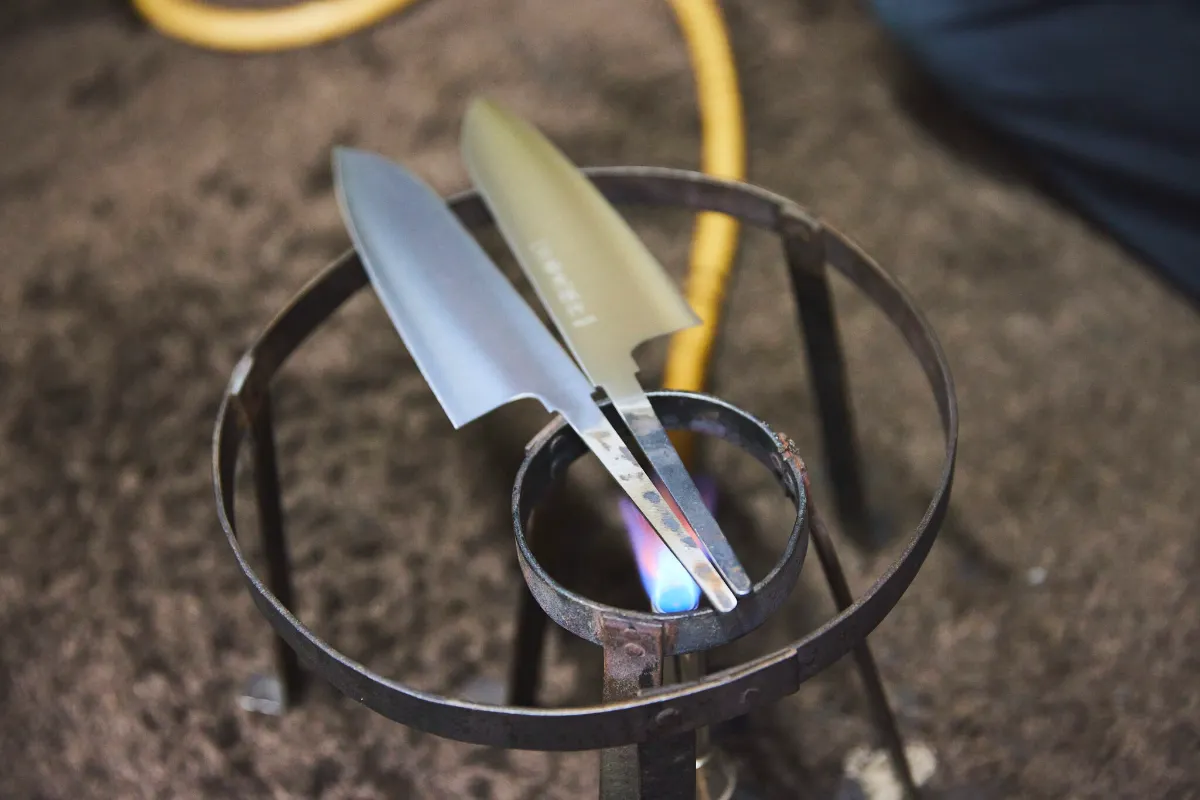
A perfect balance between “sharpness” and “ease of sharpening” is what defines a good knife.
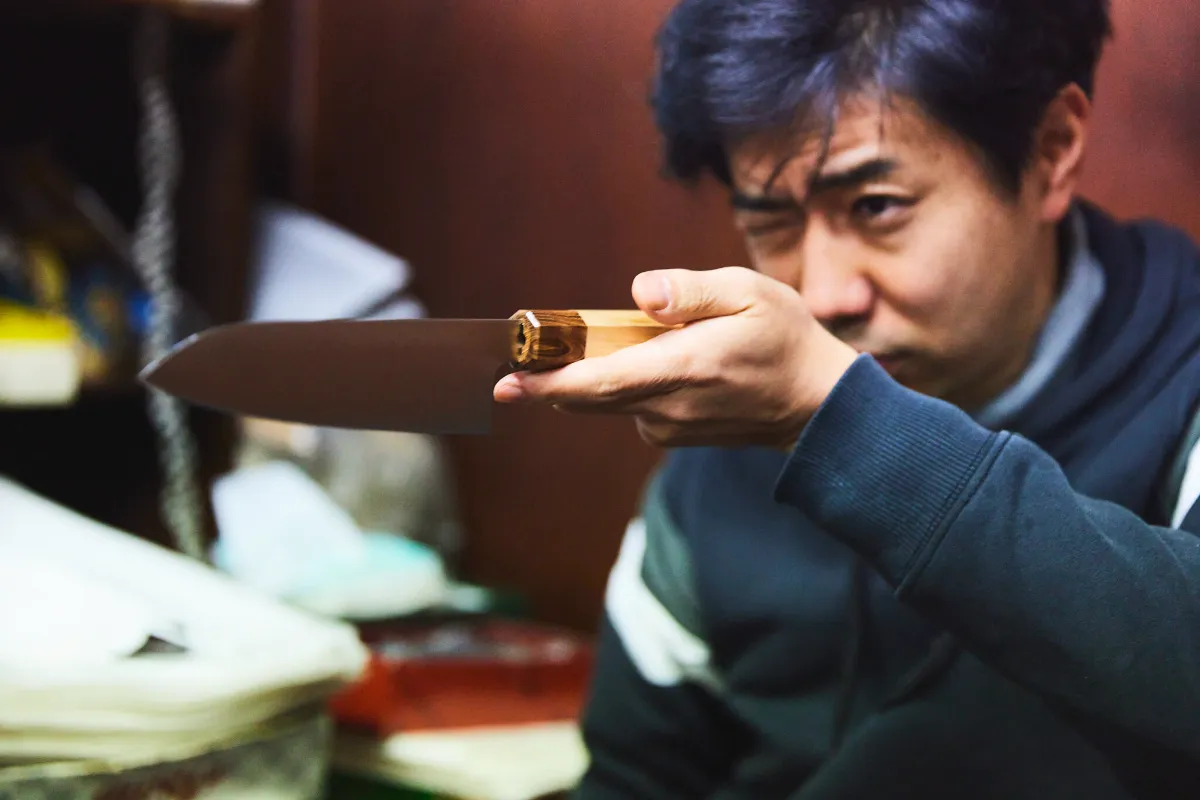
“The harder the knife, the sharper it is, but overly hard blades can make sharpening difficult. We describe a blade that balances sharpness and ease of sharpening as ‘hard yet pliable’. This exquisite balance can only be achieved by the skills, experience and intuition of a skilled craftsman.”」
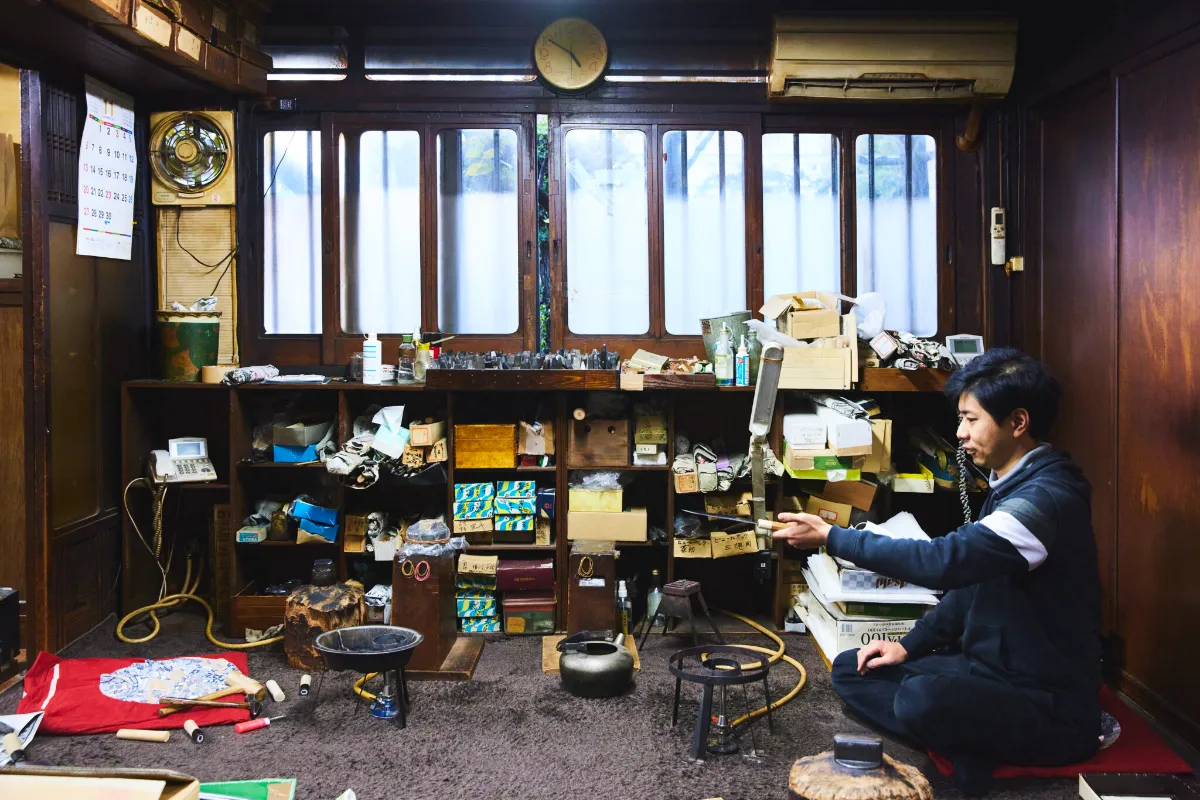
While he speaks, the blade in his hand gleams with rich, lustrous beauty, almost sending chills down your spine. Mr. Takahashi attaches the handles to each of these blades, one by one with precision.
Challenging Tradition by Innovative Ideas and Actions
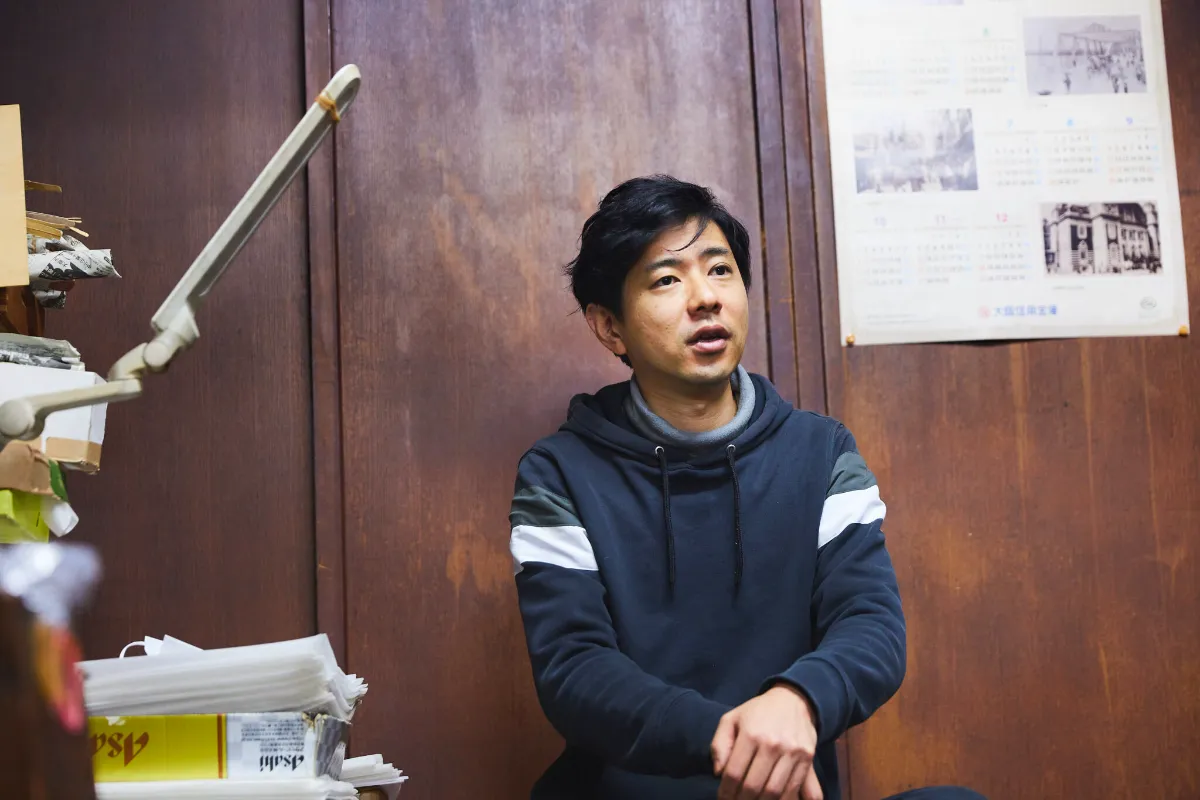
“My aim is to preserve the essential aspects of traditional craftsmanship while developing authentic Sakai forged knives that adapt to modern times,” says Mr. Takahashi. It may be his diverse background in other industries that gives him this ability to see the big picture and envision the industry’s future.
“Changes must be made where needed. Sakai’s traditional Japanese knives have long been created through a division of labor among forging craftsmen, blade craftsmen, and handle craftsmen. However, it has been a few decades, possibly over a century since this system has been implemented, meaning a time for change. And so, we are building a new studio to produce Sakai knives entirely in-house.”
For an efficient production, the forging processes will reduce reliance on individual skills as much as possible and include measuring instruments like thermometers instead. This approach is likely to make a significant change in the industry.
Another concern is securing young craftsmen for the next generation.
“Becoming a craftsman is often considered as a tough profession in Japan, while it is regarded as a well-respected career in Europe and overseas. By incorporating contemporary science and technology to eliminate the challenging aspects of the job, we aim to change the mindset associated with being a craftsman.”
Takahashikusu is dedicated to raising standards not only within their own company but also across the entire industry. Their innovative ideas and drive will shape the future of Sakai knives.
Edit&Test Tomoyo Tsuchiya
Photographer Yutaka Sato